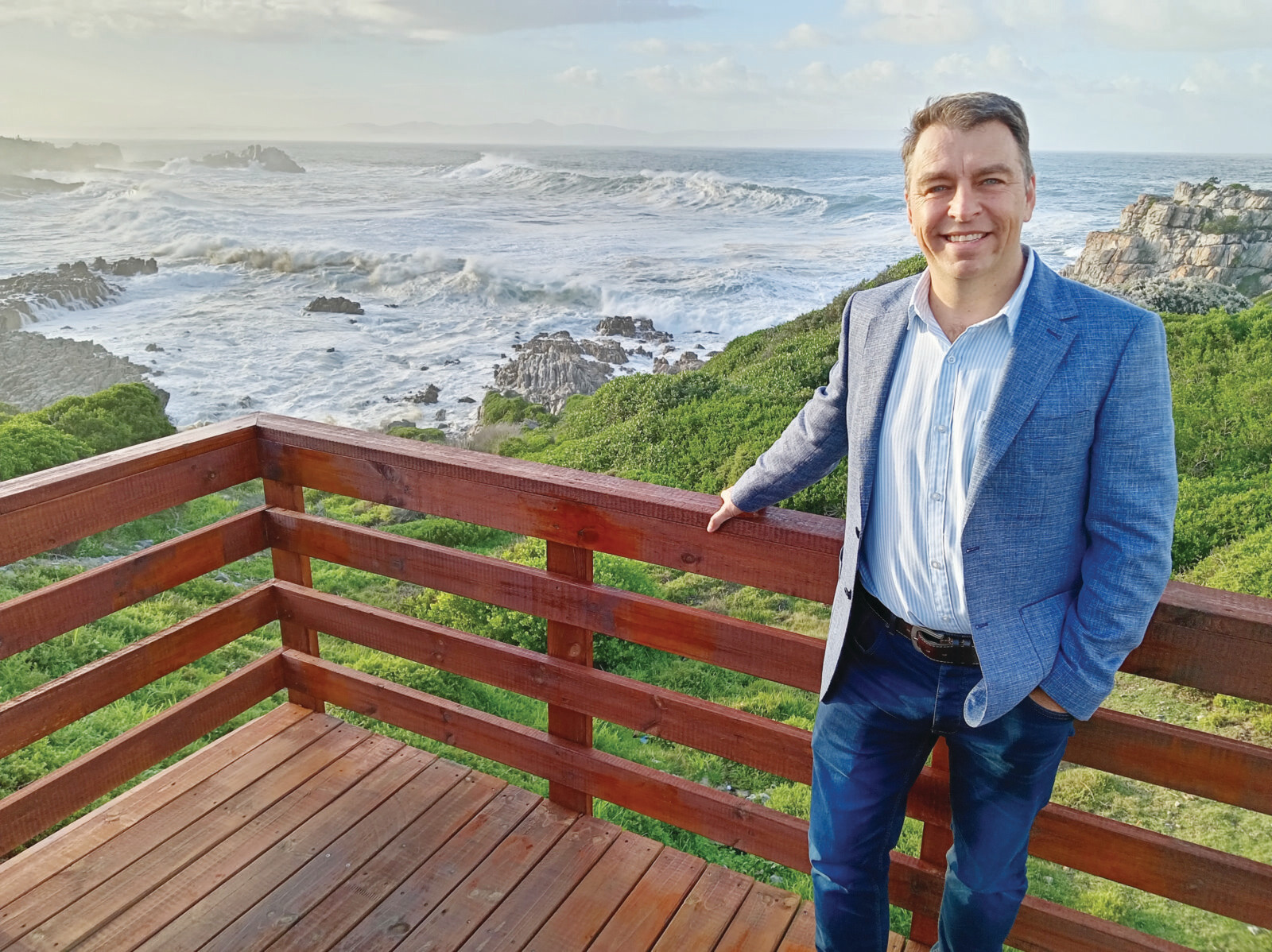
Three key pillars underpin good local governance: consistent public engagement, open and honest communication, and, ironically, putting into practice what has become little more than a political slogan.
That is the conviction of mayor-elect Clinton Lerm, who, after the Democratic Alliance’s (DA) victory in last week’s Overstrand local government elections, is set to steer the region’s development and prosperity over the next five years.
“The much-touted – working for the people – slogan, so glibly rolled out by politicians during election campaigns, has unfortunately lost its true meaning. The public perception is that, once the ballots have been cast, those in power actually work against the people,” says Lerm. “And one cannot really blame them, judging by the state of affairs in many municipalities.


“But, at its core, working for the people is the fundamental mandate local government leaders receive from their constituents at the ballot box. Residents expect those words to be taken literally. That is precisely what we must do in the Overstrand. Everything flows from there.”
Lerm believes sound governance is impossible when public engagement is undermined by arrogance or dismissiveness from those in positions of authority.
“Every opinion deserves to be respected and heard, no matter how insignificant it may appear. Open and honest communication is invaluable, and residents must feel part of the decision-making process.
“That is why I undertook to introduce technology that will enable residents to have access to council and portfolio committee meetings no matter where they are.”
But Lerm stresses that effective public participation is a two-way street.
“I will endeavour to strengthen public participation, but residents must also play their part by getting involved in a meaningful way. At each of the more than 250 public meetings I held before the election, I asked how many people in the audience had participated in the IDP and Spatial Development processes – both critical to shaping the future of our towns and the region as a whole.
“Very few had. In such circumstances, complaints about a lack of public participation carry little weight.”
Equally important to stable governance, Lerm says, is constructive collaboration between parties in the broader community’s interests.
“My mission is to create a climate in which opposing factions can work together rather than against one another. We need to move away from destructive, emotionally charged responses to differences of opinion and focus instead on mature, sensible negotiation.”
Another priority is to strengthen the municipality’s capacity to ensure optimal service delivery.
“We are fortunate to have a proven, committed and competent workforce. The Overstrand’s reputation as one of the country’s best-performing municipalities bears testimony to this. But we must not become complacent or blinded by awards. Constant monitoring and promptly addressing shortcomings that could compromise performance are non-negotiable. This includes equipping our teams to succeed.”
Lerm acknowledges that service delivery, infrastructure maintenance and curbing wasteful expenditure are just a few of the many challenges that require attention.
“Sound conservation policies, responsible development strategies to safeguard the Overstrand’s unique character, and the equitable distribution of resources among our diverse communities are essential. This includes rates relief for residents who are struggling financially.”
He accepts that repeated promises and good intentions are likely to be met with scepticism.
“That is understandable. But, at this juncture, all we can do is roll up our sleeves, get to work and fulfil the mandate entrusted to us. Ultimately, we will be judged on whether our intentions translate into tangible achievements.”


Enjoyed this story? Get the whole paper first
The top stories and the whole edition, in your inbox the moment the new paper is out.
More news from Hermanus