We tend to think of the southern Cape as a land of fynbos, with proteas, ericas, and restios carpeting the mountains.
But come to the coast, and the vegetation changes dramatically. On the dunes and sandy coastal plains one enters the realm of ‘strandveld’, a rich, leafy world that is generally overlooked, possibly because it lacks the glamour of the world-renowned fynbos.
Strandveld – with fynbos, renosterveld, succulent Karoo, and Albany forest and thicket- makes up the Cape Floristic region, with fynbos as the dominant and better-known vegetation.
The name comes from Dutch, with strand meaning beach. Strandveld can be thought of as the coastal bush that forms a narrow band between the sea and inland vegetation.
In the Overstrand we are fortunate to have some wonderful examples. The recently recognised Grootbos Strandveld occurs around Walker Bay between Die Kelders and Stanford, while Southwestern Strandveld extends along much of the southern coast towards Cape Hangklip. Both of these types are classified as endangered.
What makes strandveld different from fynbos? It is characterised by tall, hard-leaved evergreen shrubs, succulents, and abundant grasses, and it grows on alkaline, calcareous dunes rather than the nutrient-poor, acidic soils typical of classical fynbos.
Compared with fynbos, strandveld vegetation tends to be bigger, leafier and less inclined to burn. Instead of the small, resinous leaves typical of many fynbos plants, strandveld comprises shrubs with larger, fleshier leaves, interspersed with succulents, grasses and annuals.
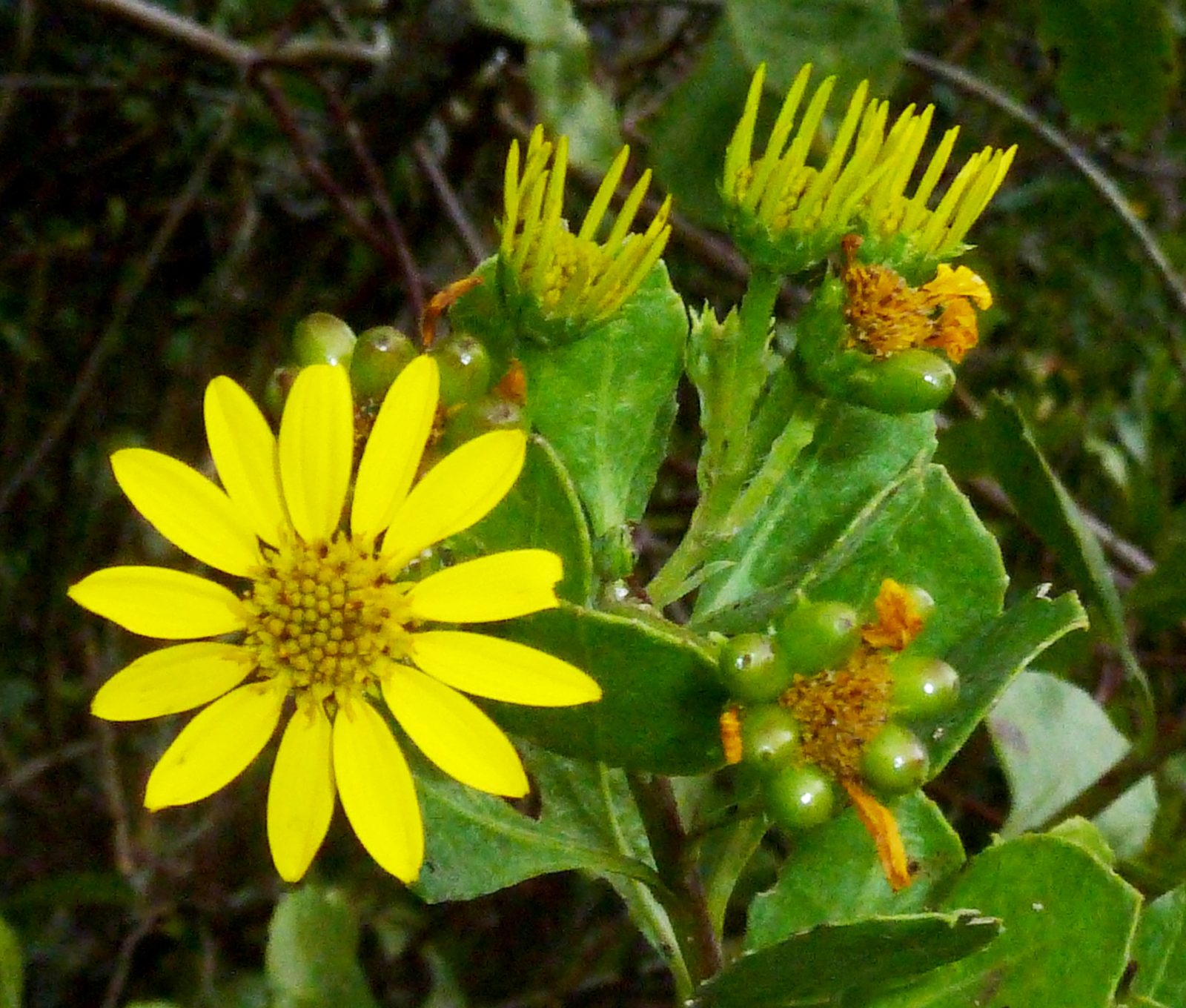
Species such as sea guarrie (Euclea racemosa), blombos (Metalasia muricata) and bietou (Osteospermum moniliferum) characterise strandveld communities. They offer a more generous pantry than fynbos, providing berries, bulbs and nutritious leaves for insects, birds and animals. Fruit-eating birds such as Cape bulbuls help disperse seeds, and dense vegetation shelters insects, reptiles and small mammals.
Historically, the coastal landscape also supported larger animals. Strandveld’s relatively productive vegetation could sustain substantial herbivores, including antelope and, in the now-distant past, even larger browsers such as elephant and rhino.
Unlike fynbos, strandveld does not need regular fire to regenerate. In sheltered, moist places, patches can gradually become dense thicket and eventually develop into forest. Milkwood forests are also part of strandveld vegetation. The landscape can contain a mosaic of open shrubland, thicket, wetlands and forest, all within a relatively small area. This special vegetation type stabilises coastal dunes, provides rich biological corridors, and supports specialised regional wetlands such as the Nuwejaars Wetland.
Then there are the flowers. From July to September, strandveld bursts into a riot of colour, with daisies, bulbs, vygies and other annuals appearing among the shrubs.
Sadly, strandveld has paid a heavy price for its niche on prime coastal real estate. It is vulnerable to urban sprawl, agricultural expansion (such as potato and vineyard cultivation), alien invasive plants (such as Rooikrans and Port Jackson), and illegal sand mining.
Roads, houses, farms, resorts and other development have fragmented and destroyed much of it. Strandveld, consequently, is classified as endangered nationally, with more than half of its original extent already transformed or lost.
The remaining patches are more than attractive pieces of bush: they are fragments of a unique natural heritage and vital refuges for biodiversity. Because coastal dune vegetation is so rare now, conservationists argued that remaining areas deserve the highest conservation priority. It is currently critically underprotected, with only a fraction (about 6% to 15% depending on the specific sub-region) formally conserved in reserves.
Enjoyed this story? Get the whole paper first
The top stories and the whole edition, in your inbox the moment the new paper is out.
More news from Stanford