Spekboom (Portulacaria afra) is one of South Africa’s most remarkable plants.
Its home is the Eastern Cape – although it happily grows elsewhere – where, to the casual observer, it looks like great stretches of ordinary green bush covering the hillsides.
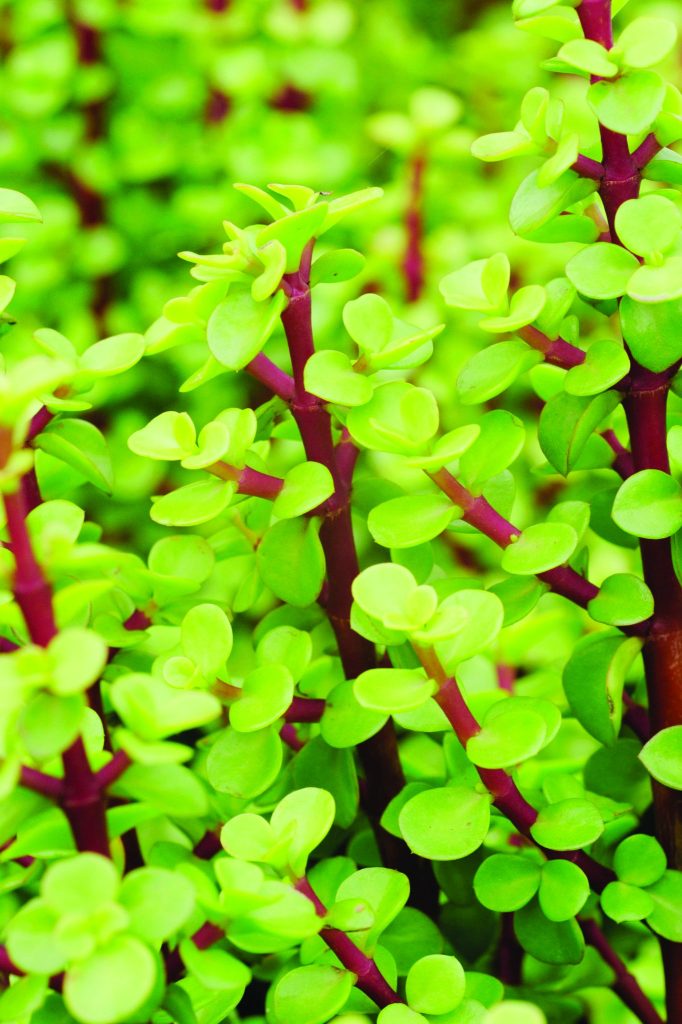
Spekboom is a succulent, evergreen shrub often reaching several metres high. It has small, fleshy, rounded leaves. Its succulent leaves and stems allow it to survive in remarkably dry conditions.


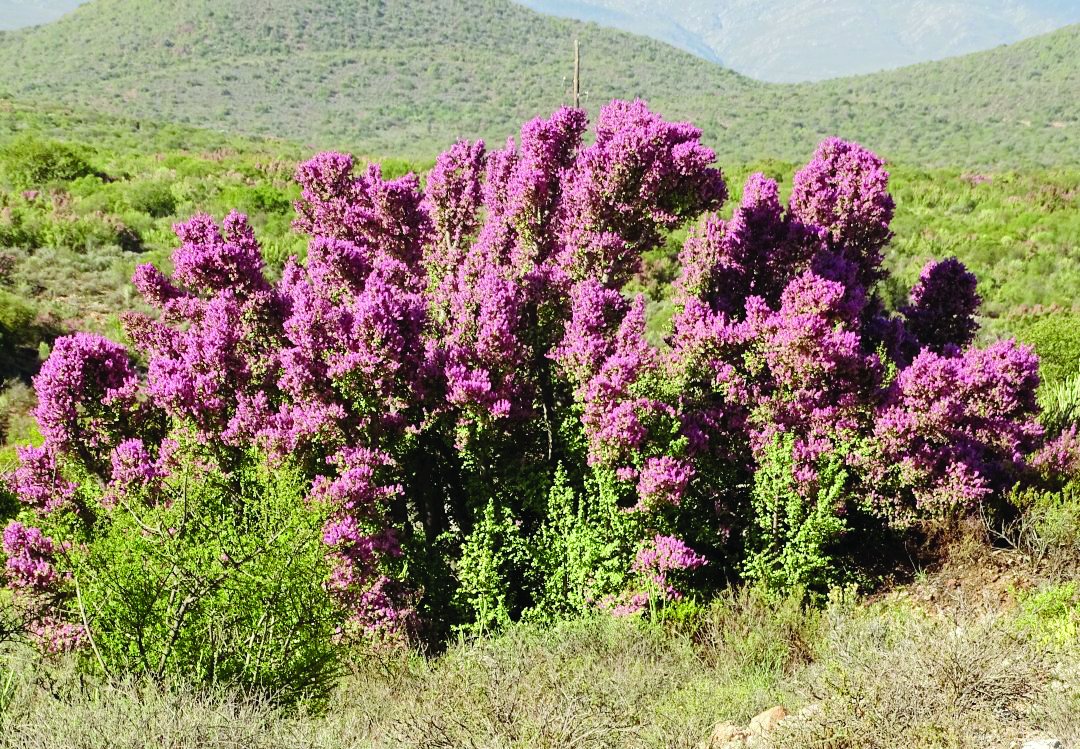
After good rains and in full sun, it produces clouds of tiny pinkish or lilac flowers, particularly attractive to bees.
The name Portulacaria combines Portulaca and the Latin suffix -aria (meaning ‘pertaining to’ or ‘resembling’), chosen because the genus looks similar to Portulaca. However, Portulaca and Portulacaria are distinct plant genera; although they share a similar appearance and historical classification, they belong to different botanical families (Portulacaria to Didiereaceae and Portulaca to Portulacariaceae).
Although the common name can be translated as ‘bacon tree’, spekboom is also colloquially known as ‘elephant's food ', and for good reason. Spekboom forms a major part of elephants’ diet.
Being eaten is not necessarily bad news for spekboom. Branches, broken or trampled into the soil, can take root, while browsed plants quickly produce fresh growth. These abilities make spekboom exceptionally well adapted to living alongside large herbivores.
The most interesting superpower of spekboom is the way it photosynthesises. As we all know from school biology, plants combine carbon dioxide (CO2) with water to make carbohydrates, using sunlight energy. CO2 enters the plant through its stomata – microscopic pores in the epidermis of plant leaves that regulate gas and water vapour exchange with the surrounding atmosphere.
Like other plants, spekboom can perform ordinary daytime photosynthesis. However, under dry conditions, water loss through the stomata would be detrimental to survival, so it switches to a different strategy known as CAM photosynthesis. Its stomata don’t open during the heat of the day to reduce water loss, and open at night when temperatures are lower and less water is lost. Carbon dioxide is therefore also taken in at night, but in the absence of sunlight it is stored in the plant until daylight, when it can be used for photosynthesis. It is a particularly ingenious way to conserve scarce water.
This ability to store carbon has made spekboom famous in the fight against climate change. Research on the Eastern Cape's succulent thicket has shown that healthy spekboom-rich vegetation can store substantial amounts of carbon – in the plants and in the soil. This has led to major efforts to restore degraded thicket by allowing spekboom to recover, and by planting cuttings.
And that is another of spekboom's tricks: it is wonderfully easy to propagate. A branch pushed into the ground can develop roots and become a new plant very quickly. For generations, people have used spekboom branches to make living fences and enclosures. It also grows well in pots, making it a useful garden subject.
Its value as livestock fodder in times of drought has also been recognised. The plant can provide food when grasses are scarce, and its dense growth form creates a cool, sheltered environment for small animals.
But there’s more! It is also a healthy, tasty addition to the human diet and can supplement our stretched food budgets. It contains minerals such as calcium, magnesium and selenium and is particularly rich in Vitamin C, which, in spekboom, is unusually not destroyed by cooking. The fleshy leaves can be incorporated into all sorts of dishes – and are a tasty, raw addition to salads and a healthy garnish.
Enjoyed this story? Get the whole paper first
The top stories and the whole edition, in your inbox the moment the new paper is out.