Chemical warfare is a common defensive strategy that insects use to repel attackers. If you have ever touched a stink bug firmly by mistake, you will have experienced this.
But some insects have taken a rather more dramatic approach to self-defence and have evolved serious chemical weapons.
One of the best-known South African examples is the beetle known in Afrikaans as the oogpister – literally, the ‘eye-pisser ‘. The name is not entirely undeserved.
Some African ground beetles in the genus Anthia can squirt an acrid defensive secretion surprisingly far and accurately at an attacker. The chemical is produced in special glands in the beetle’s abdomen. A well-aimed squirt of unpleasant chemicals effectively persuades an attacker to think – more than twice.
Beetles have an astonishing variety of chemicals and chemical mixtures among different species. In many chemically defended beetles, these secretions contain quinones, substances that are irritating and unpleasant.
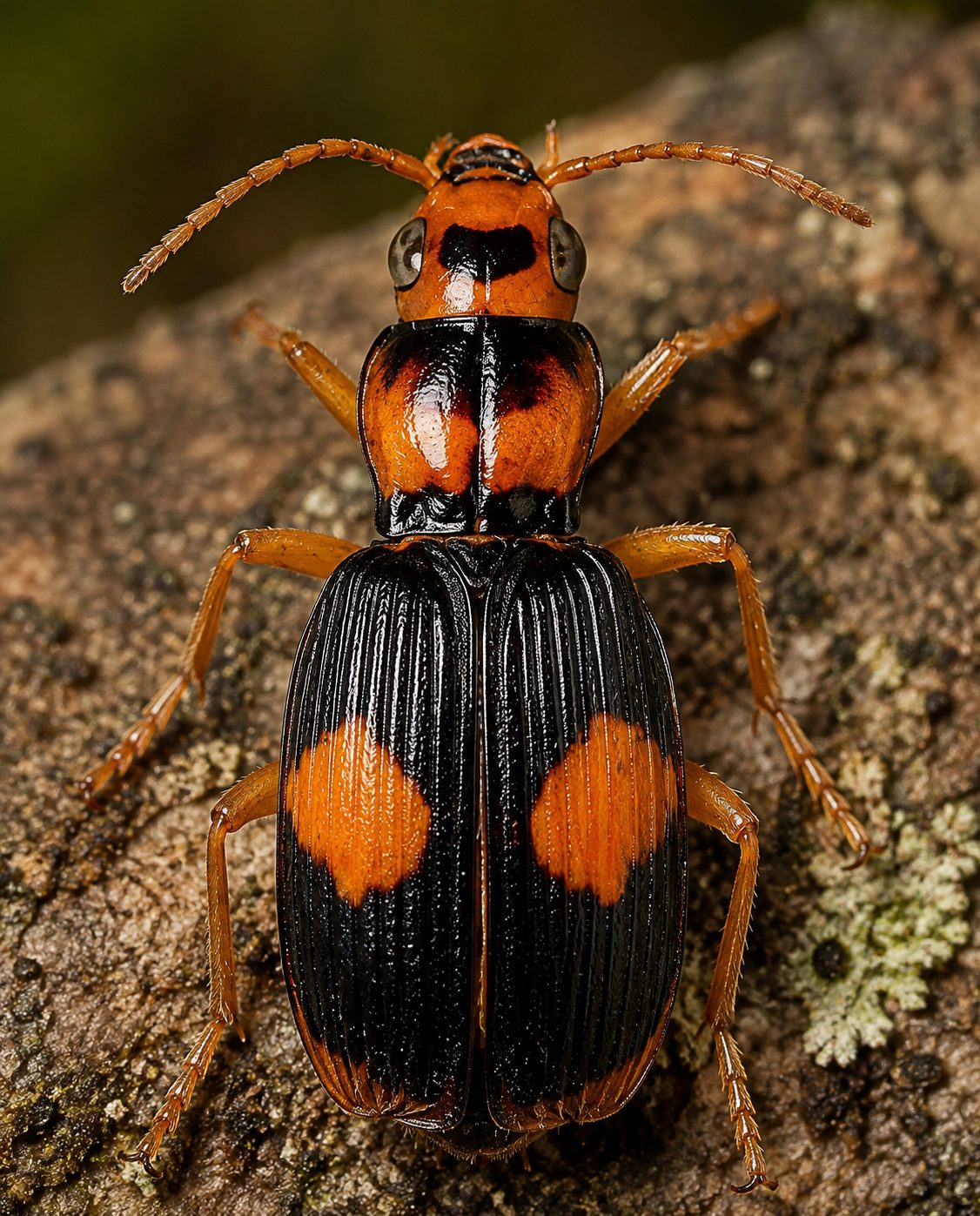
But if the oogpister carries a water pistol, the bombardier beetle packs heavy artillery.
This ground beetle has evolved an extraordinary system for producing a hot, noxious spray. It keeps the ingredients safely separated inside its abdomen: one compartment contains hydrogen peroxide and hydroquinones, while another contains enzymes including catalase and peroxidase.
When the beetle is attacked, the ingredients combine in a reaction chamber.
The resulting chemical reaction produces a lot of heat, oxygen and irritating quinones. The spray can reach 100°C, and the pressure build-up inside the mixing chamber propels it out of the beetle’s abdomen with an audible pop. Even more remarkably, the beetle can aim the spray in different directions.
A bombardier beetle can discharge its weapon repeatedly – in some species more than 20 times before its chemical supplies are exhausted. This is a machine gun, not a pistol.
Chemical defence doesn’t always involve shooting at the enemy. Some beetles make themselves poisonous or revolting to eat (like the aforementioned stink bug). Others acquire defensive chemicals from the plants they feed on and store them in their own bodies.
My favourite example is the Acraea butterfly larva that feeds on the Kiggelaria (wild peach) tree. The leaves of this tree are poisonous, which very effectively protects the tree from browsers – except for the Acraea caterpillar.
This clever creature can sequester the poison in spiny protrusions on its skin, rendering it harmless to the larva itself but not to prospective predators.
This strategy protects the caterpillars from most birds – except the Klaas’s cuckoo. This particular bird has a trick or two up its own proverbial sleeve. It whacks the caterpillar on a branch until the guts spill out, then eats only the guts, which are totally harmless, leaving the poisonous skin behind. Job done, clever bird.
But let’s not talk about the cuckoo’s reprehensible breeding behaviour.
Some animals combine chemicals with warning colours to deter predators. The convention is that a prospective meal clad in bright colours is likely a very bad idea.
The warning colours deter predators. However, harmless species may copy the colours and patterns of dangerous or unpleasant species with the message: “I look poisonous, so better not eat me”. This is known as mimicry.
For example, some young lizards have evolved black-and-white colouring and behaviour that resembles the conspicuous oogpister beetles. The lizard is effectively advertising somebody else’s chemical weapon as its own, but the strategy works.
So the message is… If something looks poisonous, it might well be. And if a beetle raises its abdomen and points it at you, you would be well advised to retreat – fast.
Enjoyed this story? Get the whole paper first
The top stories and the whole edition, in your inbox the moment the new paper is out.