Hermanus and the South African National Space Agency (SANSA) share an 85-year history, yet how many locals appreciate its international significance in space science?
On the facility’s recent annual open day, its gates were flung wide, and people of all ages streamed in to learn more. Guided tours and stalls highlighted specific aspects of its work.
Visitors were fascinated by the intricate devices used to track events in the near-Earth space environment, and the mesmerising space weather display in the main centre was a major drawcard.

SANSA runs an exciting educational programme for learners throughout the year, so it was gratifying to see numbers of wide-eyed youngsters at the open day.
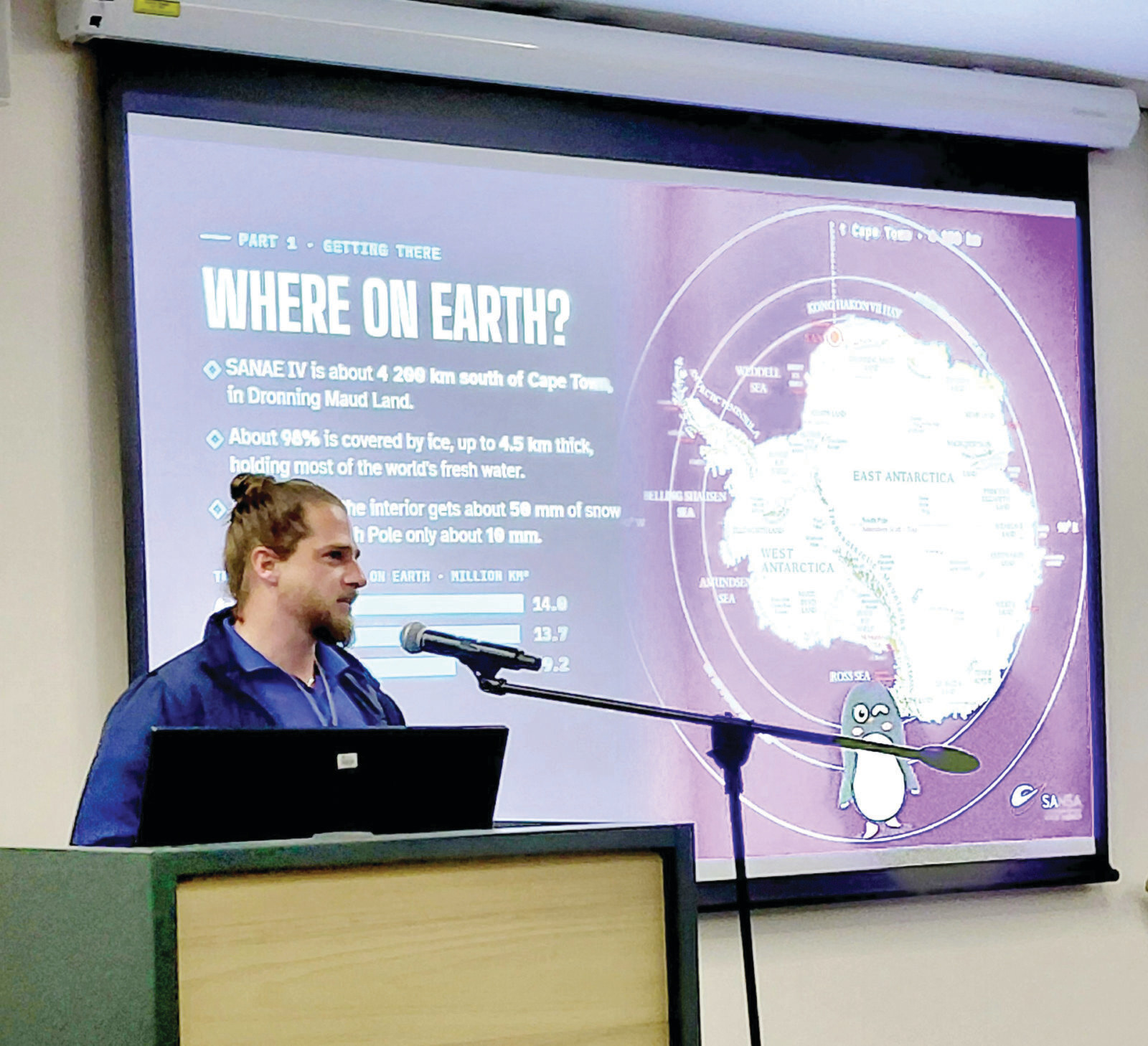
Presentations by several of its highly specialised scientists and engineers gave insight into the scope of the various projects. Of particular interest was Antarctica, an Engineer’s Perspective, in which seasoned space engineer DJ van Wyk offered an intriguing glimpse into what it’s like working at SANSA’s SANAE IV base for an uninterrupted 14-month stretch.
South Africa is a founding member of the Antarctic Treaty of 1959, which has expanded from the original 11 to 53 parties, and is responsible for establishing the legal framework for the management of the region. Signatories undertake to ensure that the Antarctic region will be used for peaceful and scientific purposes only – to protect and preserve the environment.
The South African National Antarctic Programme (SANAP) plays a crucial role in conserving this living laboratory in the coldest, windiest and driest place on Earth. Studies performed here directly link to our understanding of the Earth system, including global geological and other changes of the past, as well as projections to future conditions.
SANAP recognises the national and worldwide importance of safeguarding the environment of the Antarctic and Southern Ocean and protecting the integrity of ecosystems – marine and terrestrial.
Groundbreaking instrumentation has been designed and tested there to monitor near-Earth phenomena, such as solar flares and coronal mass ejections that directly impact Earth, especially the performance of technological systems used in aviation and marine operations – among others.
As Van Wyk explained, living at the base for a minimum of 14 months each time is not for the faint-hearted. Although applicants endure rigorous physical, mental and emotional evaluations before being accepted, some members of the nine-person team find the seven- to nine-week period of total darkness during the winter months unbearable. Unfortunately for them, once there, there’s no going back. And, while morale improves as soon as the sun reappears, struggling to sleep at night during the 24/7 sunny summer months can be trying in its own way.
Every necessity during the period, from personal toiletries to food – and diesel for the generators – has to accompany them on their journey. If there is no diesel, there is no power. Utilising solar power in the summer has proven unworkable; the panels fly off in the wind.
To survive the desperate winter conditions, they organise birthday parties, watch movies, play games, cook special dishes- anything to take their minds off the situation. For obvious reasons, one team member is always a medical practitioner.
Yet some hardy scientists choose to return – again and again – to this unforgiving environment. Van Wyk will be returning in December for another stint, and one of his colleagues has volunteered seven times.
SANSA runs free weekly tours of the Hermanus facility on Wednesdays at 11:00. To book, call 028 312 1196.

Enjoyed this story? Get the whole paper first
The top stories and the whole edition, in your inbox the moment the new paper is out.
More news from Hermanus