I have always been suspicious of those wonderful snippets of animal information that turn up from time to time.
You know the sort of thing: Crayfish communicate by urinating from their faces. Surely somebody has made that up.
But sometimes nature is weird.


Crayfish really do communicate chemically using urine released through tiny openings at the base of the second pair of antennae at the front of the animal. Yes, on what we would call their faces.
During encounters with other crayfish, currents carry the urine from the gills to the other animal’s sensitive antennae. Experiments show that these chemical signals play a role in aggression and in courtship.
Block a female's urine openings and a male may completely lose interest. Reintroduce her urine and his courtship behaviour returns.
So, yes. Crayfish can communicate by peeing from their faces.
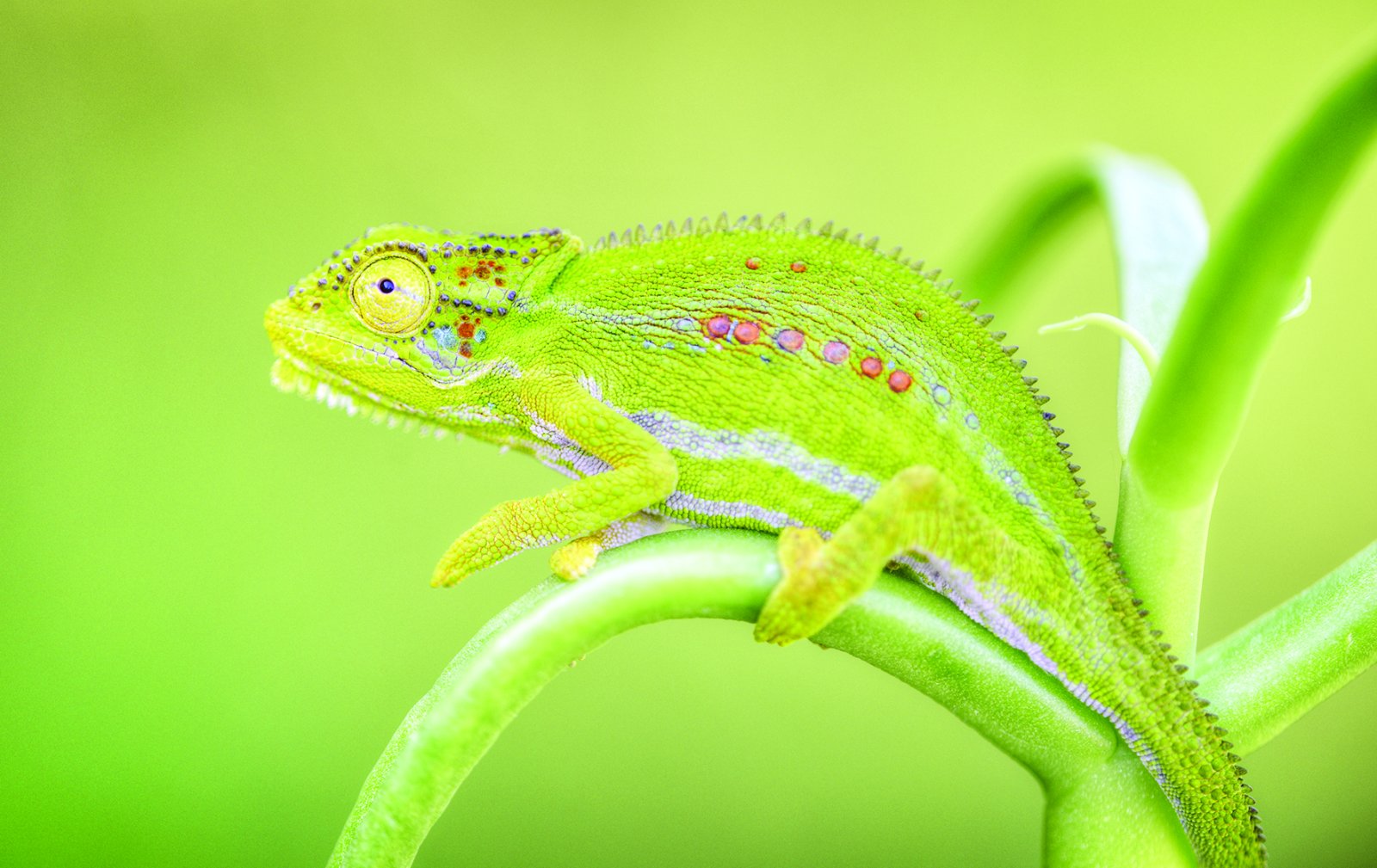
Then there are chameleons (top photo). They don’t have any green pigments. We tend to think of chameleons as green animals, but much of that colour isn't produced by a green pigment.
In many chameleons, yellow pigment cells lie above specialised cells called iridophores, which contain microscopic guanine crystals. These crystals selectively reflect blue light. This light passes through the yellow pigment and our eyes perceive the combination as green.
And when chameleons change colour, they don't simply add or remove pigment to get the desired result. They can alter the spacing of the microscopic guanine crystals, thereby changing the wavelengths of light that are reflected. In other words, a chameleon can change its colour by changing the architecture of its skin.
And what about the Cape rain frogs that can drown? It seems weird – a rain frog that can't swim? Our Cape rain frog (Breviceps gibbosus) is a burrowing frog with short legs and unwebbed toes. It can inflate itself and float, but it cannot swim. If it gets into deep water and cannot reach the side, it can drown. Look at its face – it’s not a happy frog. It seems to be anticipating the worst.
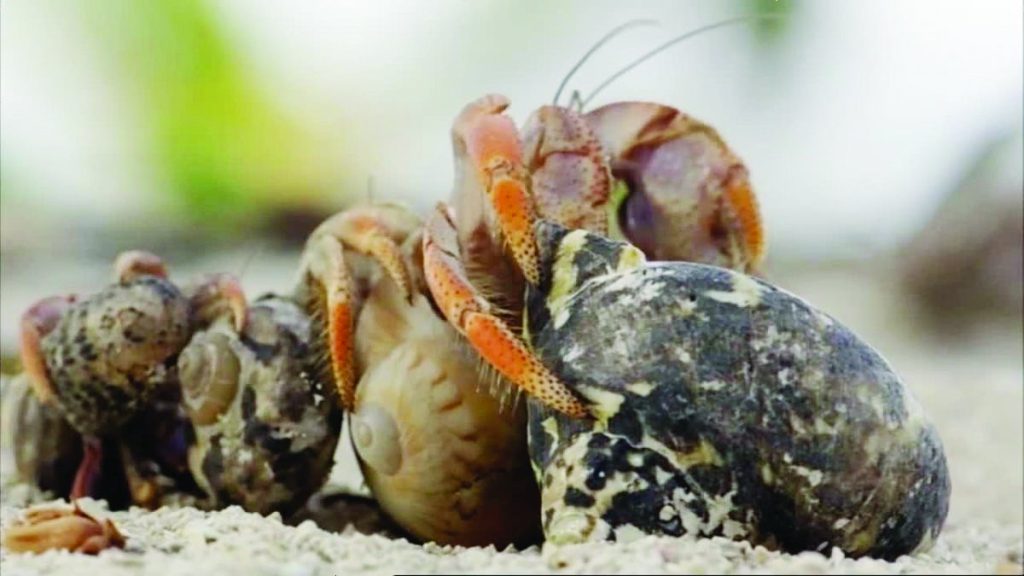
That cute little hermit crab (photo right) on the beach has a sophisticated approach to the housing problem. Hermit crabs keep growing and tend to outgrow their shells.
They don’t make their own shells like molluscs, but depend on finding vacant shells from deceased snails – which are not always abundant. Often, there is fierce competition from other hermit crabs in need of a bigger ‘house’ for this prime real estate.
Do they fight over the shell? Not often. When a suitable large empty shell appears, hermit crabs, needing bigger homes, form an orderly queue roughly from largest to smallest crab. The largest crab moves into the new (larger) shell; the next-sized crab takes over its now vacated shell; the next takes the one then vacated, and so on. The whole chain of house-swapping can happen within seconds.
And, finally, the barnacle.
Barnacles are found wherever hard surfaces meet seawater, including boats and whale heads. They look like little rocks, but they’re actually crustaceans—close relatives of crabs and shrimp.
Their relatives walk about, but barnacles affix themselves to a surface – with their heads – and filter food from the water with protruding paddling legs. This stationary lifestyle poses a problem during mating, especially since barnacles fertilise each other internally.
They overcome this predicament by having a huge penis, which blindly reaches across into neighbouring shells and deposits sperm inside them. This giant organ can stretch up to eight times a barnacle’s own body length, making it proportionately the biggest penis in the animal world.
Most barnacles are hermaphrodites, so every individual can fertilise and be fertilised by all its neighbours. And if no one else is within reach, the barnacles apparently fertilise themselves.
Interestingly, barnacles living on exposed rocky shores have evolved shorter, sturdier members than those living in calmer water. This prevents rough waves from ripping off the organ.
Nature, it seems, is often stranger than fiction.

Enjoyed this story? Get the whole paper first
The top stories and the whole edition, in your inbox the moment the new paper is out.