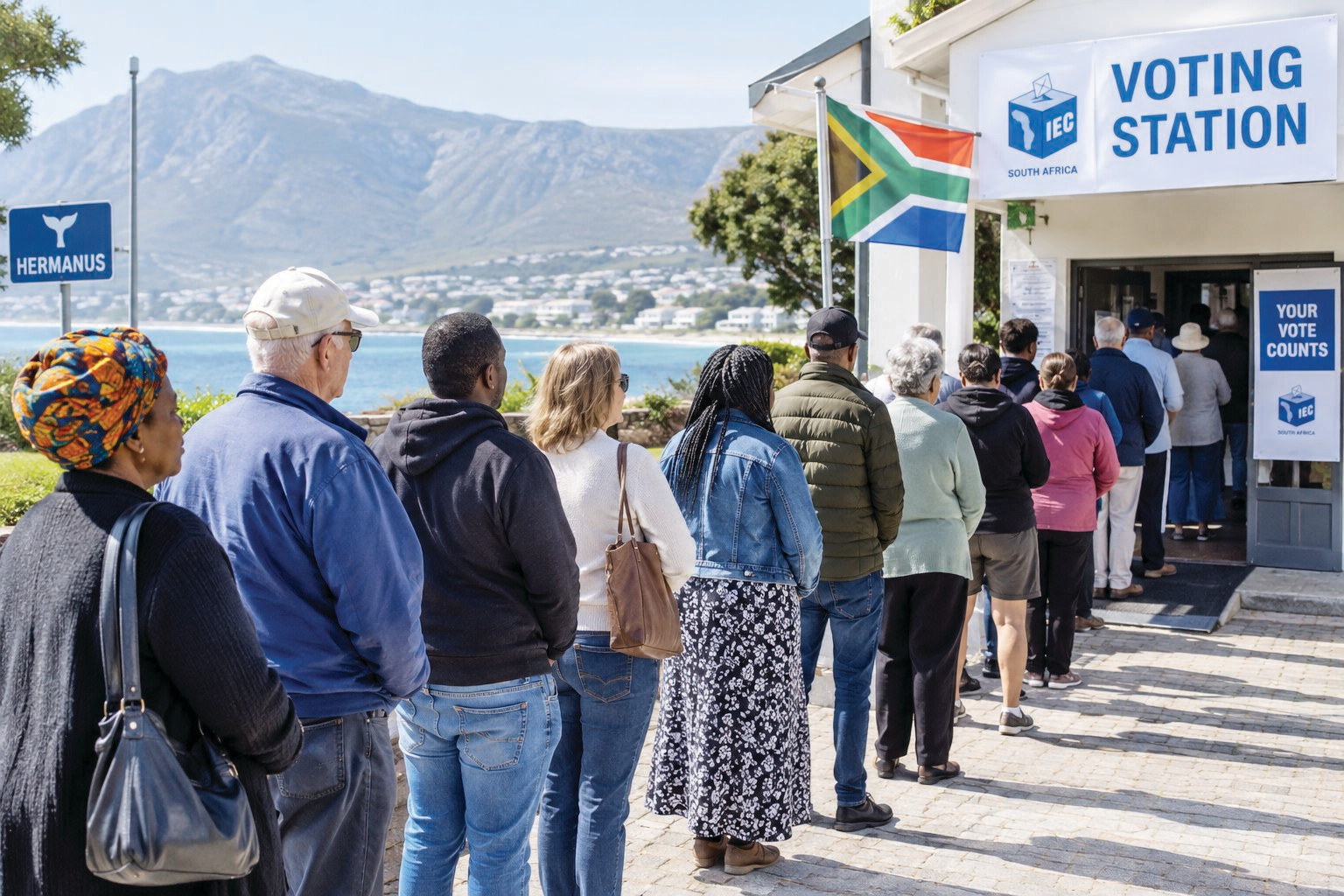
With just days before voters head to the polls next Wednesday to elect the leaders who will shape local service delivery for the next five years, one question looms large: have residents done their homework, or will they simply vote along familiar party lines – or not vote at all because of apathy?
It is a question worth asking after years of municipal decay across South Africa. Crumbling infrastructure, failing services, corruption and a glaring lack of accountability have exposed the consequences of electing leaders who seem more concerned with party politics and personal interests than the communities they serve.
These elections are widely regarded as perhaps the most consequential since the dawn of democracy in 1994. Will voters accept the continued decline of local government, or use their ballots to demand competence, accountability, and a return to order and progress?

The responsibility rests with the electorate. Voters choose the leaders and must live with the consequences. The adage that people get the government they deserve has seldom carried greater weight.
The question is whether this election will finally mark a decisive shift away from leadership associated with corruption, failing infrastructure, sewage in streets and waterways, contaminated drinking water and persistent electricity failures.
A different picture in Overstrand
Locally, Overstrand presents a markedly different picture. While many municipalities are battling deep-seated governance failures, the Hermanus-based municipality is generally regarded as one of the country's better-performing administrations.
In the 2021 local government elections, the Democratic Alliance (DA) secured 64.14% of the vote according to the Independent Electoral Commission’s (IEC) statistics. The ANC followed with 15.76%, while the Land Party won 7.60%, the FF Plus 5.59%, the EFF 2.65% and the ACDP 2.27%.
On those figures, the DA appears well placed to retain control. But an apparently comfortable lead can also breed complacency – and that is where the election becomes interesting.
Will DA supporters, comfortably confident of victory, stay away from the ballot box and inadvertently weaken their party's mandate? Or will they turn out in force, pushing the party closer to the 70% mark?
New faces, new possibilities
The performance of political newcomers will be another interesting issue. The MK Party is testing the waters in Overstrand for the first time, fielding candidates in five wards: 2, 4, 5, 6 and 12.
Will Jacob Zuma's brethren gain any foothold beyond the party's traditional strongholds in KZN, Gauteng and further north? If they do, will the ANC, Land Party or EFF pay the price by bleeding support to the newcomer?
Independent candidates are also making their presence felt this year. Without the financial muscle of established parties, some have taken their campaigns to social media and community meetings, appealing directly to voters who may share the belief that local representatives will be more effective than candidates beholden to political-party structures.
Whether voters are ready to embrace that alternative in significant numbers remains to be seen.
Overstrand may not be heading for a political earthquake, but a dominant party should never mistake past success for a guaranteed future.
Next Wednesday's results may well confirm the status quo. The more revealing question is whether residents will strengthen it, challenge it or begin looking for alternatives.
Either way, the ballot box will deliver its verdict – and voters will have to live with that outcome for the next five years.


Enjoyed this story? Get the whole paper first
The top stories and the whole edition, in your inbox the moment the new paper is out.