Home Blog Page 3

Silt cuts dam capacity

El Niño effect – water conservation measures necessary despite full dams

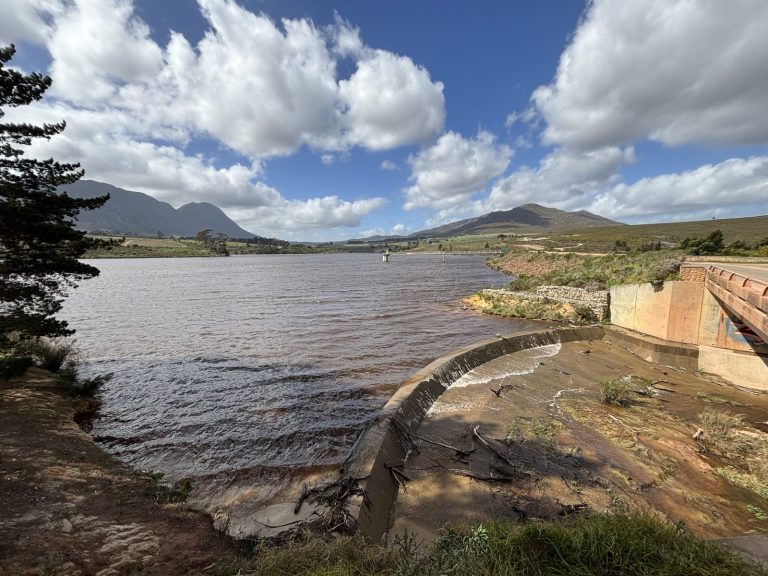
Despite being virtually 100% full, De Bos Dam’s water-carrying capacity has effectively decreased with silt build-up during the 2024 floods. Residents, therefore, are urged to use water sparingly and follow garden-watering restrictions.

A survey of the dam basin after the floods found the current full storage capacity at 5.57 million kilolitres. The original full storage capacity was 5.8 million kilolitres.

The Overstrand Municipality attributes the high dam levels to a strong flow in the catchment area following good rainfall earlier in the year. Statistics from the Department of Water and Sanitation confirm that De Bos Dam is 99.8% full, compared with 99.9% at the same time last year.

All dams in the Overstrand are close to 100% full. At this stage, no water restrictions are applicable in the Overstrand, but the situation in all towns is being closely monitored.

This must be seen in the context of the predicted El Niño effect, which is likely to cause warmer and drier-than-average conditions in the Western Cape in the months ahead.

To limit evaporation during the warmest period of the day, residents are reminded that Clause 46 of the Water Services By-law remains in place throughout the Overstrand. It requires that no irrigation takes place between 09:00 and 17:00.

The new borehole drilled opposite Gateway Lifestyle Centre last month is intended to replace older boreholes that have become unproductive and to increase overall production from the Table Mountain Sandstone (TMS) deep aquifers. The testing and investigation phase is ongoing.

Diversification of water sources continues, with planning for a seawater desalination plant for Hermanus in progress.

Colour blaze to hit Spring Show

Fynbos colour burst

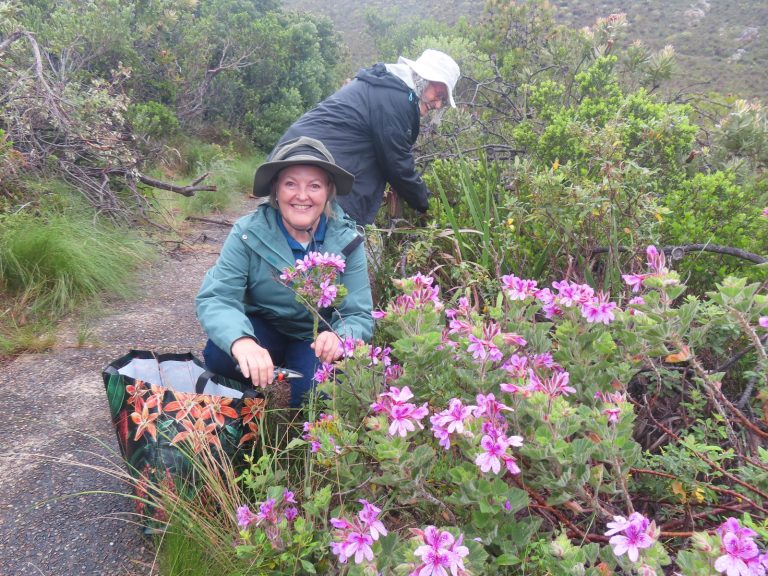
Up to 400 indigenous species will be on display at this year’s Hermanus Botanical Society’s Spring Show at the Fernkloof Nature Reserve from 24-27 September, turning the exhibition hall into a blaze of colour

Planning begins at least 10 months before the show date, and the picking happens a few days before the show opens. In the preceding weeks, the final plant and flower gathering and recces are executed to assess which plants will be ready and from where they can be gathered,

CapeNature provides the Botanical Society with flower-picking permits. As many as 45 pickers go into the mountains and along the coast, come rain or shine, to gather specimens that are sorted into families and species.

A team of flower arrangers creates the arrangements, with additional flowers sourced from local growers and farms in the district.

This year’s exhibit theme is Fernkloof in Colour. Visitors will learn about light – the part it plays in the colour of plants, flowers and pollination. Informative posters prepared by members will show how there is no colour without light and how light powers all botanical life.

An ultraviolet light box, manned by experts, will demonstrate ultraviolet light’s influence on a flower’s colour, and how this colour interacts with the birds and insects that use it as a pollination guide.

Entry to the hall exhibit is R50 for adults and free for under 18s. Pay at the door or book on Quicket.

Youthful energy takes centre stage in Stanford

0

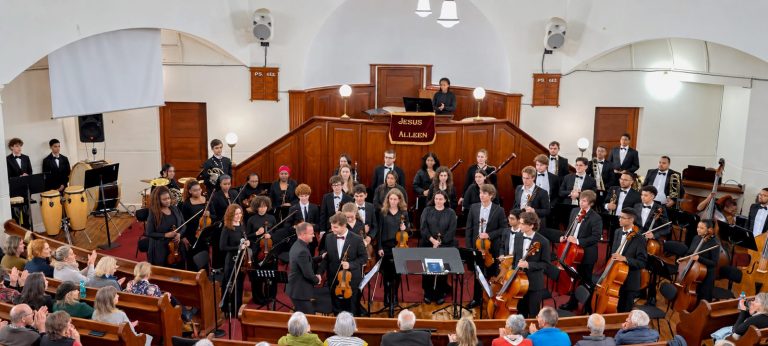
Stanford’s NG Kerk was filled with youthful energy on Saturday as the Cape Town Philharmonic Youth Orchestra presented a concert of unusually broad appeal to mark the opening of the Stanford in Bloom festival.

Under the assured direction of conductor Liam Burden, the orchestra demonstrated the value of the Cape Town Philharmonic’s youth-development programme and the impressive standard its young musicians have already attained.

The programme travelled freely across opera, musical theatre, film and African song. This wide-ranging choice proved one of the afternoon’s greatest strengths.

Guest soprano Lynelle Kenned brought glamour and considerable theatrical presence to the occasion. An accomplished performer whose career embraces opera, musical theatre, television and the concert platform, she sang with warmth and clarity, communicating directly with the audience while blending naturally with the youthful orchestra behind her.

Swing sharpening at Kleinmond

0

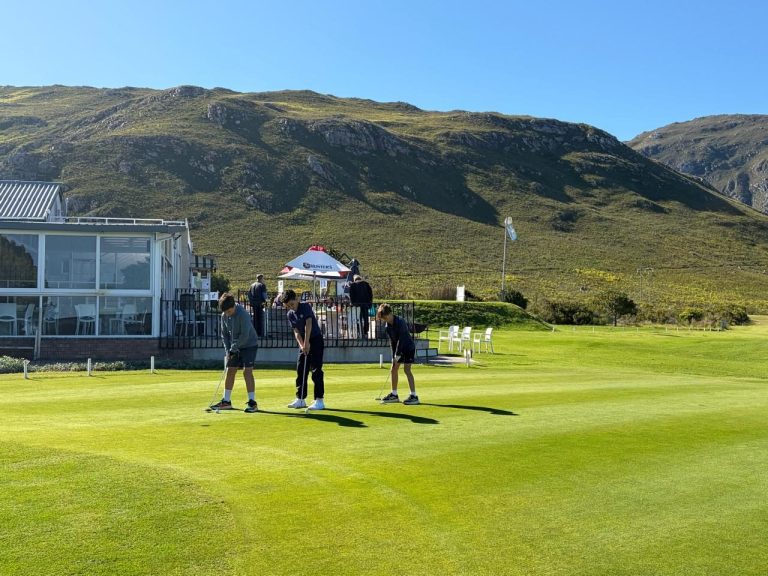
Junior players at the Kleinmond Golf Club don’t simply take lessons – they have fun,

The club follows a clear pathway to improvement, designed to help young golfers find their talent and level up their skills, confidence, performance, and character.

The year-round coaching programme focuses on beginner golfers aged 9-16. Training includes every component of the game – putting, short game, ball striking, driving, speciality shots, on-course strategy, fitness, equipment knowledge, and the mental game.

Lessons are free – every Monday afternoon. Equipment is supplied. Email kleinmondgholfclub@sonicmail.co.za or phone 028 271 3525 for more information.

Flower power hits Stanford’s streets

0

Stanford in Bloom, tentatively launched three years ago, has become a major drawcard for the Overstrand – bigger and better each year.

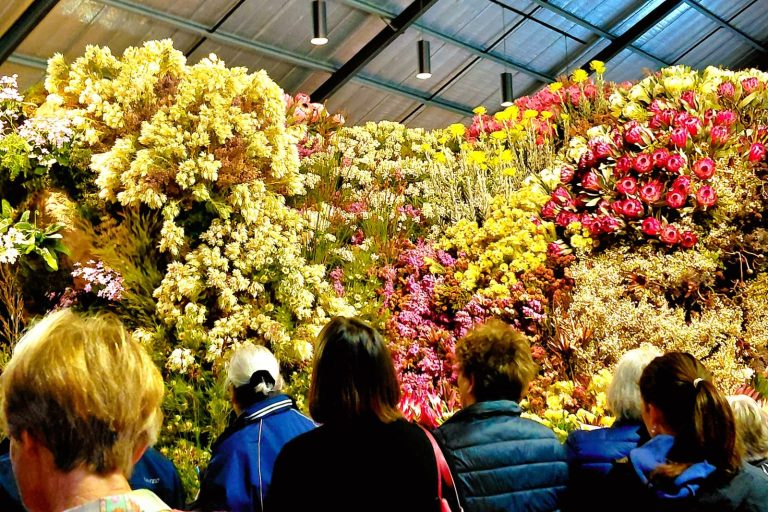
With the recreation of South Africa’s multi-award-winning Royal Horticultural Society (RHS) Chelsea flower exhibit as its centre point, it has had the full support of the people and businesses of Stanford. This annual celebration of our fynbos heritage has become an all-hands-on-deck community project, with a huge economic spin-off for the town.

Despite dire warnings of inclement weather on the opening day on Saturday, the streets and exhibit hall were thronged with literally thousands of visitors. They came prepared and didn’t let the periodic showers – not nearly as widespread or disruptive as predicted – dampen the spirit of excitement and joy.

The Grootbos-sponsored, meticulously reconstructed 2026 Chelsea exhibit, Life after Fire, designed again by Leon Kluge, won a Gold Medal and Best Exhibit in the Great Pavilion award in May.

The spectacular portrayal of the unique, fire-driven landscape of the Cape Floristic Region included some 20 000 stems of protea cut flowers and thousands of burnt protea branches, arranged to create a post-fire landscape. Bulbs and orchids from various parts of South Africa were also on display.

Now, in real time, the Cape Floristic Region is blooming again. Fire-stimulated ephemerals – plants that only flower the season after a fire – are bursting from the soil in masses. Some have not been seen for decades. It is a ‘superbloom’ of rare, endemic flowers, visually demonstrating that there is abundant life after fire.

The good news is that Leon has already designed South Africa’s exhibit for the 2027 Chelsea Flower Show. He says not enough funding has been pledged as yet, but he is confident it will be forthcoming. Given our prestigious profile at the world’s top horticultural show, it would be a travesty if it were not.

Stanford in Bloom continues until 27 September, with a full programme of events every day. For schedule and booking details, visit www.stanfordinbloom.co.za

Missing the point

0

Last week’s letter of complaint about the U3A meeting notice regarding Dr Abedian’s lecture on Iran, K Enslin missed the quotation marks around “Great Satan” and “Little Satan”.

Quotations marks indicate that the writer says that this is somebody else’s words, (in this case the Iranian regime), not his or hers.

A brief Google search reveals that Dr Abedian is a passionate opponent of the Iranian regime, and does not in fact support their sentiments regarding Israel or the US. I therefore submit that no apology is needed to ‘Western civilised’ or ‘non-Islamic’ people.

From: Derik Gelderblom

No quick fix for Stanford Cove erosion

0

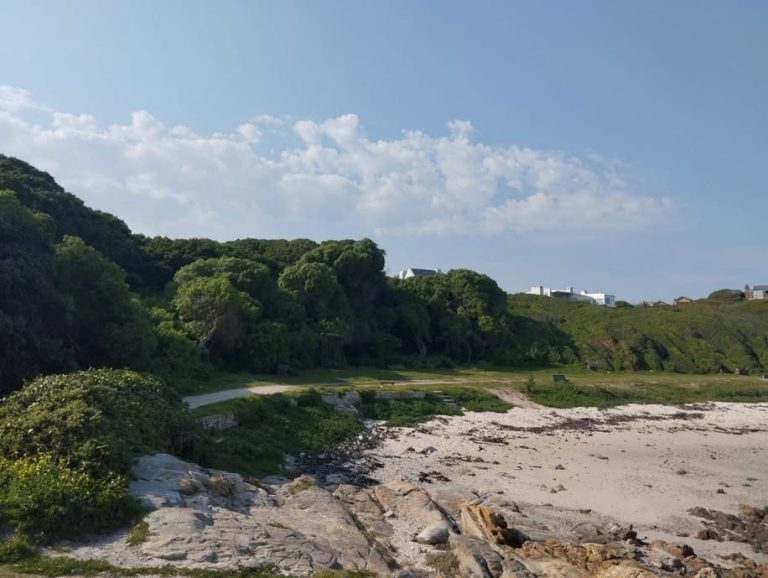
A report from Overstrand Municipality states that officials are aware of growing concerns about erosion at Stanford Cove in De Kelders near Gansbaai, where sections of grass have been lost, embankments have collapsed, and steps to the beach have been washed away.

The cove is a popular, public open space for residents and visitors, and the municipal officials recognise the need to keep the area safe and accessible.

Recent storms and unusually high seas have caused significant erosion along parts of the Overstrand coastline. As a small ‘pocket beach’, Stanford Cove naturally experiences the sand’s movement within the area. Storms can shift sand away from sections of the beach and upper shoreline, while some sand may return under calmer conditions.

To assess possible solutions, the municipality requested advice from the Western Cape Government’s Department of Environmental Affairs and Development Planning (DEA&DP). Its Coastal Management team inspected the site on 29 July and subsequently advised that the situation did not constitute an emergency and posed no immediate risk to life.

The municipality will therefore not mechanically reshape the beach or place rocks as an erosion-control measure at this stage. Such interventions could disrupt the natural movement of sand and potentially worsen erosion elsewhere in the cove.

For safety reasons, the damaged staircase and eroded paths have been closed and barricaded. The beach remains accessible via four to five other access points from the grassed area.

The damaged staircase will not necessarily be rebuilt in its current position. If replacement access is required, the municipality will investigate alternatives better suited to the coastal environment and natural movement of sand.

The municipality’s Environmental and Conservation Division, with the Infrastructure and Community Services Directorates, will monitor the site and assess:

the stability and safety of the eroded embankment

safe and sustainable beach access

options for restoring vegetation and retaining sand

the impact of stormwater flowing towards the beach, and

longer-term rehabilitation options.

Any future work involving sand movement, earthworks, rock placement or other coastal stabilisation measures will be discussed with the relevant environmental authorities to determine whether environmental authorisation or other approvals are required.

Residents are urged to keep away from steep or potentially unstable areas and obey temporary barriers and warning signs.

Who was Fick’s Pool named after?

0

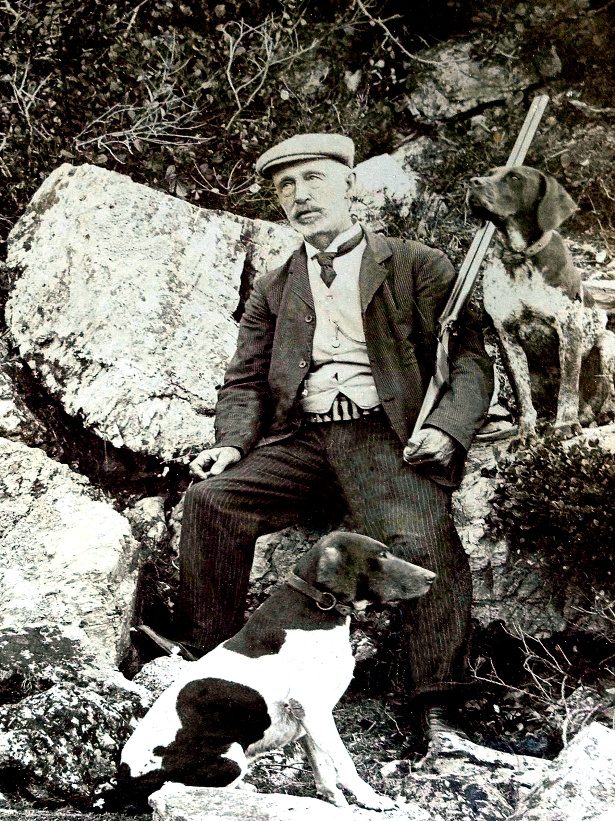
Following uncertainty over who Fick’s Pool was named after, research suggests that Josias Servaas Fick (1830-1919) carries the honour, after two candidates were previously thought to be the true candidates. An article on how clarity was reached has been posted on the new U3A Overberg website. To read this interesting story of discovery, visit https://u3aoverberg.co.za

PHOTO: Supplied by the Fick family

Springboks and politicians

0

Erasmus has created more than a team. He has laid the subliminal groundwork for a sense of “oneness” – a shared identity built around common aspirations, goodwill and achievement. Something politicians fail to grasp.

Without intending to, the Springbok rugby squad has become South Africa’s single most powerful and successful ‘political’ force.

The reason is the team’s extraordinary ability to unite the nation.

Nothing else lifts the spirits of our diverse population into such a surge of positivity, pride and cohesion as watching the men in green and gold weave their magic on the international stage.

Given the Boks’ dominance in recent years, this is hardly a new phenomenon. But Saturday night’s conclusion of the “Greatest Rivalry” series against the All Blacks, – in the United States, of all places – added a remarkable new dimension to the argument.

Played in a country where rugby remains a marginal sport – albeit one that will host next year’s World Cup – the match was regarded by some pundits as little more than an exhibition showpiece.

They were wrong.

More than 68 000 spectators packed Baltimore’s stadium, turning it into a sea of green as South Africans of every background descended on the city to fly the flag, uniting as one proud South African nation – albeit most lived in America. The scale of it was mind-boggling.

It was also symbolic. The crowd set a new record for the largest attendance at an international rugby match anywhere in North or South America – a striking demonstration of the power of one team to transcend the divisions that so often define us.

And while the players deserve the credit for what happens on the field, much of the Boks’ success can be traced to coach Rassie Erasmus and his remarkable motivational instincts.

His philosophy is by now familiar: the players are constantly reminded that they do not play merely for themselves. They play for every South African, regardless of race, background, wealth or social standing.

It is a simple concept, but a profoundly powerful one.

By instilling that sense of responsibility, Erasmus has created more than a team. He has laid the subliminal groundwork for a sense of “oneness” — a shared identity built around common aspirations, goodwill and achievement.

For a country as diverse and complicated as South Africa, this is no small achievement.

The Boks cannot solve our political, economic or social problems. But, perhaps uniquely, they make us forget our differences for a while – and remind us of what we have in common.

With local government elections almost upon us, one can only wonder what South Africa might look like if our politicians adopted something of that same positive mindset, rather than sowing division for their own political ends.

It is disheartening that the country’s long and largely successful post-apartheid healing process often takes a back seat when political parties go into election mode.

Of course, there are difficult issues that must be confronted. Politics is politics. But there is a vast difference between robust political contestation and the deliberate cultivation of antagonism – sometimes spilling over into violence – to advance partisan objectives.

South Africa could do without this nonsense.

Particularly galling is the cheap politicking that often accompanies deeply emotive community protests.

This week’s unfolding tragedy in Kempton Park and surrounding areas, involving what appears to be the serial killing of women, is a case in point.

Understandably, communities gripped by fear and anger take to the streets and gather at crime scenes to demand answers. Their anguish is real.

What rankles is the inevitable arrival of opportunistic political parties, eager to turn that grief into political capital.

Party colours appear — scarves, T-shirts and flags — and, with victims’ bodies lying in the background, party faithful can be seen toyi-toying with broad smiles as if at a jamboree, while party spokespersons jostle for the cameras, adopting suitably mournful expressions and proclaiming solidarity.

C’mon, people.

Surely there is a line that should never be crossed — a point at which political opportunism must give way to simple human decency.

When communities are at their lowest ebb, let them grieve, rage, and demand justice.

But don’t turn their pain into a political stage. Be sincere at least.

Wishful thinking?

Of course.
Overberg birding takes flight!

As more local and international birders discover the region’s exceptional birdlife and natural beauty, the vision of making the Overberg a leading birding destination – once a dream – is now a reality.

BirdLife Overberg chairman Steve Peck says this was the vision of the late Anton Odendal, a legend in the Overberg birding community.

Peck, who has guided international birders around the region, is mindful of the growing number of birders and is committed to carrying this vision forward.

With an impressive 454 bird species on record, including 41 pelagic and 413 terrestrial species – which include one critically endangered, eight endangered, 15 near-threatened, and eight vulnerable species, as well as endemic and near-endemic species – the Overberg is a hotspot for conservation.

It has sixty-one migrant species, including the Red-chested Cuckoo, African Paradise Flycatcher, Black Saw-wing and Black Cuckoo.

Based on BirdLife Overberg’s monthly bird counts over the past seven years, the number of species recorded represents 42% of all the birds on the official South African bird list.

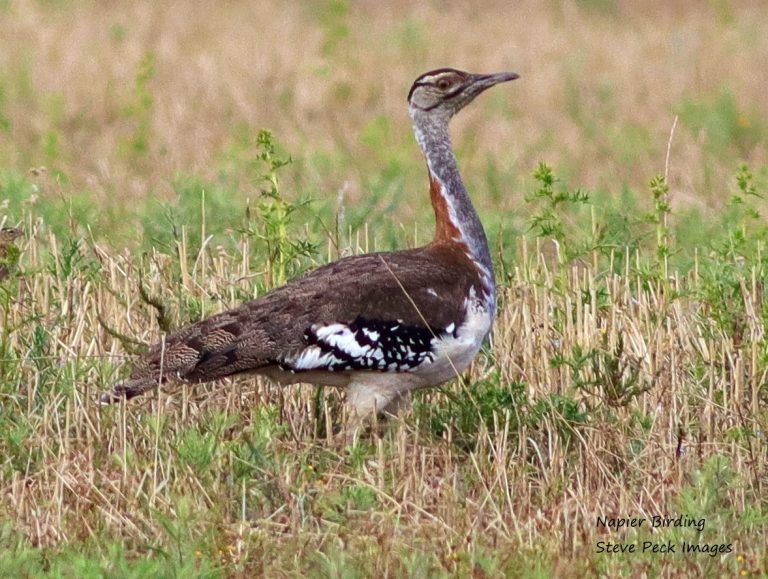
“We firmly believe no other region in South Africa can come close to this percentage,” says Peck. Birding enthusiasts are drawn by iconic birds such as the Blue Crane, Denham’s Bustard, Cape (Agulhas) Long-billed Lark, Cape Rockjumper and other fynbos endemics.

Avi-tourism is becoming increasingly popular – and a valuable additional income for tourism in the area. Recent research has highlighted the benefits of developing it as a conservation and economic opportunity in South Africa.

A study of 11 community-based projects revealed that birding, when linked to conservation objectives, creates income, skills and empowerment opportunities for local communities.

The Overberg’s diversity of habitats and nature reserves – such as De Hoop, home to Cape Vultures; Stony Point, with its African Penguins; and Rooiels, where Cape Rockjumpers and Verreaux’s Eagles can be seen – offers birding enthusiasts a range of options.

Visit the club’s website, birdlifeoverberg.org.za and follow the link Birding Routes Archives to explore available routes in the Overberg.