Home Blog Page 4

Walking for animals in silly socks

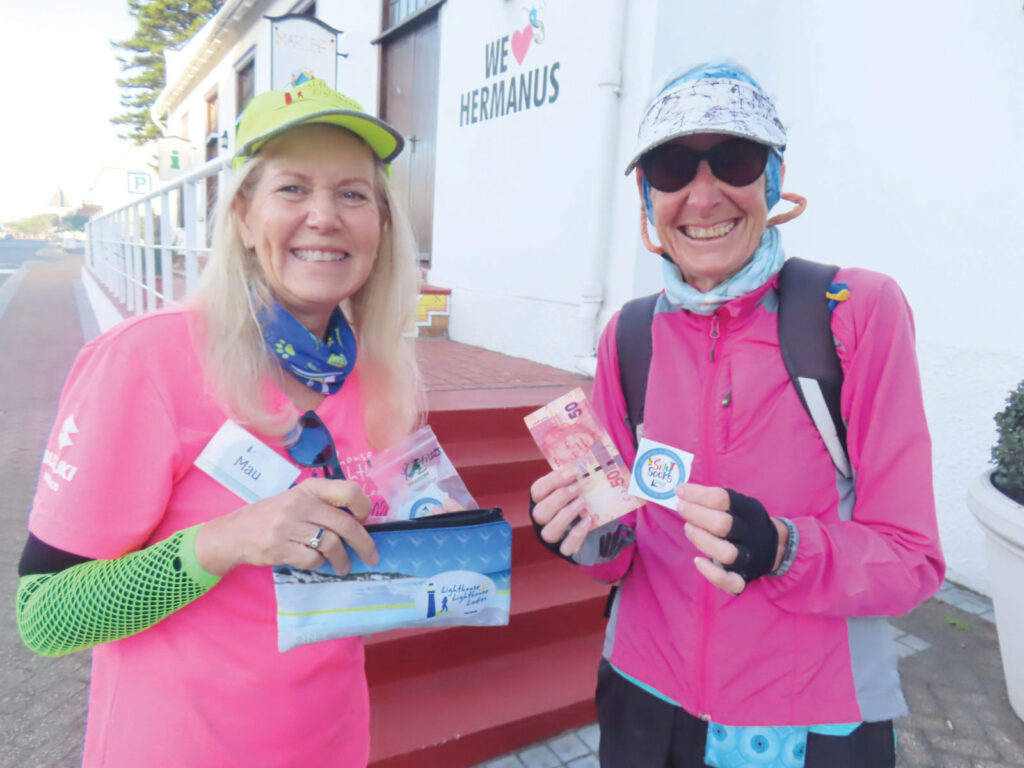
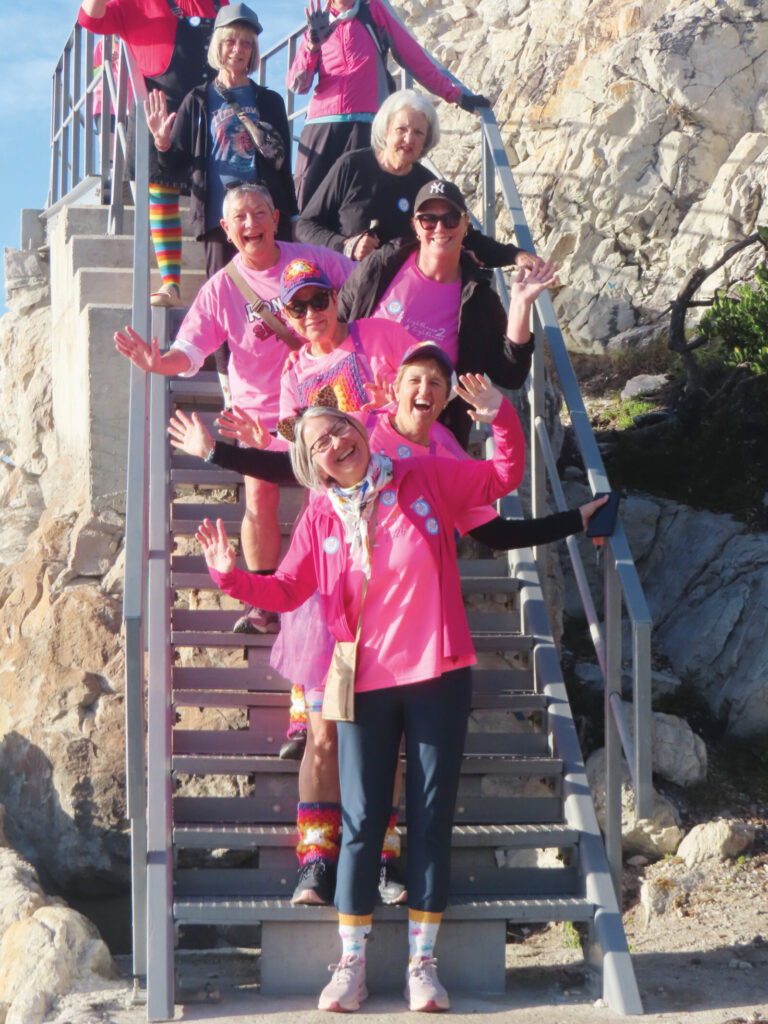
A group of enthusiastic walkers, many of them Lighthouse to Lighthouse (L2L) ladies, joined last Friday’s Silly Socks walk to raise funds for cats, big and small; dogs and other animals.

The fundraiser recipients were Kleinmond Animal Welfare (KAWS) and Panthera Africa. KAWS (30%) and Panthera Africa (70%) and will be the main beneficiaries when the L2L ladies walk for animals in their 2027 main walk.

Walking for animals in silly socks
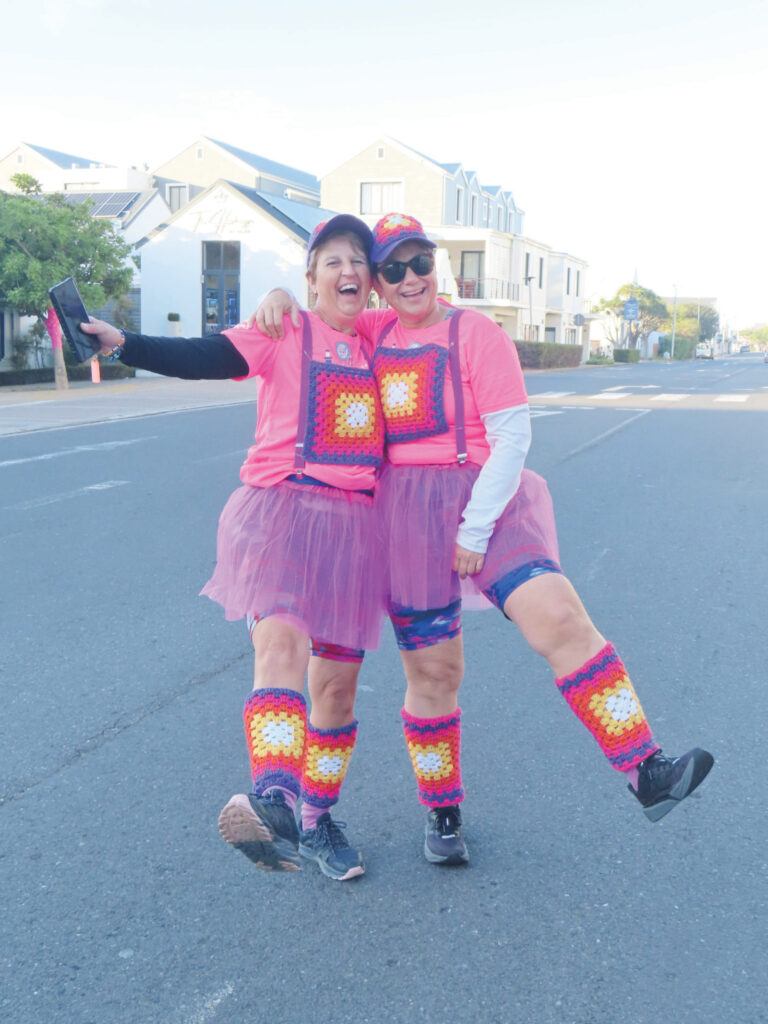
ABOVE: Michele Serfontein and Roeleen Wessels opt for a colourful Granny Squares theme. RIGHT: Walkers on the steps of the new cliff path section enjoy the outing. PHOTOS: Tweet Gainsborough-Waring
Walking for animals in silly socks
Maureen Worth (left) happily collects the entry fee from Silly Socks participant Maria Hofmeyr.

Springbok stars back Hermanus High fundraiser

0

Former Springbok forwards Bismarck du Plessis and Steven Kitshoff brought some World Cup-winning insight to Hermanus High School’s annual Gentlemen’s Evening last Friday.

They joined rugby commentator Matthew Pearce for an evening of rugby and fundraising.

A school tradition since 2018, the event raises funds for infrastructure improvements through ticket sales, an auction and a raffle. Guests enjoyed a two-course meal and table wines while hearing from two of South Africa’s most accomplished forwards.

Between them, Du Plessis and Kitshoff boast 162 Test caps and three Rugby World Cup victories.

Du Plessis earned 79 caps and was part of the Springboks’ 2007 World Cup-winning squad. He also represented South Africa at the 2011 and 2015 tournaments, playing for the Sharks, Montpellier in France and the Bulls. His older brother, Jannie, was also in the 2007 World Cup-winning squad.

Kitshoff won 83 caps and lifted the Webb Ellis Cup in 2019 and 2023. He also featured in South Africa’s 2021 British & Irish Lions series victory and captained the Stormers to the inaugural United Rugby Championship title in 2022. He retired in 2025 following a serious neck injury.

Pearce led the discussion, allowing guests to hear the players’ stories away from the pressures of international competition.

A poignant moment came when Pearce called for a minute’s silence in memory of Lions' lock Hyron Andrews, 31, who died on Friday while the team was touring France ahead of its scheduled Champions Cup match against La Rochelle.

The evening’s focus, however, remained on supporting Hermanus High’s infrastructure needs, with local businesses also contributing to the annual fundraiser’s success.

Boost for emergency communications

0

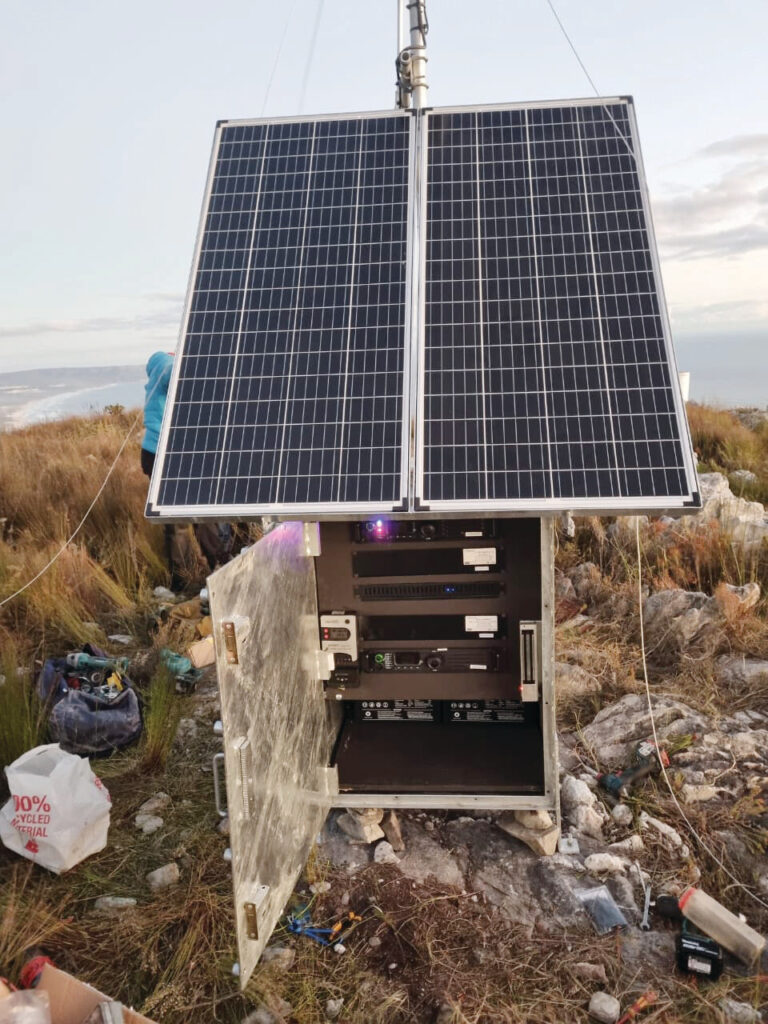
CapeNature and Overstrand Municipality will install a small radio repeater station near Hangklip Peak as part of an upgrade to the region’s radio communication network.

The repeater will strengthen the communication networks used by both parties and improve coverage across the Overstrand municipal area, Kogelberg Nature Reserve, Betty’s Bay Marine Protected Area and parts of the City of Cape Town.

Reliable radio communication is essential for the daily operations of CapeNature staff, municipal law enforcement and fire and rescue services. The upgraded network will be particularly valuable during wildfire and other emergency incidents, enabling response teams to communicate and coordinate more effectively in mountainous areas where radio coverage can be limited.

CapeNature and Overstrand Municipality recognise the environmental and visual sensitivity of Hangklip Mountain and have taken steps to keep the installation’s impact to a minimum.

The repeater will be installed on CapeNature-managed land near Hangklip Peak and positioned just below the skyline to limit its visibility.

Owing to the small scale of the infrastructure, the installation does not require an Environmental Impact Assessment or Basic Assessment.

The repeater will be solar-powered and fireproofed. It will be positioned on exposed rock and securely bolted in place, ensuring that no vegetation needs to be cleared or disturbed.

All equipment will be transported to the site by helicopter, avoiding the need to create access routes through sensitive vegetation. The helicopter will not land at the installation site.

Illegal crayfish haul seized in Hawston

0

A joint early-morning operation in Hawston last week seized more than 1 400 West Coast rock lobsters, worth an estimated R718 000.

The operation, involving the Overstrand Municipality K9 Unit, Hermanus SAPS and CapeNature, followed information about the illegal harvesting outside the official harvesting season.

While responding, officers spotted a white single-cab bakkie transporting crayfish. The driver fled into a side street upon noticing the enforcement team, dumping several bags before escaping.

A subsequent search recovered 1 436 units, comprising 28 whole rock lobsters, 1 153 tails and 255 tails from egg-carrying females.

Investigators also identified two white Toyota Hilux bakkies bearing CEM number plates and the fishing vessel Luna Scott as items allegedly used in the commission of the offence.

An enquiry docket has been opened, and Investigations are continuing.

Ammunition recovered

In a separate intelligence-driven operation in Hermanus, Overstrand Law Enforcement officers recovered ammunition from a vehicle believed to have been used in a robbery.

The municipality’s K9 Unit also conducted crime-prevention patrols along the R43 and in Mount Pleasant, Schulphoek, Zwelihle, Westcliff, the Hermanus CBD, Vermont and Hawston as part of ongoing law enforcement efforts across the municipal area.

A landmark for wildlife

0

South Africa’s Constitutional Court (ConCourt) has delivered an important victory for animal protection, but one that is not final.

This ruling leaves legislation intact that requires decision-makers to consider the well-being of wild animals when making decisions about their management, conservation, and ‘(ecologically) sustainable use’.

The judgment was handed down on 9 October. It followed a challenge by the South African Hunters and Game Conservation Association, which sought to have the animal well-being provisions in the National Environmental Management: Biodiversity Act (NEMBA) declared invalid.

The National Council of SPCAs (NSPCA) and the EMS Foundation opposed this challenge. The ConCourt dismissed the application because it had been submitted too late. So, although it did not decide the constitutional challenge on its merits, the existing legal protections remain in place for the moment.

But the battle is not yet over. Why is this worth fighting for?

For a long time, wildlife conservation has largely been measured in terms of populations, species and habitats. How many animals are left? Is a species threatened with extinction? Is its habitat protected?

These remain important questions, but they do not tell the whole story. An animal may belong to a growing population and still experience pain, fear, distress or poor living conditions ill-suited to its needs.

The legislation defines animal well-being broadly, considering the circumstances and conditions that affect an animal’s physical and physiological health, mental health and quality of life, including its ability to cope with its environment. It requires sensitivity regarding animals’ well-being when they are managed, conserved or used.

This represents an important shift in perspective. Wild animals are not simply numbers in a population survey, resources to be harvested or assets to be managed. They are living, sentient beings with their own needs and experiences.

The implications naturally extend beyond hunting. Decisions about wildlife management, captivity, relocation, research and other human activities may raise questions about the well-being of the animals concerned. The law does not mean that every activity affecting an animal is automatically prohibited, nor does it remove the need to balance competing conservation objectives. It establishes that ensuring the animals’ well-being must be part of the decision-making process.

This is particularly significant when human interests and animal welfare conflict. A practice when dealing with animals may be convenient, profitable or traditionally acceptable, but that does not make any animals’ suffering associated with such practices irrelevant. Decisions should be informed by up-to-date evidence and should consider the consequences for the animals themselves.

The ruling also reinforces the close relationship between animal welfare and environmental protection. Section 24 of the Bill of Rights of South Africa’s Constitution recognises everyone’s right to an environment that is not harmful to health or well-being and requires environmental protection for the benefit of present and future generations.

Courts recognise that protecting biodiversity and preventing animal suffering are connected responsibilities.

However, a legal principle is only as effective as its implementation. Following the ConCourt’s ruling, the challenge is to ensure that government policies, regulations, permits and practical decisions incorporate animal well-being. It must be more than a phrase in legislation.

For conservationists, environmental organisations and concerned members of the public, the judgment provides an important foundation to build on. It encourages us to ask not only whether a species survives, but also how individual animals experience the lives we shape for them.

Well-founded conservation practices must protect the natural systems wildlife depends on, as well as the animals living within them. South Africa has taken an important step towards recognising that these responsibilities are interconnected.

Read the very pertinent article by Adam Cruise in the Daily Maverick of 15 October – https://www.dailymaverick.co.za/opinionista/2026-10-15-the-arrogance-of-scientific- certainty-cape-towns-baboons-deserve-ethics-not- imprisonment/
Death beneath the surface

0

A boy of nine drowned in the Kleinmond lagoon earlier this month. He is not the first child to do so.

Every year since 2018, except for 2025, at least one child has drowned there during the October/November period, almost always in the same section of the lagoon. Once again, questions are being raised about the causes of this recurring tragedy and how to prevent it.

According to Schalk Boonzaaier, commander of NSRI Station 42 in Kleinmond, the cause is known, but the solution is multi-faceted and complex.

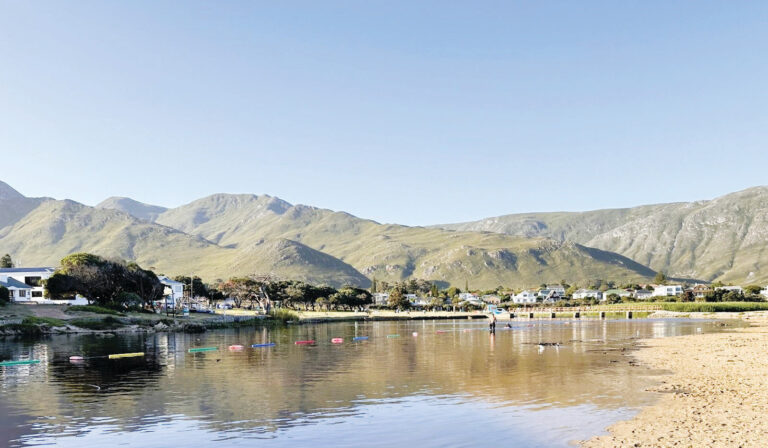
Statistically, there have been more child drownings in the main Kleinmond lagoon than in any other similar location in the Overstrand, other than Palmiet River – also in Kleinmond. The problem is the many large rocks embedded in the lagoon floor. When the mouth opens to the sea during the winter months, the water level is low enough for the rocks to be clearly visible, but as soon as the mouth closes up – about this time each year – the level rises, and the rocks are hidden in the inky dark water.

A member of the local NSRI team recently mapped the positions of the various rocks, confirming the location of the potentially most dangerous. Deep trenches have been scoured in the sand around each rock, some reaching more than 1,5m below the surface. A child playing in a group might lose his/her footing, fall into a hole, and suddenly find the water is over his/her head.

“Remember,” says Boonzaaier, “drowning is silent. The victim cannot call for help, and other group members don’t notice his absence until it’s too late. And neither do the parents or guardians of the child, who may be chatting together or on their phones on the beach.” As a priority, parents and children need ongoing education.

Each November for several years, the NSRI has laid a line of 20 pink buoys across the lagoon, separating the shallow water from the deeper, more dangerous sections; every year, sometimes within three days, they are stolen. Between November and mid-January last year, the NSRI replaced the entire line twice.

Boonzaaier points out that the NSRI has installed 70 buoys at strategic positions along the coast between Kleinmond and Rooiels, and these have saved many lives, but at the Kleinmond lagoon, if they keep being stolen, they are less than effective.

The NSRI Emergency Centre in Cape Town monitors a security camera day and night, but it currently focuses exclusively on the beach. In future, the plan is to train it on the lagoon at night. Large posters are also being placed at seven key positions around the lagoon warning adults to keep their children in sight at all times.

The NSRI also plans to realign the string of buoys to prevent access to those areas identified as particularly dangerous. To boost community involvement, the NSRI is seeking donations for 20 to 30 additional buoys to expand its project outreach.

To contribute – NSRI banking details: Account Name: Fundraising Account; ABSA Account No: 1382480607; Branch No: 632005; Ref: St42buoy+cell number. For further information, phone NSRI Kleinmond at 063 699 2765.

Fines issued for illegal camping

0

Overstrand Municipality Law Enforcement officers issued fines for illegal camping during last week’s early-morning foot patrols in Kammabaai and Mossel River areas of Hermanus.

The operation forms part of ongoing crime prevention efforts, during which officers removed makeshift tents, sleeping gear and cardboard shelters from bushy areas and public spaces.

According to the municipality, these interventions aim to improve public safety, reduce fire risks and address health and sanitation concerns associated with makeshift camps.

Residents and visitors are urged to remain vigilant, particularly when walking or hiking. The municipality advises against walking alone, recommending groups of three or more, and warns against leaving valuables such as cellphones and handbags in plain sight.

Anyone who spots illegal makeshift structures on public open spaces, vacant municipal land or bushy areas is encouraged to report them and provide the exact location.

To report incidents:

Overstrand Law Enforcement: 028 313 8996

Hermanus Police: 028 313 5300 or 10111; cell phone emergency number 112

Overstrand Contact Centre: 028 313 8111

Collab Citizen App: Law Enforcement > Illegal Structures

Email: enquiries@overstrand.gov.za (subject: Vagrants)

Hawston sets early marker

0

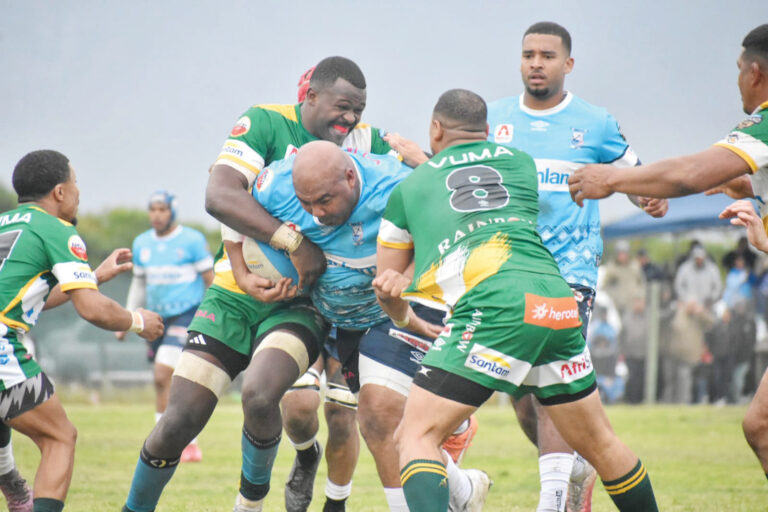
Newly crowned Overberg Grand Challenge champions Hawston RFC opened their Sanlam Boland Top 12 campaign in commanding fashion, securing a convincing 36–3 bonus-point home victory over Abbotsdale RFC.

With aggressive moves, the visitors made their intentions clear from the opening exchanges, but Hawston captain Branden Hunter opened the scoreboard with a well-executed set-piece try. Abbotsdale eventually opened their account from a penalty by Wiam Syster, but once Hawston found their rhythm, the home side began to take control.

Brenton-Lee Dickson and Jevan August crossed the tryline within minutes of each other, extending Hawston’s advantage to 17–3 and putting the visitors under increasing pressure.

Abbotsdale had several golden opportunities to reduce the deficit before half-time but failed to capitalise, opting not to take penalty opportunities. Hawston’s defensive structures proved pivotal as they kept the visitors scoreless from open play, heading into the break with a commanding 17–3 lead.

In the 46th minute, Jayden Fisher crossed for Hawston’s fourth try and secured the bonus point, pushing the score to 22-3.

With momentum firmly on their side, Hawston's continual pressure and further tries from Dennian du Toit and Jaydin Kennedy sealed an impressive afternoon for the champions. The bonus-point win placed Hawston second in Group A on points difference.

Hawston will now turn their attention to their next challenge, an away encounter against Delicious North West in Clanwilliam on Saturday.

Other results

Group A – Roses United beat Vredenburg 33-28, Robertson Town outclassed Delicious North West 54-10.

Group B – Safcol United beat Wesbank 43-32, Saldanha Bay beat Worcester Villagers 21-10, and Bella Vista beat Invincibles 26-24.

De Mond: Time to move beyond speculation

0

The withdrawal of the legal challenge against the appointment of Point Caravan Resort (Pty) Ltd to redevelop the former De Mond Caravan Park has reignited debate on social media, much of it based on speculation rather than fact.

The Hermanus Ratepayers’ Association (HRA) believes it is time to clarify the position and focus on securing an appropriate redevelopment that serves Hermanus and its residents.

The municipality acquired the De Mond site in Voëlklip through a 1942 Crown Grant. Its title conditions restrict its use to public recreational purposes and prohibit its sale into private ownership. The tender specifications explicitly recognised these constraints, making suggestions of a luxury 500-room hotel or high-density lifestyle estate unfounded.

Following the caravan park’s closure in 2012, unsuccessful attempts to secure a new operator have left the site deteriorating for more than a decade. Overstrand Municipality has since entered into a 45-year lease with the appointed developer for a public resort. The property remains subject to its title restrictions, although improvements revert to the municipality when the lease ends.

The withdrawal of the legal challenge means the process can move forward. This, however, doesn’t mean development can begin immediately. Planning and environmental approvals remain outstanding, including a Site Development Plan and an Environmental Impact Assessment – both requiring public participation. These processes will allow residents and interested parties to comment on the proposed layout, facilities and potential environmental impacts.

In November 2024, the HRA expressed some principal concerns namely, the 45-year lease, which we believed should have been shorter, and the lack of meaningful public participation at an earlier stage. Legal opinion obtained indicated that despite shortcomings, the tender process was likely to withstand legal scrutiny. In this context, we considered engagement more constructive than litigation, particularly given the restrictive title conditions governing the site.

Further delays will cost the municipality revenue while allowing the property to deteriorate further, with potentially damaging environmental consequences. Another risk is that prolonged underutilisation could invite national government intervention, leaving decisions about the site’s future less firmly in local hands.

FROM: Ken Briggs – Chair, Hermanus Ratepayers’ Association

Residents step up for recycling

0

Overstrand residents turned out in numbers to support e-waste recycling at collection points in Hermanus, Gansbaai and Kleinmond last week. This was organised by the municipality’s Environmental Management & Conservation team.

Public contributions help reduce pollution, recover valuable materials and keep hazardous waste out of landfill sites.

E-waste is one of the world’s fastest-growing waste streams and includes batteries, cables, and electronic devices.

Remember, disposable vapes and e-cigarettes contain batteries and electronic components that require responsible disposal. Never toss them into household bins because their lithium batteries can cause fires in refuse collection trucks and recycling facilities.

By recycling e-waste responsibly, residents can help protect the environment and reduce risks that are associated with hazardous waste.