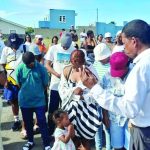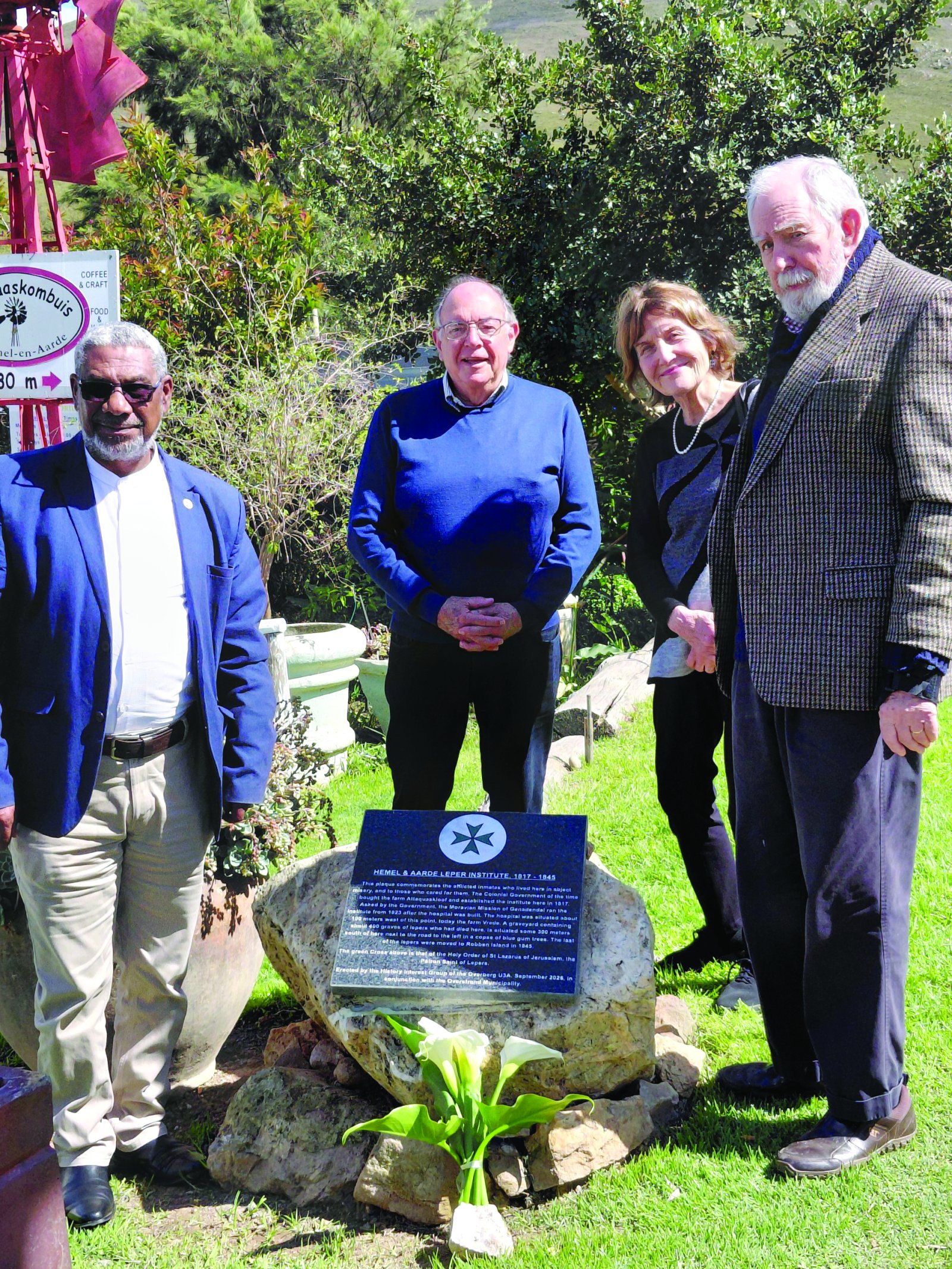
At a small but moving ceremony in the Hemel-en-Aarde Valley last Monday, a plaque was unveiled in memory of the residents of South Africa’s first leper colony.
Established by the Dutch colonial government in the mid-18th century on the farm Attaquaskloof in this remote valley of the Cape Colony, the British later formalised the leper colony under the governorship of Lord Charles Somerset.
In 1817, with the encouragement of the renowned Dr James Barry, the governor proclaimed that the lepers should be allotted “… a healthy spot, where they may retire to, and where they shall receive such aid as necessary to their future substance and comfort, but to which place the safety of the Public requires they should be confined”.


Out of sight, out of mind, in effect. He, however, had overlooked Barry’s passionate commitment to personally ensuring the residents’ medical, social, and spiritual needs were met.
A new hospital and vicarage were completed in 1820, and lepers of all races and classes were accommodated in huts and shacks and were given land to grow their own vegetables and fruit. Despite her efforts, however, things did not turn out the way Dr Barry – now elevated to the high position of Colonial Medical Inspector – had envisaged.
Hearing rumours of poor conditions in the Leper Institute, Barry requested the governor to add the Inspectorate of the Leper Institute to her duties.
What she saw on her first visit infuriated her. She reported that the medical treatment of the lepers “is so entirely neglected that, as far as I can learn, no attempts to care for the patients have been made. The hospital was crowded and dirty, with insufficient bedding, and the lepers were clothed in unclean garments with a rough texture that aggravated the disease”. She ordered increased rations and measures to improve the lepers’ lives.
She also arranged for the Moravian Brothers of Genadendal to minister to their needs. In 1823, the missionary, Peter Leitner, and his wife arrived to fill this role.
It is estimated that in the years 1823 to 1845, when the Leper Institute was closed and the last 39 patients were unwillingly transferred to Robben Island, about 400 had died and been buried on the farm. The cemetery, however, has never been definitively located. All that remains of the buildings are the large rocks imported to the area for the hospital foundations, about 100 metres to the west of the current Die Plaaskombuis, a restaurant and farm stall.
One of these rocks now forms a base for the plaque beside the restaurant’s entrance. Envisioned and erected by the History Interest Group of the Overberg U3A, with the Overstrand Municipality, the plaque acknowledges and pays tribute to a largely forgotten community that lived unobtrusively in this beautiful valley and was shunned by the public of the day.
Unveiling the plaque, Pastor Godfrey Cunningham of the Genadendal Moravian Mission called it a physical anchor of remembrance for people forgotten in history. Despite their physical and emotional exile, they lived with dignity and humanity, and in their own way, set an example for the future development of this fruitful valley between Heaven and Earth.
Among those present at the plaque’s unveiling were Pastor Godfrey Cunningham of the Genadendal Moravian Mission, Jack van Dyk and Angela Heslop of the History Interest Group of the Overberg U3A, and Prof John de Gruchy of the Volmoed Retreat Centre. The green cross on the plaque is that of the Holy Order of St Lazarus of Jerusalem, the Patron Saint of Lepers. PHOTO: Elaine Davie
Enjoyed this story? Get the whole paper first
The top stories and the whole edition, in your inbox the moment the new paper is out.
More news from Hemel-en-Aarde Valley