Home Blog Page 10

Strandveld’s own riches

0

We tend to think of the southern Cape as a land of fynbos, with proteas, ericas, and restios carpeting the mountains.

But come to the coast, and the vegetation changes dramatically. On the dunes and sandy coastal plains one enters the realm of ‘strandveld’, a rich, leafy world that is generally overlooked, possibly because it lacks the glamour of the world-renowned fynbos.

Strandveld – with fynbos, renosterveld, succulent Karoo, and Albany forest and thicket- makes up the Cape Floristic region, with fynbos as the dominant and better-known vegetation.

The name comes from Dutch, with strand meaning beach. Strandveld can be thought of as the coastal bush that forms a narrow band between the sea and inland vegetation.

In the Overstrand we are fortunate to have some wonderful examples. The recently recognised Grootbos Strandveld occurs around Walker Bay between Die Kelders and Stanford, while Southwestern Strandveld extends along much of the southern coast towards Cape Hangklip. Both of these types are classified as endangered.

What makes strandveld different from fynbos? It is characterised by tall, hard-leaved evergreen shrubs, succulents, and abundant grasses, and it grows on alkaline, calcareous dunes rather than the nutrient-poor, acidic soils typical of classical fynbos.

Compared with fynbos, strandveld vegetation tends to be bigger, leafier and less inclined to burn. Instead of the small, resinous leaves typical of many fynbos plants, strandveld comprises shrubs with larger, fleshier leaves, interspersed with succulents, grasses and annuals.

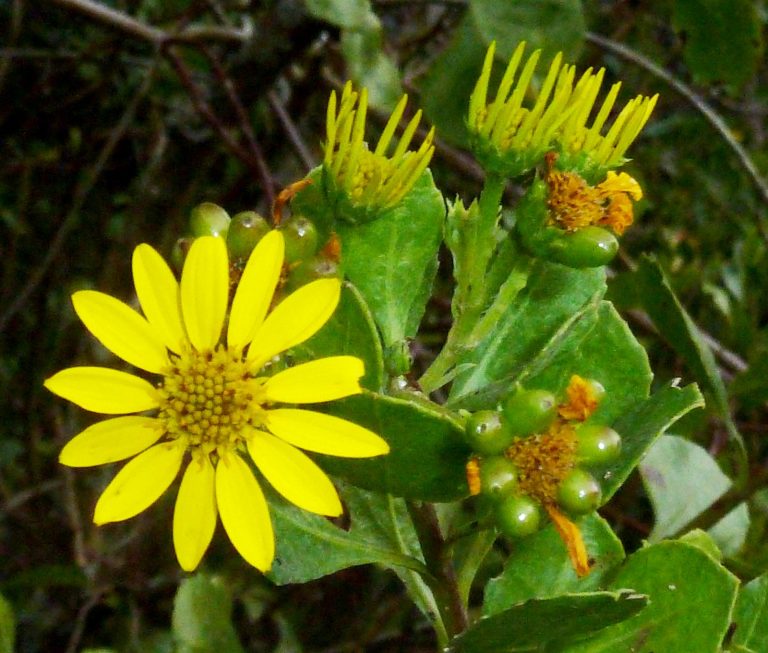
Species such as sea guarrie (Euclea racemosa), blombos (Metalasia muricata) and bietou (Osteospermum moniliferum) characterise strandveld communities. They offer a more generous pantry than fynbos, providing berries, bulbs and nutritious leaves for insects, birds and animals. Fruit-eating birds such as Cape bulbuls help disperse seeds, and dense vegetation shelters insects, reptiles and small mammals.

Historically, the coastal landscape also supported larger animals. Strandveld’s relatively productive vegetation could sustain substantial herbivores, including antelope and, in the now-distant past, even larger browsers such as elephant and rhino.

Unlike fynbos, strandveld does not need regular fire to regenerate. In sheltered, moist places, patches can gradually become dense thicket and eventually develop into forest. Milkwood forests are also part of strandveld vegetation. The landscape can contain a mosaic of open shrubland, thicket, wetlands and forest, all within a relatively small area. This special vegetation type stabilises coastal dunes, provides rich biological corridors, and supports specialised regional wetlands such as the Nuwejaars Wetland.

Then there are the flowers. From July to September, strandveld bursts into a riot of colour, with daisies, bulbs, vygies and other annuals appearing among the shrubs.

Sadly, strandveld has paid a heavy price for its niche on prime coastal real estate. It is vulnerable to urban sprawl, agricultural expansion (such as potato and vineyard cultivation), alien invasive plants (such as Rooikrans and Port Jackson), and illegal sand mining.

Roads, houses, farms, resorts and other development have fragmented and destroyed much of it. Strandveld, consequently, is classified as endangered nationally, with more than half of its original extent already transformed or lost.

The remaining patches are more than attractive pieces of bush: they are fragments of a unique natural heritage and vital refuges for biodiversity. Because coastal dune vegetation is so rare now, conservationists argued that remaining areas deserve the highest conservation priority. It is currently critically underprotected, with only a fraction (about 6% to 15% depending on the specific sub-region) formally conserved in reserves.
Six paintings for the record books

0

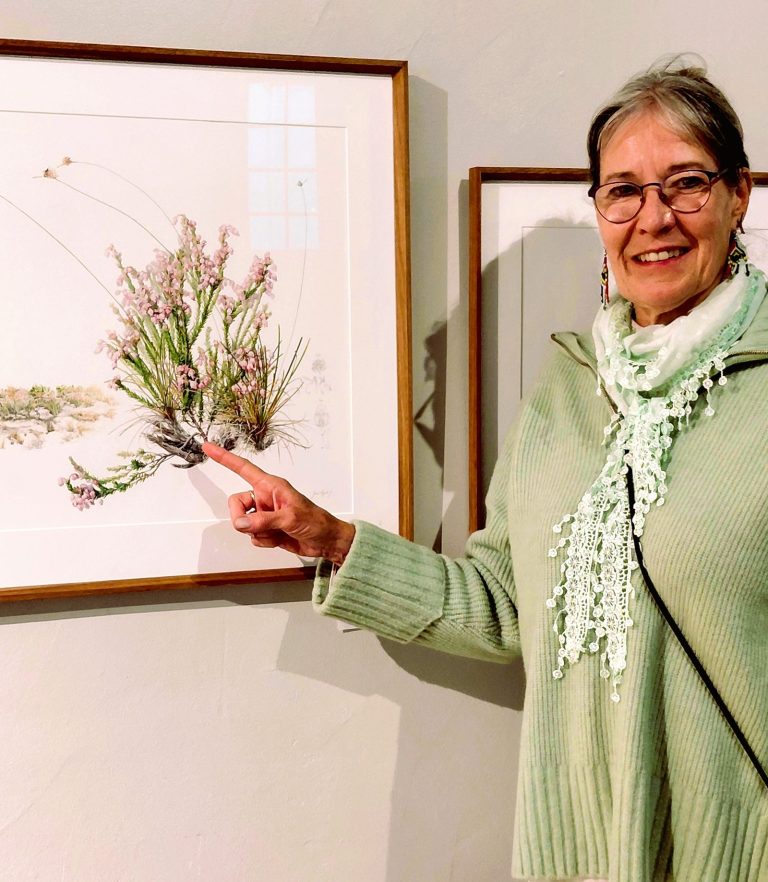
Jenny Hyde-Johnson, a prize-winning botanical artist from Gauteng, still finds it almost impossible to believe that the six fynbos watercolour paintings she submitted for the 2026 Royal Botanical Society’s annual Botanical Art and Photography Show in August broke the prestigious organisation’s record.

Never before in its 100 years of existence has any artist won the Best Botanical Art Exhibit and the Best Botanical Artwork awards in the same year. That’s in addition to the Gold Medal she received at this year’s Chelsea Flower Show in May.

Visitors to the reconstructed South African Flower Show exhibit in Stanford can view these artworks – and may have the opportunity to meet the artist.

It took her five years to complete the six works. She often became so despondent about her efforts that she felt like throwing in the towel. Fortunately, with the advice and encouragement of fellow artists, she kept going. The Royal Horticultural Society’s initial acceptance process alone took many months to finalise and involved, among other things, verifying the authenticity of each rare plant she planned to include.

Because her home is in Gauteng’s Cradle of Humankind and her subjects are found only in isolated pockets in the southern Cape, the project involved regular trips to the Grootbos Nature Reserve to observe them in their natural environment.

Since some of Jenny’s previous paintings were already included in the Grootbos Florilegium, fellow artist and manager of the collection Chris Lochner facilitated her trips, and she soon had the enthusiastic assistance of the reserve’s botanists and other natural scientists in tracking down the plants.

She chose rare, difficult-to-find species growing in cracks in limestone rocks for her series, titled Fynbos Diversity of the Coastal Limestones on Grootbos.

“Limestones of the southern Cape are new rocks, only about two million years old,” she says. “They overlay older dominant sandstones and form small islands in the landscape, home to highly adapted endemic fynbos. Limestone fynbos is extremely threatened in the areas surrounding Grootbos Nature Reserve, due to invasive, non-native vegetation and habitat destruction.”

It was not only the precise, detailed depiction of each endangered species and their companion plants that won the approval of the competition judges. It was the unique composition of each artwork, often with an unobtrusive – yet accurate – indication of the landscape from which they originated.

She said she wanted the paintings to ‘talk to one another’. That meant arranging them in a specific sequence, involving colour, shape and size, so one painting led to the next, with the last one in sync with the first. While each painting can be appreciated independently, all six together form a beautiful, clearly identifiable entity.

Withdrawal of the De Mond court action

0

We are not giving up; we are warming up.

As many people know, I have withdrawn my High Court challenge to the De Mond Lease.

This is not conceding defeat but a strategic withdrawal. Please note that this decision has nothing to do with pressure put on me by various people.

I remain of the view that the municipality’s decision to award the tender to Point Caravan Resort (Pty) Ltd in March 2024, and to conclude the lease for 45 years in September 2024, was not correct.

In general, I support development. But here, there should have been proper public participation regarding what the developer intended to do with the leased property. Will there be an abattoir, a picnic terrain or affordable housing?

One simply does not know. Not even after huge legal expenses incurred in the High Court battle regarding the ‘record’ of the municipality’s decision.

While I am disappointed that my efforts have not resulted in the revelation of Point’s plans for the leased property, I have been advised that my concern can be better addressed in the land development application process which lies ahead, in particular any environmental, rezoning or departure application(s).

I am advised that it is in that process that my concerns (if any, once I know what the plan is) about the compatibility of the intended use should be raised.

This litigation was hugely stressful and expensive. It was also unnecessary. Why can we not be told by Point and/or the municipality what is envisaged for De Mond? Not only for my information but for the public’s consideration and comment.

FROM: Elmien de Kock

Still not showing us the money

In politics, the so-called art of avoiding awkward questions, or wrapping them in enough vagueness in the hope they will eventually disappear, is a fallacy.

Public accountability has a habit of catching up with those in its crosshairs – no matter how long it takes

The long-running saga surrounding the failed Milkwood Festival may yet prove to be a case in point.

Most readers will recall that, around this time last year, Overstrand Mayor Archie Klaas allocated R250 000 of public money, from his discretionary fund, to the festival organisers.

A double booking of the location meant the festival subsequently collapsed amid what appeared to be inadequate planning. The perception was also that the municipality failed to apply due diligence and oversight, and the money had already been paid.

Since then, The Village News has repeatedly approached Mayor Klaas and Municipal Manager Dean O’Neill to explain what steps were in place to establish accountability and, crucially, safeguard or recover the public money.

A year later, clear answers remain elusive. Instead, the municipality offered a vague defence – organisers would fund this year’s Milkwood Festival with last year’s budget. Left unanswered was what happened over the past year, what financial checks were conducted, and who was being held accountable for the quarter-million rand

Calls for answers have not been confined to the media. AfriForum opened a case with Saps for investigation, while the Overstrand Community Action Network (OCAN) has repeatedly called for an inquiry.

Still, the saga remains unresolved.

Overstrand resident Pat Redman has also pursued the matter vigorously, taking her concerns directly to Mayor Klaas and eventually escalating them to Democratic Alliance (DA) head of governance Richard Newton.

And, judging by the responses, avoidance and ambiguity remain the order of the day.

Newton wrote that he had “engaged the mayor and his team regarding the issue”. He said he understood that the money was not missing, but that the festival had been postponed on the understanding that, once a new date was secured, the agreed services would be provided.

He said he had also asked the mayoral committee for progress on securing a new date and a clear plan to resolve the delay.

Mayor Klaas, meanwhile, referred Redman to an update from the municipality’s administration. He said the organisers had submitted a compliant application; marketing material had been issued or would be issued shortly; and municipal officials were expected to hold the organisers accountable. The only additional condition was that the festival took place before the 2026 Hermanus Whale Festival.

If the organisers failed to honour that undertaking, Klaas said, “consequence management” should apply. At this point, the mayor said that officials had confirmed that the festival was going ahead.

Oh, OK.

But the Whale Festival is next weekend. So, by that logic, the Milkwood Festival should be happening this weekend. Yet there is no evident announcement, programme or promotion.

But on Wednesday, Mayor Klaas told The Village News that the Milkwood Festival was booked for Sunday at Zwelihle Sports Ground and that no additional funds were granted for staging the event.

So the Overstrand public waits with bated breath to see what this promised “consequence management” will look like if indeed the condition is not met.

The DA leadership’s seemingly limp-wristed handling of the matter is telling and troubling – particularly surprising with the local government elections only a month away.

Does the party regard the questionable management of public money, due diligence and the prolonged absence of clear accountability as a trivial matter?

Or is the party’s normally quick response to dubious practices involving public money by political opponents somehow less robust when the questions involve one of its own?

Public funds deserve public accountability, not evasive language or assurances that something might happen at some unspecified point in the future.

A year is a long time to wait for a straight answer.

Nee, fokkit manne, as the saying goes: you can fool all the people some of the time, but you cannot fool all the people all the time.

Zipline slides to top spot

0

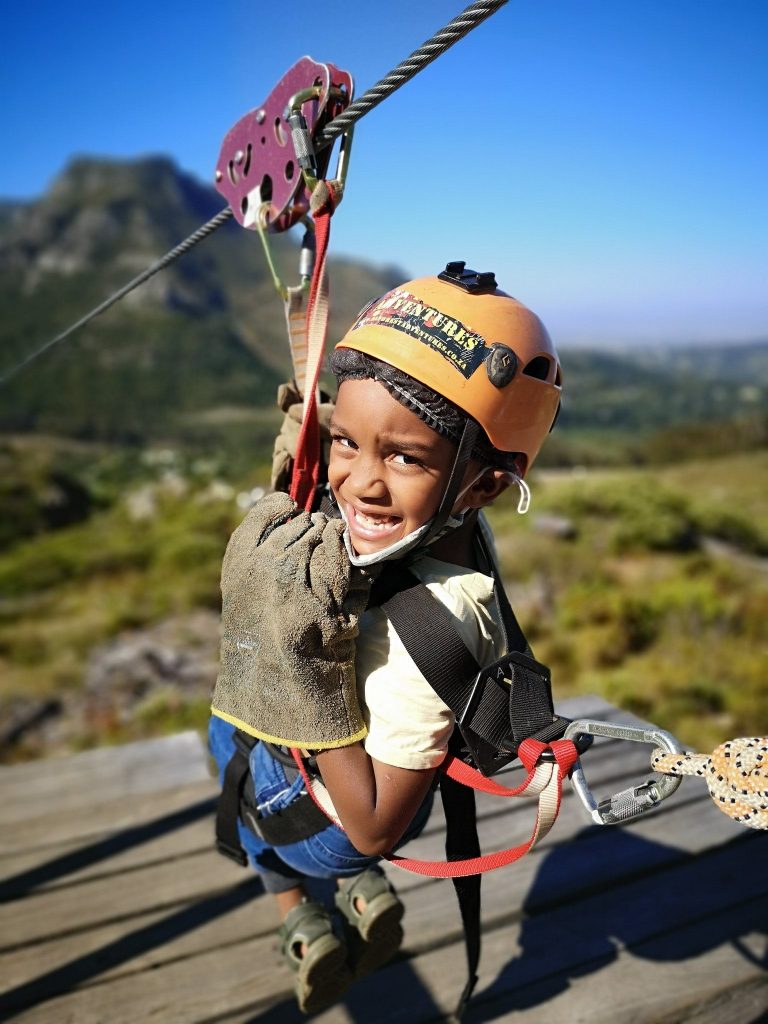
After its Cape Town Ziplines experience was named the No 1 Experience in Africa in the 2026 Tripadvisor Travellers’ Choice Awards – Best of the Best, SA Forest Adventures is celebrating a major achievement.

The recognition marks another milestone for the company and its Cape Town Ziplines’ operation, which has previously been recognised among South Africa’s leading experiences and has now risen to the top of the continental rankings.

The latest accolade adds to SA Forest Adventures’ growing portfolio of recognised adventure experiences across South Africa, including K3 in the Overstrand – the world’s longest zipline.

The Cape Town Ziplines experience currently holds a five-star rating on Tripadvisor, based on almost 5 000 reviews.

Tripadvisor describes its Travellers’ Choice Awards – Best of the Best, as its highest level of recognition. According to the platform, fewer than one per cent of its eight million listings receive the distinction.

For SA Forest Adventures owner Clinton Lerm, the award reflects years of work by the company’s team.

“This award is a testament to the hard work of our staff and the incredible support we receive from the entire tourism industry,” said Lerm.

He added that the progression from national recognition to the top of the African list was particularly significant.

Unlike awards determined solely by industry judging panels, Tripadvisor’s Travellers’ Choice recognition is based on the experiences and opinions shared by travellers on the platform.

Recent reviews of Cape Town Ziplines have highlighted its guides, organisation, focus on safety and overall experience, while the current listing maintains a five-out-of-five rating.

Located in Constantia at the foot of the Table Mountain Reserve, Cape Town Ziplines offers a guided zipline experience lasting approximately two hours.

Guests travel through the surrounding mountain landscape on a series of zipline cables, accompanied by trained guides.

Two visions of architecture win the day

0

Hermanus Photographic Society’s September competition produced two striking architectural images, with Jane McMorran and Carina de Klerk claiming the honours.

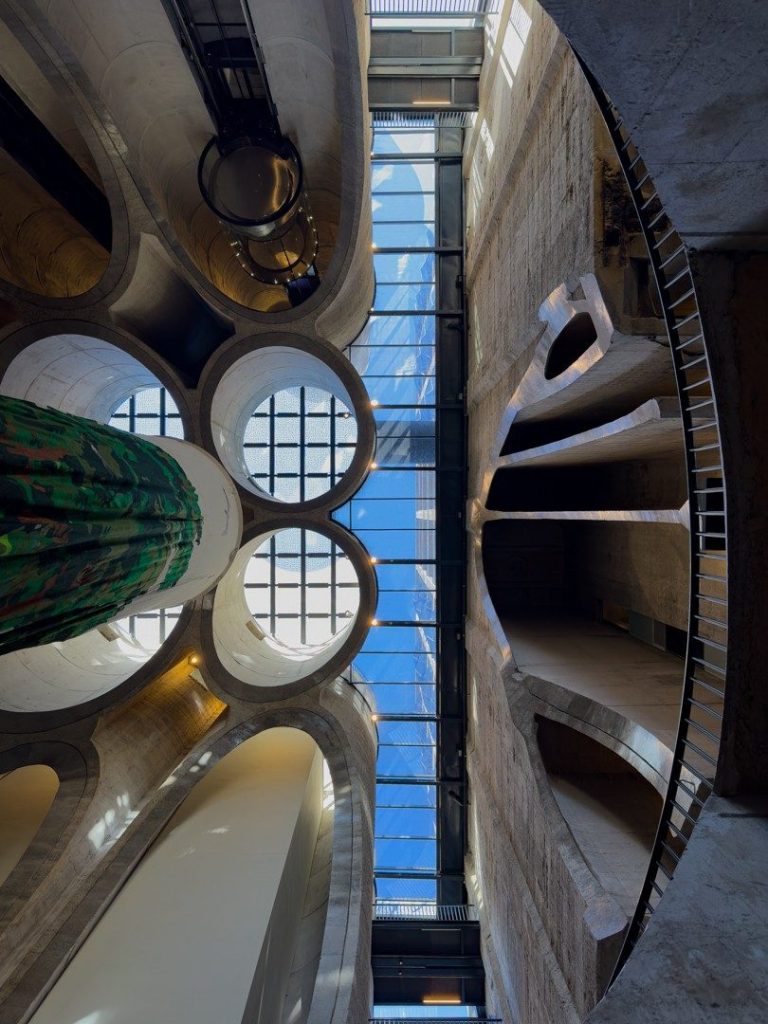
McMorran won the Junior and Set Subject categories with Looking up in Zeitz MOCAA. Photographed on her mobile phone, the image showed that strong composition and observation can compete comfortably alongside images from conventional cameras.

The month’s set subject, Harmony of Steel, Stone and Glass, focused on architectural design and structure.

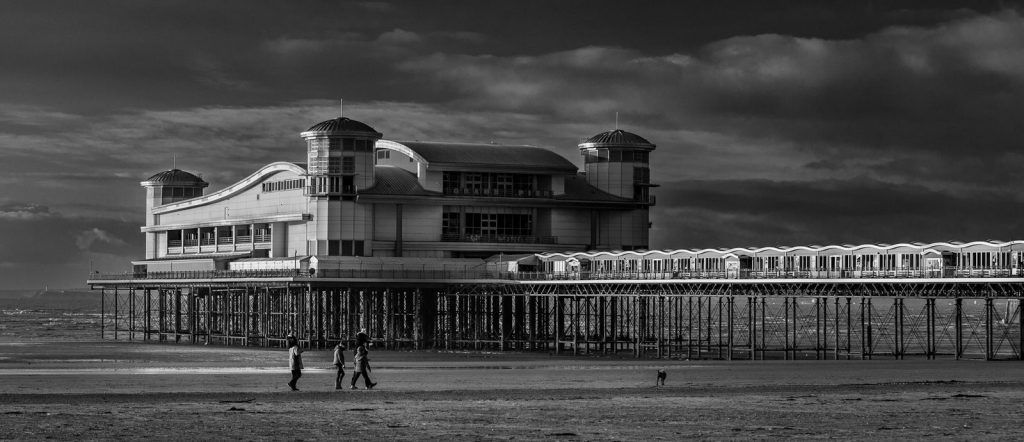
De Klerk won Senior and Image of the Month categories for Grand Pier, Weston-super-Mare, a monochrome study that combined the pier’s strong geometry with dramatic light and sky.

Grand Pier, Weston-super-Mare – Carina de Klerk. PHOTO: Supplied

André de Koker of Napier judged he competition.

The society will host a monochrome photography workshop with Kim Stevens on Saturday 10 October. Photographers interested in attending can email hps@hermanusphoto.co.za for more information.

No quick fix for Stanford Cove erosion

0

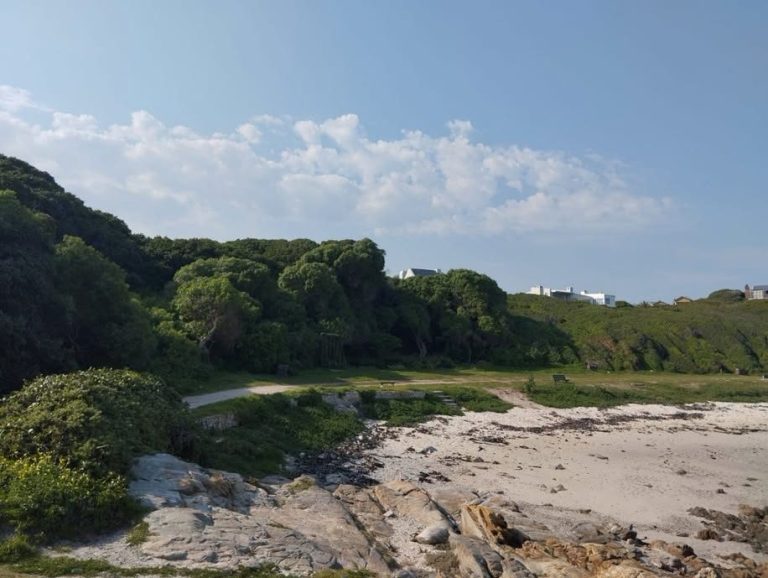
A report from Overstrand Municipality states that officials are aware of growing concerns about erosion at Stanford Cove in De Kelders near Gansbaai, where sections of grass have been lost, embankments have collapsed, and steps to the beach have been washed away.

The cove is a popular, public open space for residents and visitors, and the municipal officials recognise the need to keep the area safe and accessible.

Recent storms and unusually high seas have caused significant erosion along parts of the Overstrand coastline. As a small ‘pocket beach’, Stanford Cove naturally experiences the sand’s movement within the area. Storms can shift sand away from sections of the beach and upper shoreline, while some sand may return under calmer conditions.

To assess possible solutions, the municipality requested advice from the Western Cape Government’s Department of Environmental Affairs and Development Planning (DEA&DP). Its Coastal Management team inspected the site on 29 July and subsequently advised that the situation did not constitute an emergency and posed no immediate risk to life.

The municipality will therefore not mechanically reshape the beach or place rocks as an erosion-control measure at this stage. Such interventions could disrupt the natural movement of sand and potentially worsen erosion elsewhere in the cove.

For safety reasons, the damaged staircase and eroded paths have been closed and barricaded. The beach remains accessible via four to five other access points from the grassed area.

The damaged staircase will not necessarily be rebuilt in its current position. If replacement access is required, the municipality will investigate alternatives better suited to the coastal environment and natural movement of sand.

The municipality’s Environmental and Conservation Division, with the Infrastructure and Community Services Directorates, will monitor the site and assess:

the stability and safety of the eroded embankment

safe and sustainable beach access

options for restoring vegetation and retaining sand

the impact of stormwater flowing towards the beach, and

longer-term rehabilitation options.

Any future work involving sand movement, earthworks, rock placement or other coastal stabilisation measures will be discussed with the relevant environmental authorities to determine whether environmental authorisation or other approvals are required.

Residents are urged to keep away from steep or potentially unstable areas and obey temporary barriers and warning signs.

New Sandbaai residential estate to meet rising housing demand

0

With the launch of The Nautilus estate, the surging demand for quality housing along the Overberg coastline has found a timely answer in Sandbaai.

Positioned 800 metres from Sandbaai Beach and directly opposite the Whale Coast Mall, the secure estate addresses the region’s acute shortage of modern residential stock.

Located within 15 minutes of central Hermanus, Onrus, and the Hemel-en-Aarde Valley, the development pairs everyday convenience with access to key schools, commercial hubs, and natural landmarks such as the popular coastal cliff path.

Property specialists highlight that the release comes at an important juncture for the local market.

“The Nautilus development comes at an excellent time for the Sandbaai property market, where quality stock has been relatively limited,” says Jako Nagel of Greeff Christie’s.

Co-listing agent, Tony Kelly, agrees. “It presents an exciting opportunity for buyers looking to invest in one of the Whale Coast’s most sought-after areas, whether as a permanent residence, a lock-up-and-go, or an investment property.”

Designed with open-plan layouts and contemporary finishes, the development offers 83 apartments, 27 townhouses and 24 simplex units. To accommodate modern lifestyle preferences, the access-controlled layout incorporates updated security systems, high-speed fibre infrastructure, and dedicated pet-friendly outdoor spaces.

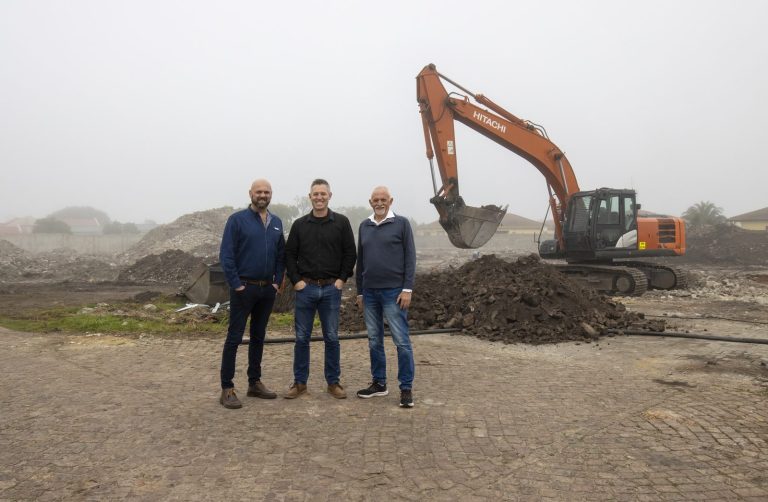
Lighthouse Construction principals Eddy Lanuti and Lambert van Heerden, whose two-decade portfolio includes landmark developments such as Ocean Breeze, Tambali and Monte Mare, are bringing the estate to life

Greeff Christie’s Whale Coast principal, Jaco van der Merwe, said the collaboration with Lighthouse instills confidence given their extensive local track record,. “To see the project take shape after years of planning is immensely rewarding. Sales have progressed remarkably well in just three weeks post-launch, with civil infrastructure currently underway and Phase One completion expected by late 2027.”

With prices ranging from R1 999 000 to R3 299 000, The Nautilus delivers a rare entry point into the vibrant local market for first-time buyers, downsizers, and investors. It offers a well-located coastal lifestyle designed for everyday living, community connection, and long-term value.

For more information, phone Tony Kelly at 082 777 8963 or Jako Nagel at 064 288 0887.

Overberg birding takes flight!

As more local and international birders discover the region’s exceptional birdlife and natural beauty, the vision of making the Overberg a leading birding destination – once a dream – is now a reality.

BirdLife Overberg chairman Steve Peck says this was the vision of the late Anton Odendal, a legend in the Overberg birding community.

Peck, who has guided international birders around the region, is mindful of the growing number of birders and is committed to carrying this vision forward.

With an impressive 454 bird species on record, including 41 pelagic and 413 terrestrial species – which include one critically endangered, eight endangered, 15 near-threatened, and eight vulnerable species, as well as endemic and near-endemic species – the Overberg is a hotspot for conservation.

It has sixty-one migrant species, including the Red-chested Cuckoo, African Paradise Flycatcher, Black Saw-wing and Black Cuckoo.

Based on BirdLife Overberg’s monthly bird counts over the past seven years, the number of species recorded represents 42% of all the birds on the official South African bird list.

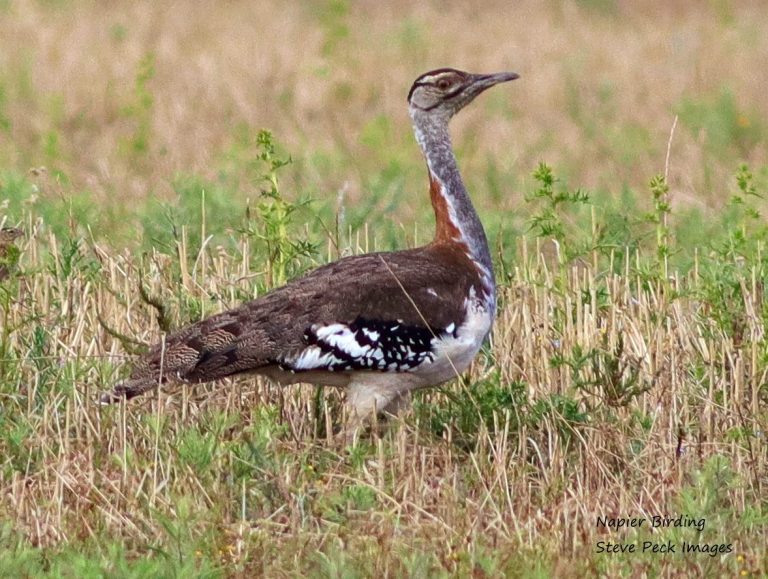
“We firmly believe no other region in South Africa can come close to this percentage,” says Peck. Birding enthusiasts are drawn by iconic birds such as the Blue Crane, Denham’s Bustard, Cape (Agulhas) Long-billed Lark, Cape Rockjumper and other fynbos endemics.

Avi-tourism is becoming increasingly popular – and a valuable additional income for tourism in the area. Recent research has highlighted the benefits of developing it as a conservation and economic opportunity in South Africa.

A study of 11 community-based projects revealed that birding, when linked to conservation objectives, creates income, skills and empowerment opportunities for local communities.

The Overberg’s diversity of habitats and nature reserves – such as De Hoop, home to Cape Vultures; Stony Point, with its African Penguins; and Rooiels, where Cape Rockjumpers and Verreaux’s Eagles can be seen – offers birding enthusiasts a range of options.

Visit the club’s website, birdlifeoverberg.org.za and follow the link Birding Routes Archives to explore available routes in the Overberg.

Missing the point

0

Last week’s letter of complaint about the U3A meeting notice regarding Dr Abedian’s lecture on Iran, K Enslin missed the quotation marks around “Great Satan” and “Little Satan”.

Quotations marks indicate that the writer says that this is somebody else’s words, (in this case the Iranian regime), not his or hers.

A brief Google search reveals that Dr Abedian is a passionate opponent of the Iranian regime, and does not in fact support their sentiments regarding Israel or the US. I therefore submit that no apology is needed to ‘Western civilised’ or ‘non-Islamic’ people.

From: Derik Gelderblom