Home Blog Page 9

Spekboom: The plant with a big story

0

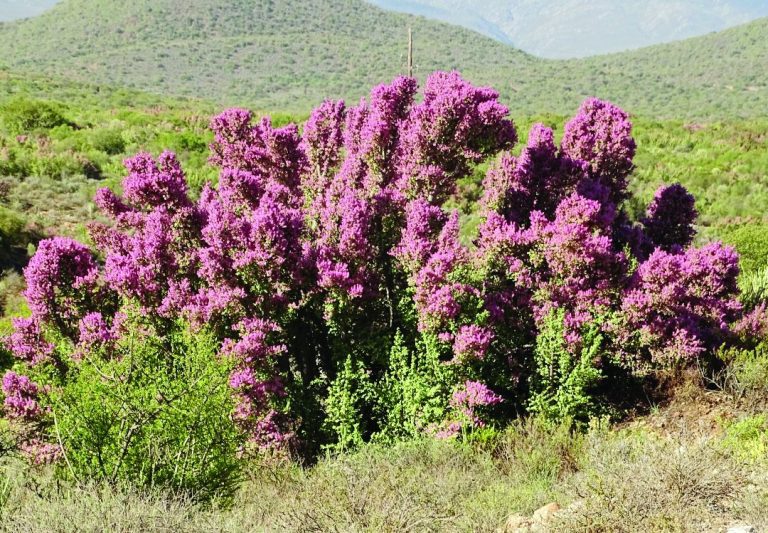
Spekboom (Portulacaria afra) is one of South Africa’s most remarkable plants.

Its home is the Eastern Cape – although it happily grows elsewhere – where, to the casual observer, it looks like great stretches of ordinary green bush covering the hillsides.

Spekboom is a succulent, evergreen shrub often reaching several metres high. It has small, fleshy, rounded leaves. Its succulent leaves and stems allow it to survive in remarkably dry conditions.

Spekboom: The plant with a big story

After good rains and in full sun, it produces clouds of tiny pinkish or lilac flowers, particularly attractive to bees.

The name Portulacaria combines Portulaca and the Latin suffix -aria (meaning ‘pertaining to’ or ‘resembling’), chosen because the genus looks similar to Portulaca. However, Portulaca and Portulacaria are distinct plant genera; although they share a similar appearance and historical classification, they belong to different botanical families (Portulacaria to Didiereaceae and Portulaca to Portulacariaceae).

Although the common name can be translated as ‘bacon tree’, spekboom is also colloquially known as ‘elephant's food ', and for good reason. Spekboom forms a major part of elephants’ diet.

Being eaten is not necessarily bad news for spekboom. Branches, broken or trampled into the soil, can take root, while browsed plants quickly produce fresh growth. These abilities make spekboom exceptionally well adapted to living alongside large herbivores.

The most interesting superpower of spekboom is the way it photosynthesises. As we all know from school biology, plants combine carbon dioxide (CO2) with water to make carbohydrates, using sunlight energy. CO2 enters the plant through its stomata – microscopic pores in the epidermis of plant leaves that regulate gas and water vapour exchange with the surrounding atmosphere.

Like other plants, spekboom can perform ordinary daytime photosynthesis. However, under dry conditions, water loss through the stomata would be detrimental to survival, so it switches to a different strategy known as CAM photosynthesis. Its stomata don’t open during the heat of the day to reduce water loss, and open at night when temperatures are lower and less water is lost. Carbon dioxide is therefore also taken in at night, but in the absence of sunlight it is stored in the plant until daylight, when it can be used for photosynthesis. It is a particularly ingenious way to conserve scarce water.

This ability to store carbon has made spekboom famous in the fight against climate change. Research on the Eastern Cape's succulent thicket has shown that healthy spekboom-rich vegetation can store substantial amounts of carbon – in the plants and in the soil. This has led to major efforts to restore degraded thicket by allowing spekboom to recover, and by planting cuttings.

And that is another of spekboom's tricks: it is wonderfully easy to propagate. A branch pushed into the ground can develop roots and become a new plant very quickly. For generations, people have used spekboom branches to make living fences and enclosures. It also grows well in pots, making it a useful garden subject.

Its value as livestock fodder in times of drought has also been recognised. The plant can provide food when grasses are scarce, and its dense growth form creates a cool, sheltered environment for small animals.

But there’s more! It is also a healthy, tasty addition to the human diet and can supplement our stretched food budgets. It contains minerals such as calcium, magnesium and selenium and is particularly rich in Vitamin C, which, in spekboom, is unusually not destroyed by cooking. The fleshy leaves can be incorporated into all sorts of dishes – and are a tasty, raw addition to salads and a healthy garnish.
Heritage shapes manager’s destiny

0

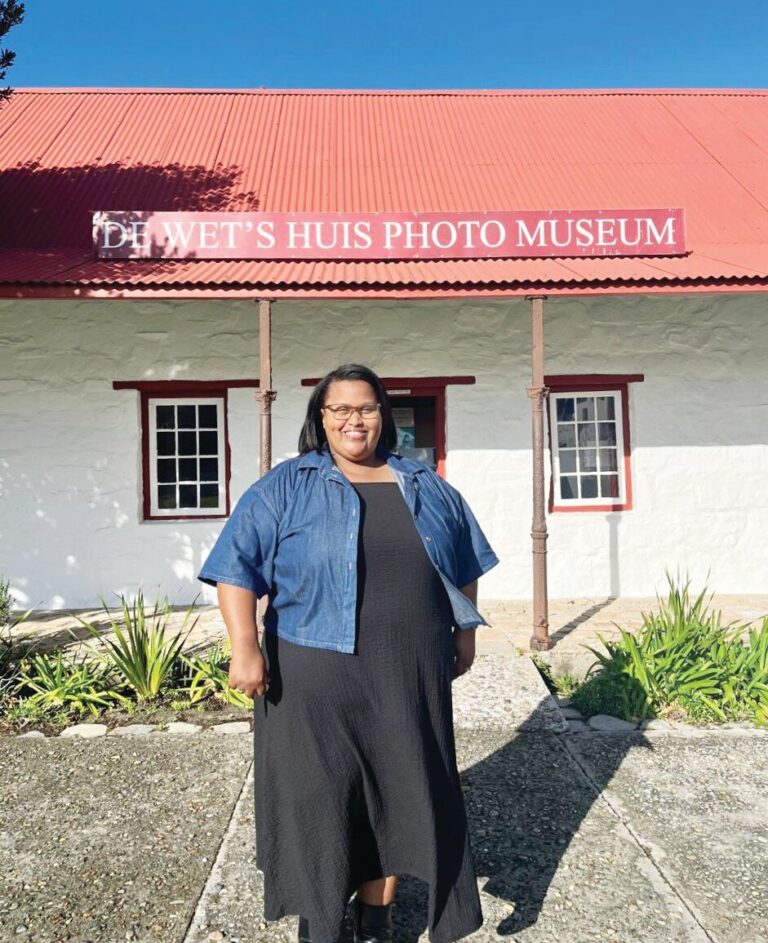
For Attwellthea Marthinus, the Hermanus Old Harbour Museum is more than a workplace. It is woven into her childhood, her family memories, her professional journey, and, most recently, the legacy of a father who encouraged her to follow her heart.

Today, as the museum manager, Attwellthea carries the responsibility of preserving and sharing the town's and its people's stories, a role she describes not as a job, but as a calling.

Her journey began before she officially entered the museum sector. As a young girl, she spent many holidays with her family around the Old Harbour area and regularly visited the museum on school excursions. She also remembers accompanying her father, Attwell Filander, to the Rossouw Art Gallery in Hermanus. Her father was a self-taught artist, and those visits left a lasting impression on her.

“I was fascinated by the beautiful artworks displayed on the gallery walls,” she recalls. “I believe that was where my love for museums, art and heritage began to grow.”

After matriculating in 2009, Attwellthea enrolled at the University of the Western Cape (UWC) and graduated in 2014. The following year, she joined the Old Harbour Museum as an Expanded Public Works Programme (EPWP) intern on a year-to-year contract.

Attwellthea’s time at the museum introduced her to the importance of heritage conservation and local history, and in 2017 she returned to UWC for occasional studies. Life was also changing in other ways. In August 2018, she became a mother – an experience she describes as bringing immense joy and purpose to her life.

In 2019, an invitation to return to the Old Harbour Museum took her back to the place that had already become so meaningful to her. She accepted without hesitation, and she has never regretted it.

In October 2022, Attwellthea reached another significant milestone when she was appointed museum manager, succeeding the respected Elizabeth du Toit. Having worked closely with her predecessor for many years, Attwellthea considers herself fortunate to have received Elizabeth’s mentorship and guidance. Elizabeth's dedication to heritage preservation continues to influence how Attwellthea approaches her own role.

And it’s her father who is connected to one of the most meaningful chapters of her museum journey. In October 2015, Attwellthea's father was a member of a group that opened Sir William Hoy and Lady Hoy’s burial site on Hoy's Koppie. She remembers how excited he was to share the experience with her, and encouraged Attwellthea to remain in the museum sector, reminding her that she was fortunate to work with the town’s rich history.

Attwellthea’s father died in July this year. His passing has left a void, but also a powerful sense of gratitude. “He was my greatest supporter and one of my biggest inspirations,” she says. His belief in her continues to accompany her as she carries out the work they both valued. Today, Attwellthea's vision for the museum is firmly rooted in community.

As she continues to steer the Old Harbour Museum into the future, Attwellthea hopes to inspire a greater appreciation of the town's shared heritage and encourage generations to value, protect and participate in the stories that belong to all of us.

In doing so, she is preserving the past – and helping shape how the next generation will remember it.

Sharpening skills for the premier league

0

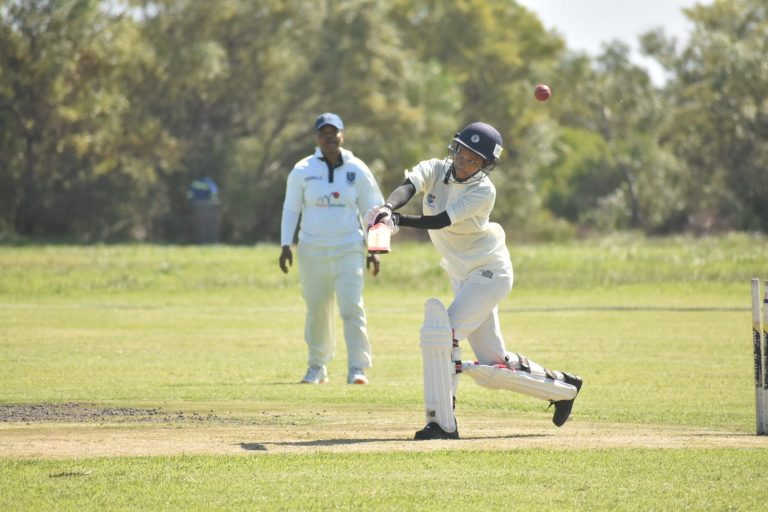
Preparations for the upcoming cricket season are well underway at Hawston Cricket Club that is gearing up to make an impact in the Boland Premier League after an impressive promotion campaign last season.

Hawston’s continued growth is evident in the club’s expanding player base, with three men’s teams taking the field alongside a women’s side made up largely of high school learners.

The women’s team opened its pre-season with a challenging home fixture against the University of the Western Cape at Hawston Sports Ground. Although the visitors proved too strong on the day, the match provided valuable experience for the young Hawston side against a more seasoned opposition.

On Sunday, Hawston’s first and second men’s teams travelled to Stellenbosch for two T20 encounters against Spes Bona.

In the second-team clash, Hawston posted 113/2 after being sent in to bat. Unako Mazuthu top-scored with 34 off 38 balls, while Brin-Lee Layman contributed 31 off 37 deliveries.

Spes Bona, however, chased down the target comfortably, with Stanley Parsley leading the way with an unbeaten 41 off 39 balls as the hosts secured a five-wicket victory.

The first-team encounter proved a much tighter affair.

Spes Bona posted 137/9 from 20 overs, with Rodwin September (36 off 23), David John (26 off 23) and Curt Oliver (23 off 16) making valuable contributions.

Hawston’s bowlers kept the hosts under pressure, with Kyle Philander returning 2/7 and Elton Jacobs 2/10. Both delivered economical spells while striking – at crucial moments – to keep Spes Bona to a manageable rather than imposing total.

Hawston responded positively in the chase, with Wade Solomon and Dawid Gerber both scoring 47. Solomon faced 56 balls, while Gerber’s 47 came from 42 deliveries, as the pair anchored the innings and kept Hawston in contention. However, the visitors fell 14 runs short, finishing on 123/9 from 20 overs.

Despite the two defeats, the fixtures provided valuable early-season match practice as Hawston continues its preparations for a demanding first campaign in the Boland Premier League.

Walkerbay victory

0

Cruising to a convincing 43-5 victory over Border champions, Mqanduli Sharks, on the weekend, Walkerbay’s rugby squad kicked off its campaign at the Betway Women’s Club Championship in Alberton in impressive fashion.

Delivering a dominant display to secure their place in the semi-finals, the Boland champions proved too strong for their opponents.

Walkerbay controlled the match from the outset, combining physicality, determination and disciplined rugby to build a commanding lead and put the Border champions under sustained pressure.

For her outstanding performance, front-rower Zena Swart was rewarded with the Player of the Match award.

Walkerbay is hoping to go one better this year after finishing as runners-up in last year’s tournament.

Ready to roll – join the boules group

0

Did you know that boules is played in Hermanus on the second and fourth Sunday of every month?

Weather permitting, players gather in Fernkloof Nature Reserve’s Amphitheatre to test their skills in a tradition played here for more than 20 years.

The match schedule includes players meeting at 12:30, with games starting sharply at 13:00. Membership is R10 a year, and the club has about 30 members.

Game-day contribution is R20, with the booty shared among the top three players – and there’s a booby prize for a bit of fun.

For details, phone or WhatsApp Dave Bellas at 072 311 9455.

Keeping the ball in play

0

In trying times, South Africans tend to unite around sport for reassurance and hope. With this in mind, the book page features three recently published memoirs about South African sport legends who have left their mark for vastly different reasons.

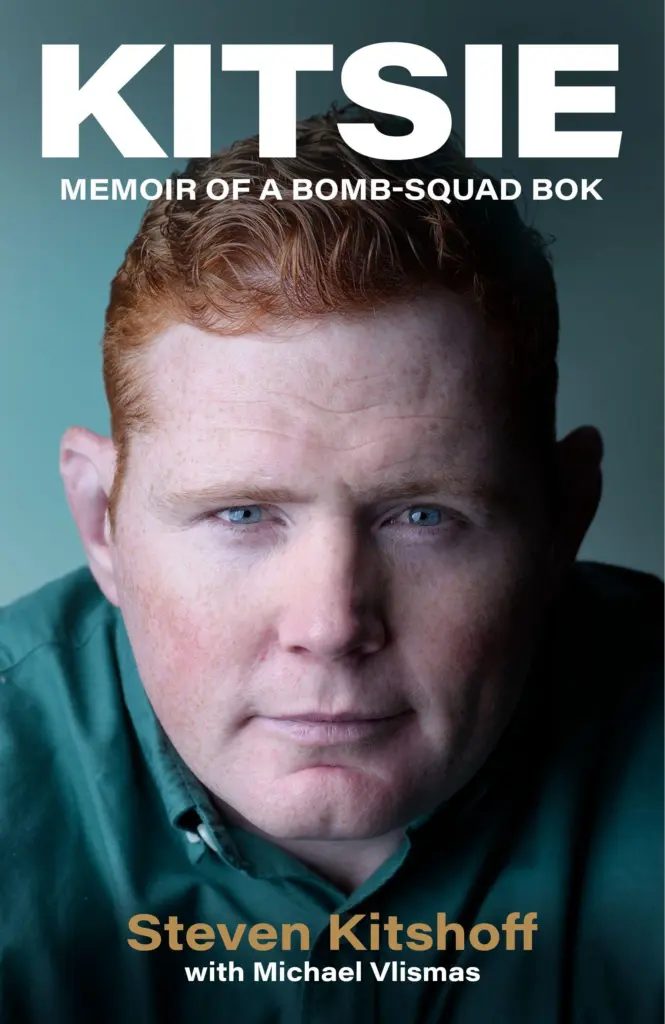
Kitsie: Memoir of a bomb-squad Bok

Authors: Steven Kitshoff with Michael Vlismas
Publisher: Jonathan Ball

Formidable former Springbok prop Steven Kitshoff was much loved on and off the field for his discipline and determination – and for his humility, honesty and warmth.

He takes us beyond the bruising scrums and World Cup trophies to reflect on a rugby career defined by an unwavering commitment to what is best for the team.

His journey is charted from schoolboy prodigy in the Western Cape to captaining the Stormers and reaching the pinnacle of international rugby as part of the team that won the World Cup twice in a row.

The big man the fans call ‘Kitsie’ and ‘Spicy Plum’ delves into the magic of the bomb squad strategy, representing a unique team-first culture. Players embraced their roles knowing that the ultimate goal was collective success rather than individual glory. This spirit of selflessness reflects one of the key reasons behind South Africa’s success on the world stage.

It’s a journey marked by hard work, sacrifice, and perseverance. While many fans only see the glory of professional sport, this memoir reveals the dedication required to reach the highest level and stay there. Kitshoff’s story serves as a reminder that success is built through years of commitment and consistent effort.

A key theme is the discovery of purpose after rugby. Following his forced retirement owing to a devastating neck injury, Kitshoff was faced with the challenge of redefining himself beyond the game. His journey of adapting to a new chapter and finding fresh opportunities is inspiring and relatable.

Written by Michael Vlismas, an award-winning journalist and author of eight books, Kitsie is honest and inspiring. His writing captures the excitement of elite rugby and the human story behind the athlete.

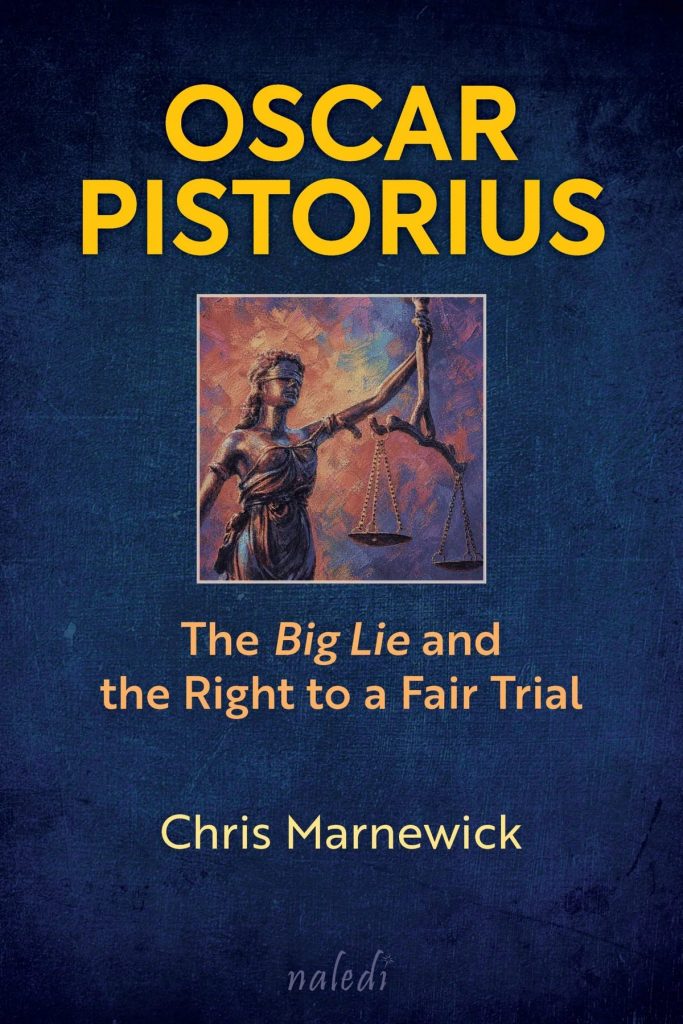
Oscar Pistorius: The Big Lie and the Right to a Fair Trial

Oscar Pistorius: The Big Lie and the Right to a Fair Trial

Author: Chris Marnewick
Publisher: Naledi

The drama and controversy surrounding champion Paralympian Oscar Pistorius and his conviction for the fatal shooting of his girlfriend, Reeva Steenkamp, in 2014, is back – with a new twist.

Chris Marnewick SC is the author of an even more controversial take on his trials. The answers to a number of troubling questions are convincingly suggested by Marnewick, an experienced senior advocate, writer and educator, after an extensive analysis of the record of the first trial, witness evidence, court judgement, and the applicable legal principles.

At Oscar Pistorius’ bail application, the prosecution asserted that there had been an hour-long argument, non-stop fighting and loud talking between Oscar and Reeva before the shots that so tragically ended Reeva’s life. The prosecution pursued that assertion as the truth during the trial. Now Marnewick asks: What if the evidence to support that scenario was suspect?

The prosecution further pursued this assertion during the five days of Oscar’s cross-examination. There are reportedly legal, procedural and ethical boundaries limiting what a prosecution is permitted to do when cross-examining an accused. The question is whether those boundaries were exceeded during Oscar’s trial.

And was his evidence about his state of mind undermined by impermissible cross-examination, resulting in the Supreme Court of Appeal upgrading his conviction to murder in 2016? Were the country’s foremost criminal law professors right when they disagreed with the murder verdict?

On the whole, response to the book, which was published only a month ago, has been supportive of Marnewick’s arguments. However, as may be expected, they have also been vehemently dismissed by others.

Chris Marnewick practised as an advocate in Durban from 1976 until his retirement in 2012, and was appointed Senior Counsel in 1991. He is the author of several books, including two non-fiction works. His textbook, Litigation Skills for South African Lawyers, has been a prescribed text for the Bar Exams for the past 24 years.

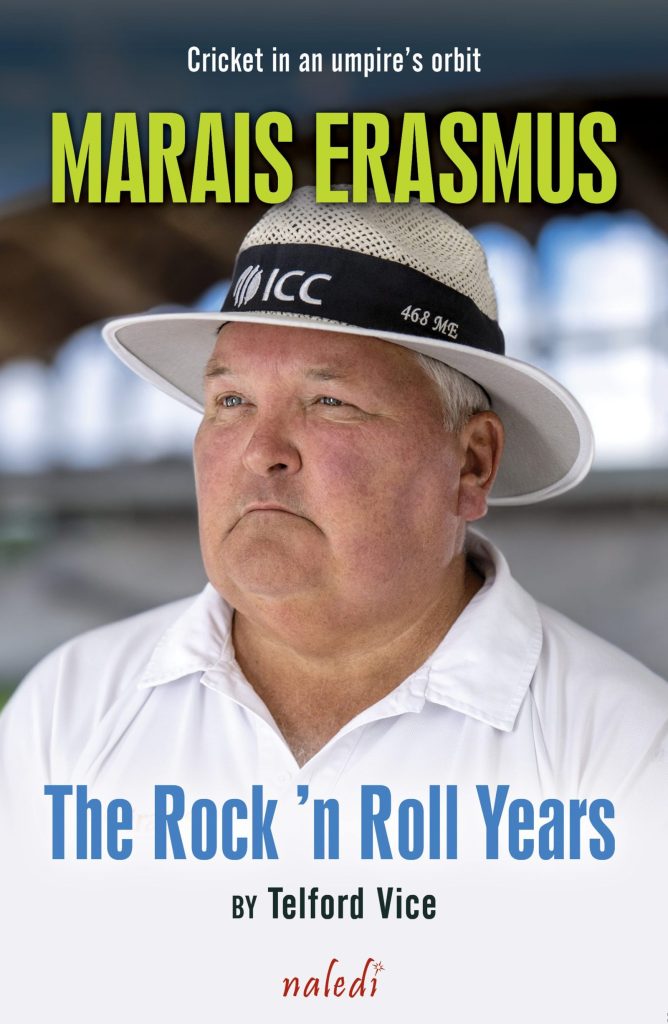
The Rock ’n Roll Years: Cricket in an umpire’s orbit

The Rock ’n Roll Years: Cricket in an umpire’s orbit

Author: Telford Vice
Publisher: Naledi

A teacher by profession, Marais Erasmus fell in love with cricket when he was a schoolboy. If anything, his passion grew more intense after he left school and moved on to represent Boland.

But, it was as an umpire that he made his name, initially in first-class cricket in South Africa and then, from 2006 on, as a full-time international umpire, affectionately dubbed the ‘poker-faced’ umpire.

As Telford Vice comments in his memoir, if he had been a painting, it would have been titled ‘Still Life with Wide-brimmed Hat’. On the other hand, off the pitch, he exudes enthusiasm and bonhomie, all signs of emotional self-control gone.

In 2007, to the shock of his wife, Adèle – also a teacher – he resigned from his job to devote himself full-time to umpiring, on the pitch and as the television third umpire. Hence the title of the book, pointing to the request for the television director ‘to rock ‘n roll that again for me, please’.

In 2010, he was appointed to the International Cricket Council’s (ICC) elite panel of umpires and he stood in four editions of the men’s 50-over World Cups between 2011 and 2023. He officiated in 82 World Cup matches.

In South Africa, he was elected six times as Umpire of the Year, and on the international stage, three times – in 2016, 2017 and 2021. As he modestly states, “Umpires are all human; we make mistakes, but fortunately, I made relatively few of them.”

His favourite contest was the 2019 World Cup at Lord’s in the UK, when he was the first South African to be an on-field umpire in the 50-over World Cup final. In fact, he loves everything about Lord’s, the home of cricket.

On the other hand, in India, where cricket is at its most passionate, spectators are extremely knowledgeable, as well as extremely vocal, and umpires have a hard time if they make an error of judgement.

Marais has umpired eight matches between India and Pakistan, and although their countries are in ongoing conflict with each other, there is no sign of animosity on the pitch.

Sixty percent of the games he umpired were played abroad. Now that he and Adèle have retired to Hermanus, he is determined they will spend quality time together – when he’s not on the golf course – and when they travel, it will be for pleasure alone.

For the aficionado, the book is filled with statistics, but cricket lovers as well as those who know a little about the game will enjoy the many anecdotes related to Marais’ fascinating career.

Two visions of architecture win the day

0

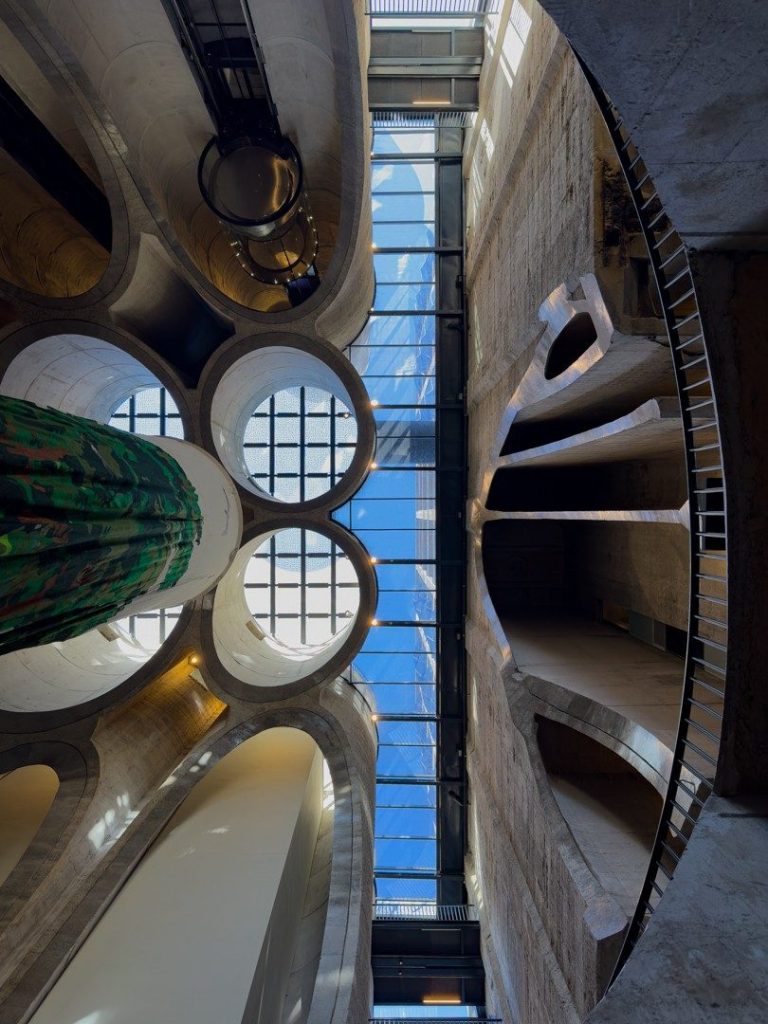
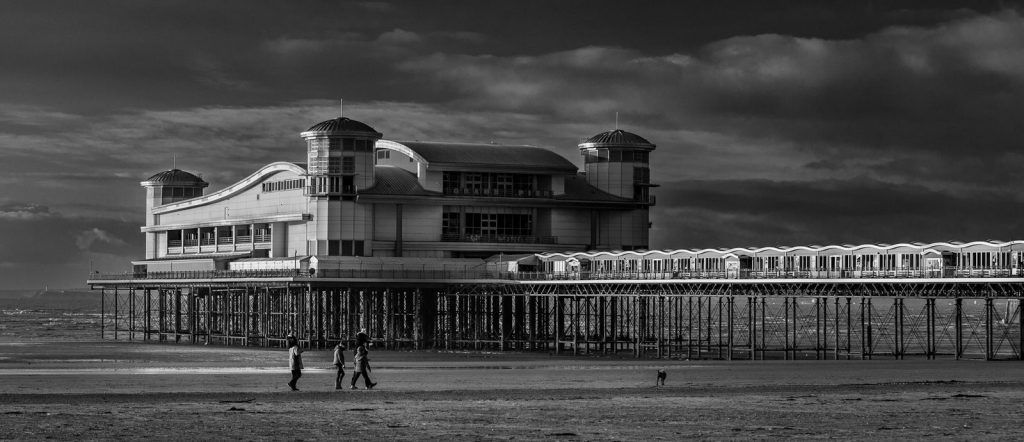
Hermanus Photographic Society’s September competition produced two striking architectural images, with Jane McMorran and Carina de Klerk claiming the honours.

McMorran won the Junior and Set Subject categories with Looking up in Zeitz MOCAA. Photographed on her mobile phone, the image showed that strong composition and observation can compete comfortably alongside images from conventional cameras.

The month’s set subject, Harmony of Steel, Stone and Glass, focused on architectural design and structure.

De Klerk won Senior and Image of the Month categories for Grand Pier, Weston-super-Mare, a monochrome study that combined the pier’s strong geometry with dramatic light and sky.

Grand Pier, Weston-super-Mare – Carina de Klerk. PHOTO: Supplied

André de Koker of Napier judged he competition.

The society will host a monochrome photography workshop with Kim Stevens on Saturday 10 October. Photographers interested in attending can email hps@hermanusphoto.co.za for more information.

Still not showing us the money

In politics, the so-called art of avoiding awkward questions, or wrapping them in enough vagueness in the hope they will eventually disappear, is a fallacy.

Public accountability has a habit of catching up with those in its crosshairs – no matter how long it takes

The long-running saga surrounding the failed Milkwood Festival may yet prove to be a case in point.

Most readers will recall that, around this time last year, Overstrand Mayor Archie Klaas allocated R250 000 of public money, from his discretionary fund, to the festival organisers.

A double booking of the location meant the festival subsequently collapsed amid what appeared to be inadequate planning. The perception was also that the municipality failed to apply due diligence and oversight, and the money had already been paid.

Since then, The Village News has repeatedly approached Mayor Klaas and Municipal Manager Dean O’Neill to explain what steps were in place to establish accountability and, crucially, safeguard or recover the public money.

A year later, clear answers remain elusive. Instead, the municipality offered a vague defence – organisers would fund this year’s Milkwood Festival with last year’s budget. Left unanswered was what happened over the past year, what financial checks were conducted, and who was being held accountable for the quarter-million rand

Calls for answers have not been confined to the media. AfriForum opened a case with Saps for investigation, while the Overstrand Community Action Network (OCAN) has repeatedly called for an inquiry.

Still, the saga remains unresolved.

Overstrand resident Pat Redman has also pursued the matter vigorously, taking her concerns directly to Mayor Klaas and eventually escalating them to Democratic Alliance (DA) head of governance Richard Newton.

And, judging by the responses, avoidance and ambiguity remain the order of the day.

Newton wrote that he had “engaged the mayor and his team regarding the issue”. He said he understood that the money was not missing, but that the festival had been postponed on the understanding that, once a new date was secured, the agreed services would be provided.

He said he had also asked the mayoral committee for progress on securing a new date and a clear plan to resolve the delay.

Mayor Klaas, meanwhile, referred Redman to an update from the municipality’s administration. He said the organisers had submitted a compliant application; marketing material had been issued or would be issued shortly; and municipal officials were expected to hold the organisers accountable. The only additional condition was that the festival took place before the 2026 Hermanus Whale Festival.

If the organisers failed to honour that undertaking, Klaas said, “consequence management” should apply. At this point, the mayor said that officials had confirmed that the festival was going ahead.

Oh, OK.

But the Whale Festival is next weekend. So, by that logic, the Milkwood Festival should be happening this weekend. Yet there is no evident announcement, programme or promotion.

But on Wednesday, Mayor Klaas told The Village News that the Milkwood Festival was booked for Sunday at Zwelihle Sports Ground and that no additional funds were granted for staging the event.

So the Overstrand public waits with bated breath to see what this promised “consequence management” will look like if indeed the condition is not met.

The DA leadership’s seemingly limp-wristed handling of the matter is telling and troubling – particularly surprising with the local government elections only a month away.

Does the party regard the questionable management of public money, due diligence and the prolonged absence of clear accountability as a trivial matter?

Or is the party’s normally quick response to dubious practices involving public money by political opponents somehow less robust when the questions involve one of its own?

Public funds deserve public accountability, not evasive language or assurances that something might happen at some unspecified point in the future.

A year is a long time to wait for a straight answer.

Nee, fokkit manne, as the saying goes: you can fool all the people some of the time, but you cannot fool all the people all the time.

Withdrawal of the De Mond court action

0

We are not giving up; we are warming up.

As many people know, I have withdrawn my High Court challenge to the De Mond Lease.

This is not conceding defeat but a strategic withdrawal. Please note that this decision has nothing to do with pressure put on me by various people.

I remain of the view that the municipality’s decision to award the tender to Point Caravan Resort (Pty) Ltd in March 2024, and to conclude the lease for 45 years in September 2024, was not correct.

In general, I support development. But here, there should have been proper public participation regarding what the developer intended to do with the leased property. Will there be an abattoir, a picnic terrain or affordable housing?

One simply does not know. Not even after huge legal expenses incurred in the High Court battle regarding the ‘record’ of the municipality’s decision.

While I am disappointed that my efforts have not resulted in the revelation of Point’s plans for the leased property, I have been advised that my concern can be better addressed in the land development application process which lies ahead, in particular any environmental, rezoning or departure application(s).

I am advised that it is in that process that my concerns (if any, once I know what the plan is) about the compatibility of the intended use should be raised.

This litigation was hugely stressful and expensive. It was also unnecessary. Why can we not be told by Point and/or the municipality what is envisaged for De Mond? Not only for my information but for the public’s consideration and comment.

FROM: Elmien de Kock

Six paintings for the record books

0

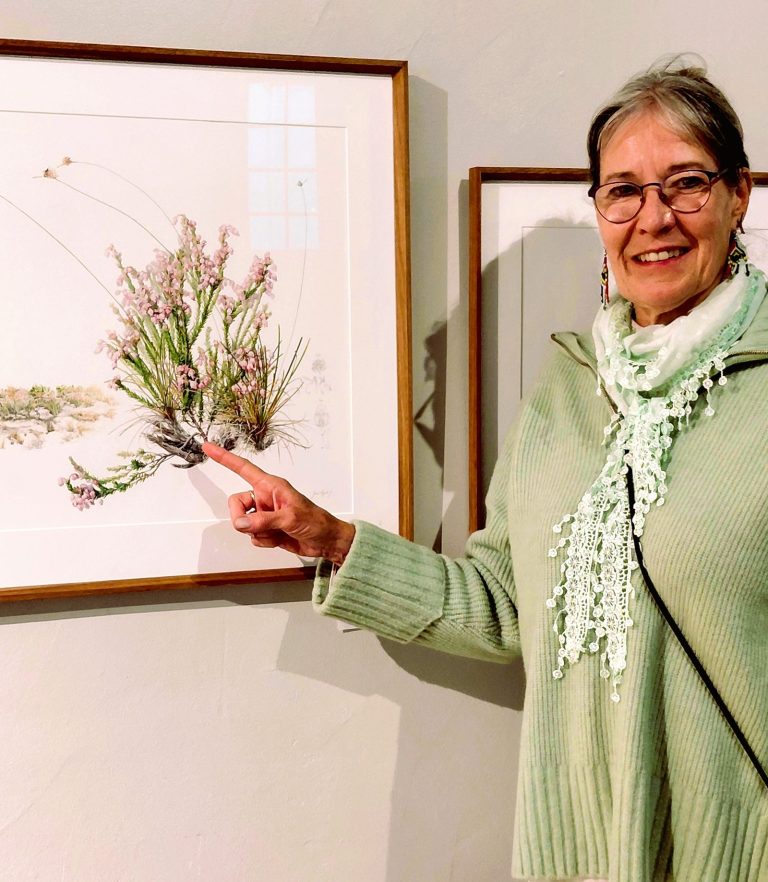
Jenny Hyde-Johnson, a prize-winning botanical artist from Gauteng, still finds it almost impossible to believe that the six fynbos watercolour paintings she submitted for the 2026 Royal Botanical Society’s annual Botanical Art and Photography Show in August broke the prestigious organisation’s record.

Never before in its 100 years of existence has any artist won the Best Botanical Art Exhibit and the Best Botanical Artwork awards in the same year. That’s in addition to the Gold Medal she received at this year’s Chelsea Flower Show in May.

Visitors to the reconstructed South African Flower Show exhibit in Stanford can view these artworks – and may have the opportunity to meet the artist.

It took her five years to complete the six works. She often became so despondent about her efforts that she felt like throwing in the towel. Fortunately, with the advice and encouragement of fellow artists, she kept going. The Royal Horticultural Society’s initial acceptance process alone took many months to finalise and involved, among other things, verifying the authenticity of each rare plant she planned to include.

Because her home is in Gauteng’s Cradle of Humankind and her subjects are found only in isolated pockets in the southern Cape, the project involved regular trips to the Grootbos Nature Reserve to observe them in their natural environment.

Since some of Jenny’s previous paintings were already included in the Grootbos Florilegium, fellow artist and manager of the collection Chris Lochner facilitated her trips, and she soon had the enthusiastic assistance of the reserve’s botanists and other natural scientists in tracking down the plants.

She chose rare, difficult-to-find species growing in cracks in limestone rocks for her series, titled Fynbos Diversity of the Coastal Limestones on Grootbos.

“Limestones of the southern Cape are new rocks, only about two million years old,” she says. “They overlay older dominant sandstones and form small islands in the landscape, home to highly adapted endemic fynbos. Limestone fynbos is extremely threatened in the areas surrounding Grootbos Nature Reserve, due to invasive, non-native vegetation and habitat destruction.”

It was not only the precise, detailed depiction of each endangered species and their companion plants that won the approval of the competition judges. It was the unique composition of each artwork, often with an unobtrusive – yet accurate – indication of the landscape from which they originated.

She said she wanted the paintings to ‘talk to one another’. That meant arranging them in a specific sequence, involving colour, shape and size, so one painting led to the next, with the last one in sync with the first. While each painting can be appreciated independently, all six together form a beautiful, clearly identifiable entity.