Home Blog Page 11

Independents challenge party-driven governance

0

With only one independent candidate contesting the 2021 Overstrand municipal election, the emergence of five independents ahead of this year’s poll on 4 November suggests growing support for alternatives to party-driven, local government.

Fed up with party politics, the independents share a belief that councillors should be directly accountable to residents, putting local interests ahead of party-political agendas.

The Organic Humanity Movement (OHM) has allowed selected candidates to stand under its umbrella in certain wards. The purpose of a collective approach is to accommodate stronger proportional representation (PR).

OHM founder Lauren Evanthia Bernardo described the Overstrand as a unique case where fed-up residents approached the organisation directly.

The independents are:

Anton Kruger – Ward 13: An environmental activist in the Overstrand for more than a decade, Kruger is of the opinion that persistent rule-breaking by the local administration and politicians is cause for concern relating to the future of the Overstrand’s natural environment. He also notes a general perception among certain ratepayer groups is that the local administration does not always act in the best interests of residents. Rather than criticise from the sidelines, he believes it is time to get involved.

Peter Hodgskin – Wards 1, 3 and 4: A resident whose Hermanus family roots stretch back to 1917, he says he is driven by a commitment to protecting the town’s unique environment and ‘sense of place’. A supporter of development determined by finite resources such as water, sewerage infrastructure and suitable land, he is critical of a ‘develop at all costs’ approach and wants community expertise to help establish responsible development parameters.

Edwin Brooks – Ward 15: As a business owner, Brooks has a long history of community development, youth training, and NPO leadership. He manages Southern Harvest and has supported the Hawston Community Forum, public spaces and affordable housing.

Adolf Krige – Wards 9 and 10: A Kleinmond resident since 1999, Krige has been involved in ratepayers’ associations, community projects and municipal issues. A former scientist and past member of several political parties, he says he is motivated by freedom, fairness and justice.

Riaan van Zyl – Ward 7: A lawyer with 30 years’ experience, practising in the Overstrand, he believes he brings extensive knowledge of property law, municipal governance and accountability to his candidacy. A Sandbaai resident of 15 years, he says he is motivated by the frustrations around the lack of service delivery, infrastructure maintenance, and meaningful public participation that he has experienced firsthand.
Laying down the law

0

Overstrand Municipality law enforcement conducted crime prevention operations across the Overstrand over the past two weeks, making 16 arrests and issuing numerous fines for various by-law and related offences.

In addition, 368 warrants of arrest were issued during the operation relating to 257 parking attendant-related offences, 67 involving car washers, 13 cases of drinking alcohol in public places, seven of illegal camping, and 23 other by-law offences, including littering and illegal dumping

Law enforcement teams focused primarily on Gansbaai and Hermanus, where complaints of illegal waste pickers and littering have increased.

A growing concern throughout the municipality is the activity of so-called bin pickers or informal waste collectors who search through refuse bins and black bags for recyclable materials, food, and other items of value. While these individuals form part of South Africa’s informal recycling economy and often operate out of economic necessity, their activities can lead to littering, illegal dumping, and security concerns.

Waste management remains a significant challenge. The municipality continues to balance humanitarian considerations with the need to maintain clean, safe, and orderly public spaces.

Operations will continue to ensure compliance with municipal by-laws and to address issues affecting the quality of life of residents and visitors.

Report littering, illegal dumping, and unlawful camping to the municipality’s law enforcement office at 028 313 8996. Alternatively, email enquiries@overstrand.gov.za with the location or address of the incident, and any other information that could assist officials investigating illegal dumping and camping.

Flower power hits Stanford’s streets

0

Stanford in Bloom, tentatively launched three years ago, has become a major drawcard for the Overstrand – bigger and better each year.

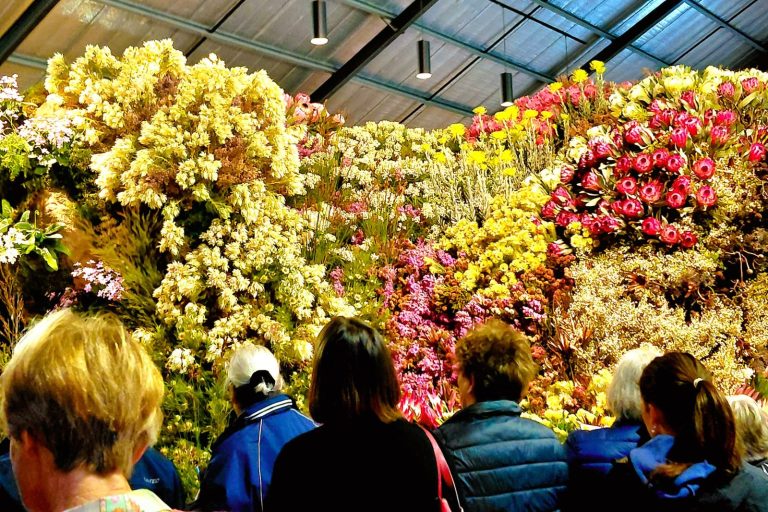
With the recreation of South Africa’s multi-award-winning Royal Horticultural Society (RHS) Chelsea flower exhibit as its centre point, it has had the full support of the people and businesses of Stanford. This annual celebration of our fynbos heritage has become an all-hands-on-deck community project, with a huge economic spin-off for the town.

Despite dire warnings of inclement weather on the opening day on Saturday, the streets and exhibit hall were thronged with literally thousands of visitors. They came prepared and didn’t let the periodic showers – not nearly as widespread or disruptive as predicted – dampen the spirit of excitement and joy.

The Grootbos-sponsored, meticulously reconstructed 2026 Chelsea exhibit, Life after Fire, designed again by Leon Kluge, won a Gold Medal and Best Exhibit in the Great Pavilion award in May.

The spectacular portrayal of the unique, fire-driven landscape of the Cape Floristic Region included some 20 000 stems of protea cut flowers and thousands of burnt protea branches, arranged to create a post-fire landscape. Bulbs and orchids from various parts of South Africa were also on display.

Now, in real time, the Cape Floristic Region is blooming again. Fire-stimulated ephemerals – plants that only flower the season after a fire – are bursting from the soil in masses. Some have not been seen for decades. It is a ‘superbloom’ of rare, endemic flowers, visually demonstrating that there is abundant life after fire.

The good news is that Leon has already designed South Africa’s exhibit for the 2027 Chelsea Flower Show. He says not enough funding has been pledged as yet, but he is confident it will be forthcoming. Given our prestigious profile at the world’s top horticultural show, it would be a travesty if it were not.

Stanford in Bloom continues until 27 September, with a full programme of events every day. For schedule and booking details, visit www.stanfordinbloom.co.za

Missing the point

0

Last week’s letter of complaint about the U3A meeting notice regarding Dr Abedian’s lecture on Iran, K Enslin missed the quotation marks around “Great Satan” and “Little Satan”.

Quotations marks indicate that the writer says that this is somebody else’s words, (in this case the Iranian regime), not his or hers.

A brief Google search reveals that Dr Abedian is a passionate opponent of the Iranian regime, and does not in fact support their sentiments regarding Israel or the US. I therefore submit that no apology is needed to ‘Western civilised’ or ‘non-Islamic’ people.

From: Derik Gelderblom

No quick fix for Stanford Cove erosion

0

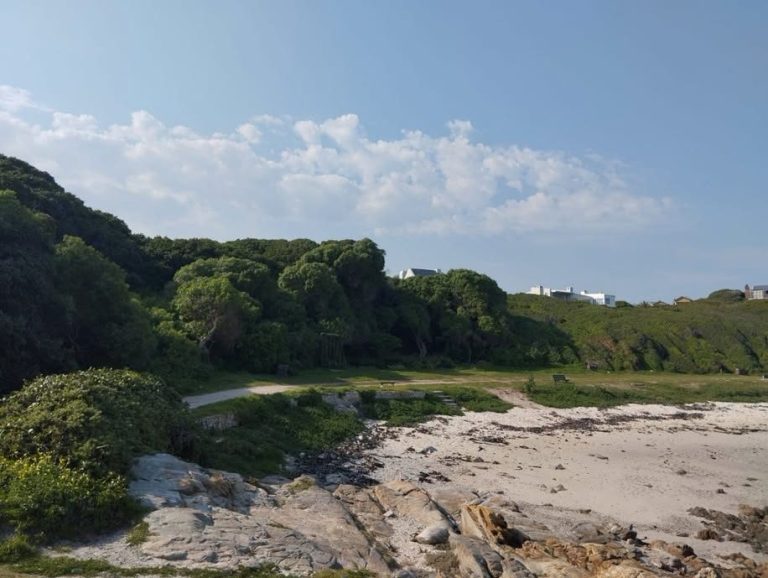
A report from Overstrand Municipality states that officials are aware of growing concerns about erosion at Stanford Cove in De Kelders near Gansbaai, where sections of grass have been lost, embankments have collapsed, and steps to the beach have been washed away.

The cove is a popular, public open space for residents and visitors, and the municipal officials recognise the need to keep the area safe and accessible.

Recent storms and unusually high seas have caused significant erosion along parts of the Overstrand coastline. As a small ‘pocket beach’, Stanford Cove naturally experiences the sand’s movement within the area. Storms can shift sand away from sections of the beach and upper shoreline, while some sand may return under calmer conditions.

To assess possible solutions, the municipality requested advice from the Western Cape Government’s Department of Environmental Affairs and Development Planning (DEA&DP). Its Coastal Management team inspected the site on 29 July and subsequently advised that the situation did not constitute an emergency and posed no immediate risk to life.

The municipality will therefore not mechanically reshape the beach or place rocks as an erosion-control measure at this stage. Such interventions could disrupt the natural movement of sand and potentially worsen erosion elsewhere in the cove.

For safety reasons, the damaged staircase and eroded paths have been closed and barricaded. The beach remains accessible via four to five other access points from the grassed area.

The damaged staircase will not necessarily be rebuilt in its current position. If replacement access is required, the municipality will investigate alternatives better suited to the coastal environment and natural movement of sand.

The municipality’s Environmental and Conservation Division, with the Infrastructure and Community Services Directorates, will monitor the site and assess:

the stability and safety of the eroded embankment

safe and sustainable beach access

options for restoring vegetation and retaining sand

the impact of stormwater flowing towards the beach, and

longer-term rehabilitation options.

Any future work involving sand movement, earthworks, rock placement or other coastal stabilisation measures will be discussed with the relevant environmental authorities to determine whether environmental authorisation or other approvals are required.

Residents are urged to keep away from steep or potentially unstable areas and obey temporary barriers and warning signs.

New Sandbaai residential estate to meet rising housing demand

0

With the launch of The Nautilus estate, the surging demand for quality housing along the Overberg coastline has found a timely answer in Sandbaai.

Positioned 800 metres from Sandbaai Beach and directly opposite the Whale Coast Mall, the secure estate addresses the region’s acute shortage of modern residential stock.

Located within 15 minutes of central Hermanus, Onrus, and the Hemel-en-Aarde Valley, the development pairs everyday convenience with access to key schools, commercial hubs, and natural landmarks such as the popular coastal cliff path.

Property specialists highlight that the release comes at an important juncture for the local market.

“The Nautilus development comes at an excellent time for the Sandbaai property market, where quality stock has been relatively limited,” says Jako Nagel of Greeff Christie’s.

Co-listing agent, Tony Kelly, agrees. “It presents an exciting opportunity for buyers looking to invest in one of the Whale Coast’s most sought-after areas, whether as a permanent residence, a lock-up-and-go, or an investment property.”

Designed with open-plan layouts and contemporary finishes, the development offers 83 apartments, 27 townhouses and 24 simplex units. To accommodate modern lifestyle preferences, the access-controlled layout incorporates updated security systems, high-speed fibre infrastructure, and dedicated pet-friendly outdoor spaces.

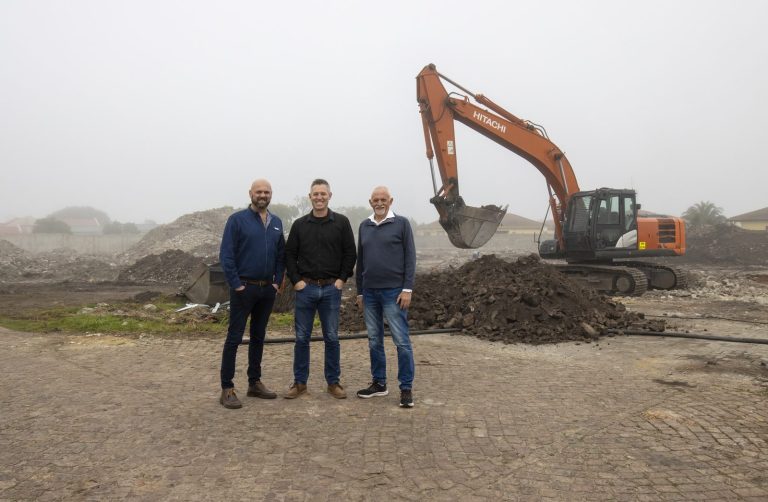
Lighthouse Construction principals Eddy Lanuti and Lambert van Heerden, whose two-decade portfolio includes landmark developments such as Ocean Breeze, Tambali and Monte Mare, are bringing the estate to life

Greeff Christie’s Whale Coast principal, Jaco van der Merwe, said the collaboration with Lighthouse instills confidence given their extensive local track record,. “To see the project take shape after years of planning is immensely rewarding. Sales have progressed remarkably well in just three weeks post-launch, with civil infrastructure currently underway and Phase One completion expected by late 2027.”

With prices ranging from R1 999 000 to R3 299 000, The Nautilus delivers a rare entry point into the vibrant local market for first-time buyers, downsizers, and investors. It offers a well-located coastal lifestyle designed for everyday living, community connection, and long-term value.

For more information, phone Tony Kelly at 082 777 8963 or Jako Nagel at 064 288 0887.

The art of chemical warfare

0

Chemical warfare is a common defensive strategy that insects use to repel attackers. If you have ever touched a stink bug firmly by mistake, you will have experienced this.

But some insects have taken a rather more dramatic approach to self-defence and have evolved serious chemical weapons.

One of the best-known South African examples is the beetle known in Afrikaans as the oogpister – literally, the ‘eye-pisser ‘. The name is not entirely undeserved.

Some African ground beetles in the genus Anthia can squirt an acrid defensive secretion surprisingly far and accurately at an attacker. The chemical is produced in special glands in the beetle’s abdomen. A well-aimed squirt of unpleasant chemicals effectively persuades an attacker to think – more than twice.

Beetles have an astonishing variety of chemicals and chemical mixtures among different species. In many chemically defended beetles, these secretions contain quinones, substances that are irritating and unpleasant.

But if the oogpister carries a water pistol, the bombardier beetle packs heavy artillery.

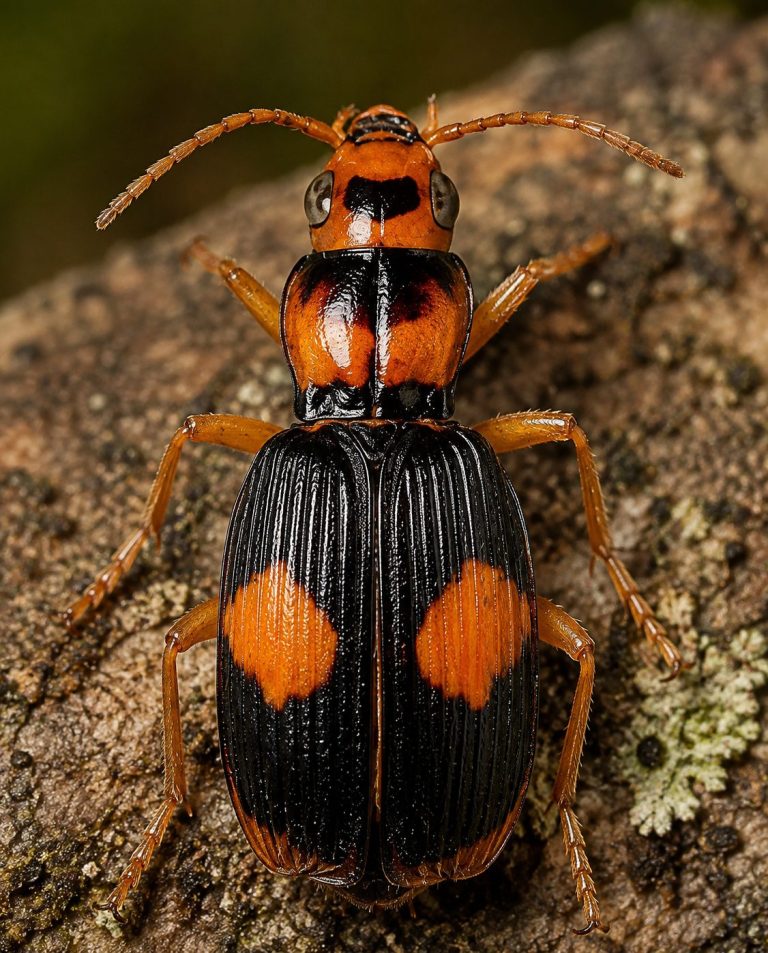
This ground beetle has evolved an extraordinary system for producing a hot, noxious spray. It keeps the ingredients safely separated inside its abdomen: one compartment contains hydrogen peroxide and hydroquinones, while another contains enzymes including catalase and peroxidase.

When the beetle is attacked, the ingredients combine in a reaction chamber.

The resulting chemical reaction produces a lot of heat, oxygen and irritating quinones. The spray can reach 100°C, and the pressure build-up inside the mixing chamber propels it out of the beetle’s abdomen with an audible pop. Even more remarkably, the beetle can aim the spray in different directions.

A bombardier beetle can discharge its weapon repeatedly – in some species more than 20 times before its chemical supplies are exhausted. This is a machine gun, not a pistol.

Chemical defence doesn’t always involve shooting at the enemy. Some beetles make themselves poisonous or revolting to eat (like the aforementioned stink bug). Others acquire defensive chemicals from the plants they feed on and store them in their own bodies.

My favourite example is the Acraea butterfly larva that feeds on the Kiggelaria (wild peach) tree. The leaves of this tree are poisonous, which very effectively protects the tree from browsers – except for the Acraea caterpillar.

This clever creature can sequester the poison in spiny protrusions on its skin, rendering it harmless to the larva itself but not to prospective predators.

This strategy protects the caterpillars from most birds – except the Klaas’s cuckoo. This particular bird has a trick or two up its own proverbial sleeve. It whacks the caterpillar on a branch until the guts spill out, then eats only the guts, which are totally harmless, leaving the poisonous skin behind. Job done, clever bird.

But let’s not talk about the cuckoo’s reprehensible breeding behaviour.

Some animals combine chemicals with warning colours to deter predators. The convention is that a prospective meal clad in bright colours is likely a very bad idea.

The warning colours deter predators. However, harmless species may copy the colours and patterns of dangerous or unpleasant species with the message: “I look poisonous, so better not eat me”. This is known as mimicry.

For example, some young lizards have evolved black-and-white colouring and behaviour that resembles the conspicuous oogpister beetles. The lizard is effectively advertising somebody else’s chemical weapon as its own, but the strategy works.

So the message is… If something looks poisonous, it might well be. And if a beetle raises its abdomen and points it at you, you would be well advised to retreat – fast.

Springboks and politicians

Erasmus has created more than a team. He has laid the subliminal groundwork for a sense of “oneness” – a shared identity built around common aspirations, goodwill and achievement. Something politicians fail to grasp.

Without intending to, the Springbok rugby squad has become South Africa’s single most powerful and successful ‘political’ force.

The reason is the team’s extraordinary ability to unite the nation.

Nothing else lifts the spirits of our diverse population into such a surge of positivity, pride and cohesion as watching the men in green and gold weave their magic on the international stage.

Given the Boks’ dominance in recent years, this is hardly a new phenomenon. But Saturday night’s conclusion of the “Greatest Rivalry” series against the All Blacks, – in the United States, of all places – added a remarkable new dimension to the argument.

Played in a country where rugby remains a marginal sport – albeit one that will host next year’s World Cup – the match was regarded by some pundits as little more than an exhibition showpiece.

They were wrong.

More than 68 000 spectators packed Baltimore’s stadium, turning it into a sea of green as South Africans of every background descended on the city to fly the flag, uniting as one proud South African nation – albeit most lived in America. The scale of it was mind-boggling.

It was also symbolic. The crowd set a new record for the largest attendance at an international rugby match anywhere in North or South America – a striking demonstration of the power of one team to transcend the divisions that so often define us.

And while the players deserve the credit for what happens on the field, much of the Boks’ success can be traced to coach Rassie Erasmus and his remarkable motivational instincts.

His philosophy is by now familiar: the players are constantly reminded that they do not play merely for themselves. They play for every South African, regardless of race, background, wealth or social standing.

It is a simple concept, but a profoundly powerful one.

By instilling that sense of responsibility, Erasmus has created more than a team. He has laid the subliminal groundwork for a sense of “oneness” — a shared identity built around common aspirations, goodwill and achievement.

For a country as diverse and complicated as South Africa, this is no small achievement.

The Boks cannot solve our political, economic or social problems. But, perhaps uniquely, they make us forget our differences for a while – and remind us of what we have in common.

With local government elections almost upon us, one can only wonder what South Africa might look like if our politicians adopted something of that same positive mindset, rather than sowing division for their own political ends.

It is disheartening that the country’s long and largely successful post-apartheid healing process often takes a back seat when political parties go into election mode.

Of course, there are difficult issues that must be confronted. Politics is politics. But there is a vast difference between robust political contestation and the deliberate cultivation of antagonism – sometimes spilling over into violence – to advance partisan objectives.

South Africa could do without this nonsense.

Particularly galling is the cheap politicking that often accompanies deeply emotive community protests.

This week’s unfolding tragedy in Kempton Park and surrounding areas, involving what appears to be the serial killing of women, is a case in point.

Understandably, communities gripped by fear and anger take to the streets and gather at crime scenes to demand answers. Their anguish is real.

What rankles is the inevitable arrival of opportunistic political parties, eager to turn that grief into political capital.

Party colours appear — scarves, T-shirts and flags — and, with victims’ bodies lying in the background, party faithful can be seen toyi-toying with broad smiles as if at a jamboree, while party spokespersons jostle for the cameras, adopting suitably mournful expressions and proclaiming solidarity.

C’mon, people.

Surely there is a line that should never be crossed — a point at which political opportunism must give way to simple human decency.

When communities are at their lowest ebb, let them grieve, rage, and demand justice.

But don’t turn their pain into a political stage. Be sincere at least.

Wishful thinking?

Of course.

Who was Fick’s Pool named after?

0

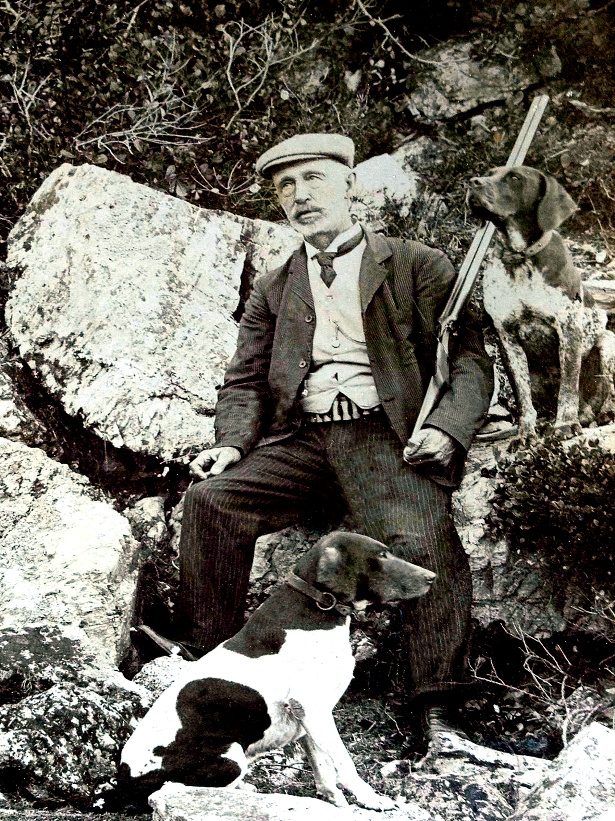
Following uncertainty over who Fick’s Pool was named after, research suggests that Josias Servaas Fick (1830-1919) carries the honour, after two candidates were previously thought to be the true candidates. An article on how clarity was reached has been posted on the new U3A Overberg website. To read this interesting story of discovery, visit https://u3aoverberg.co.za

PHOTO: Supplied by the Fick family

Overberg birding takes flight!

As more local and international birders discover the region’s exceptional birdlife and natural beauty, the vision of making the Overberg a leading birding destination – once a dream – is now a reality.

BirdLife Overberg chairman Steve Peck says this was the vision of the late Anton Odendal, a legend in the Overberg birding community.

Peck, who has guided international birders around the region, is mindful of the growing number of birders and is committed to carrying this vision forward.

With an impressive 454 bird species on record, including 41 pelagic and 413 terrestrial species – which include one critically endangered, eight endangered, 15 near-threatened, and eight vulnerable species, as well as endemic and near-endemic species – the Overberg is a hotspot for conservation.

It has sixty-one migrant species, including the Red-chested Cuckoo, African Paradise Flycatcher, Black Saw-wing and Black Cuckoo.

Based on BirdLife Overberg’s monthly bird counts over the past seven years, the number of species recorded represents 42% of all the birds on the official South African bird list.

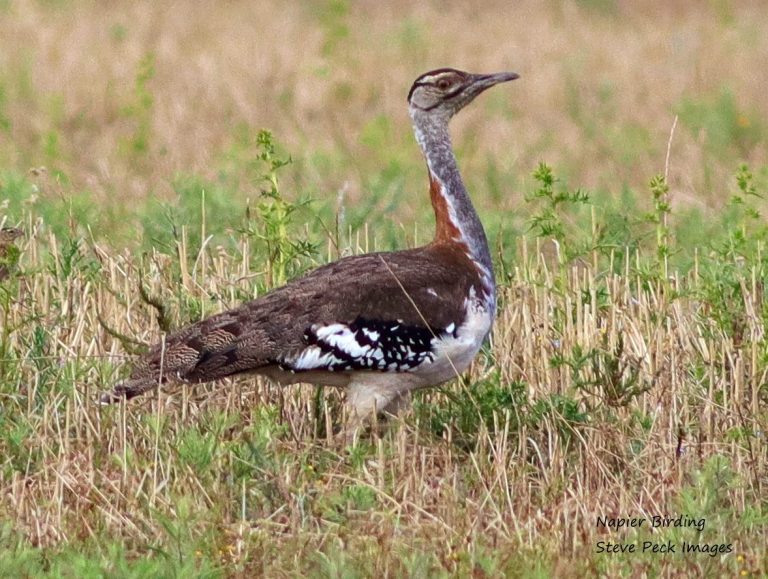
“We firmly believe no other region in South Africa can come close to this percentage,” says Peck. Birding enthusiasts are drawn by iconic birds such as the Blue Crane, Denham’s Bustard, Cape (Agulhas) Long-billed Lark, Cape Rockjumper and other fynbos endemics.

Avi-tourism is becoming increasingly popular – and a valuable additional income for tourism in the area. Recent research has highlighted the benefits of developing it as a conservation and economic opportunity in South Africa.

A study of 11 community-based projects revealed that birding, when linked to conservation objectives, creates income, skills and empowerment opportunities for local communities.

The Overberg’s diversity of habitats and nature reserves – such as De Hoop, home to Cape Vultures; Stony Point, with its African Penguins; and Rooiels, where Cape Rockjumpers and Verreaux’s Eagles can be seen – offers birding enthusiasts a range of options.

Visit the club’s website, birdlifeoverberg.org.za and follow the link Birding Routes Archives to explore available routes in the Overberg.