Home Blog Page 5

Pitching in and pitching up at Camphill

0

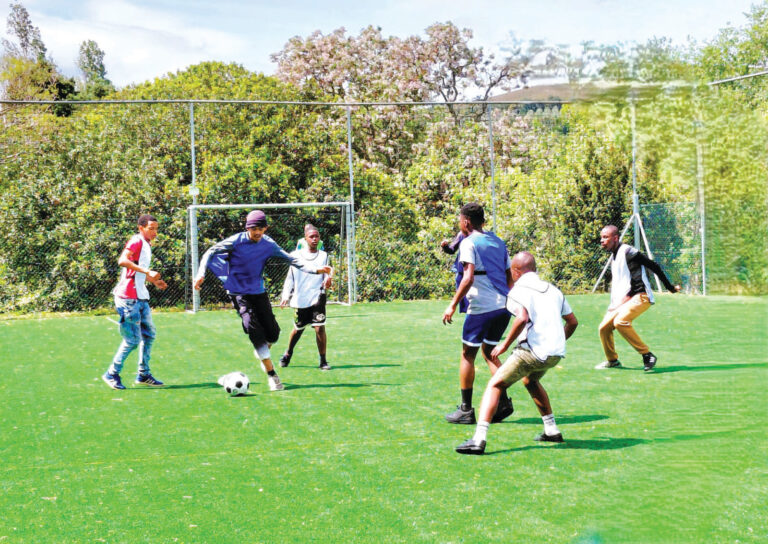
The opening of a new multi-purpose sports pitch was a momentous day for the Camphill School and Camphill Farm communities in the Hemel-en-Aarde Valley.

The children were revved up, and so were the farm residents. Friends and supporters, some from the UK, Ireland and the Camphill Africa region, joined the fun. The pitch was laid out on the open grassland in front of the school.

Funded jointly by the Association of Camphill Communities UK and Ireland, and Camphill Families and Friends UK and Ireland, this project was 10 years in the making. However, Geoffrey Weir, chairman of Camphill School Hermanus, highlighted that it was in keeping with the vision of Karl König, who started the worldwide Camphill Movement in 1939. He believed all children had the right to an equal place in the sun, no matter what their circumstances.
Pitching in and pitching up at Camphill
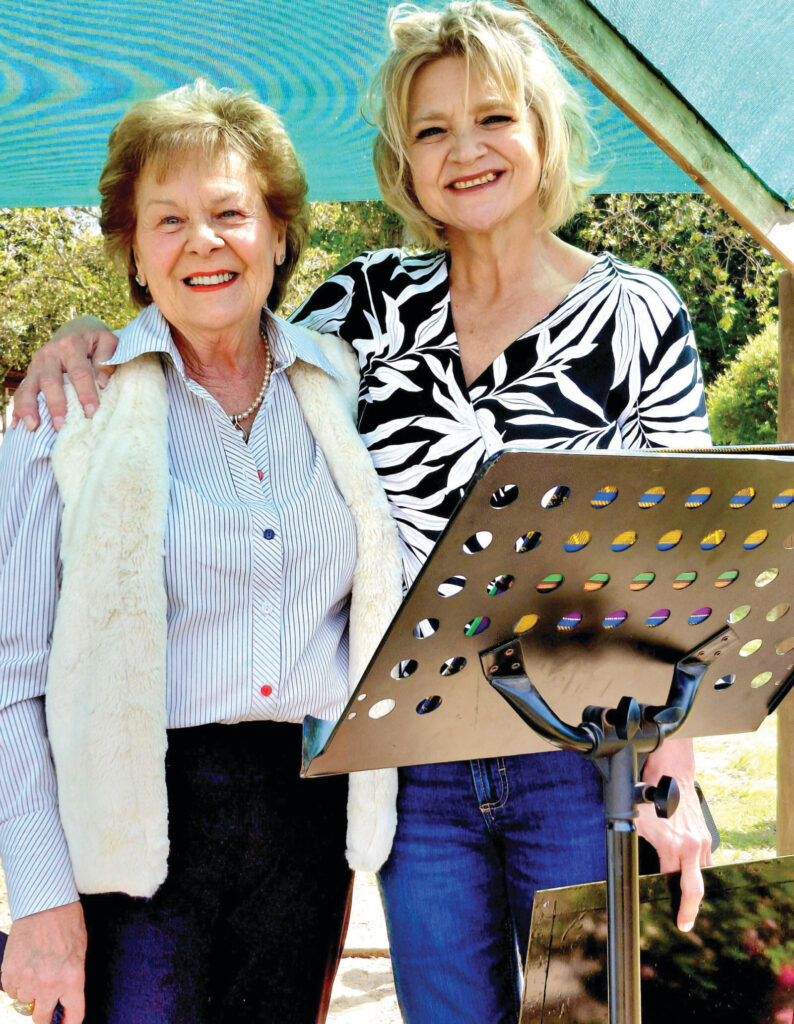
Nicolette Johnson, former Overstrand mayor and unofficial ‘patron’ of Camphill School Hermanus, with school principal, Jeanne-Marie Botha. Nicolette officiated at the opening of the school’s new multi-purpose sports pitch. PHOTOS: Elaine Davie

This sports facility willl offer the children an opportunity to experience the joy of physical activity, learn the value of teamwork, and handle winning and losing. As the children developed new skills, their confidence would grow.

These sentiments were echoed by former Overstrand mayor and unofficial ‘patron’ of Camphill School, Nicolette Johnson, who officially opened the multi-purpose, all-weather, floodlit pitch, complete with artificial grass, which will be shared between the school and the adult residents of the Camphill Farm community next door.

“Physical activity has always mattered here,” she said, “not as an add-on, but as part of how we understand education and community life at Camphill.”

Paying tribute to the funders for their support, reaching across continents, she said, “That connection between friends of Camphill so far away, and this community, right here in Hermanus, is really the spirit of the whole Camphill movement, people choosing to stand behind other people, because they believe every individual deserves the chance to thrive.”

She thanked the construction companies that tackled the project with dedication and enthusiasm, and an anonymous local donor who had provided team bibs and balls.
Signs of the times at Grotto

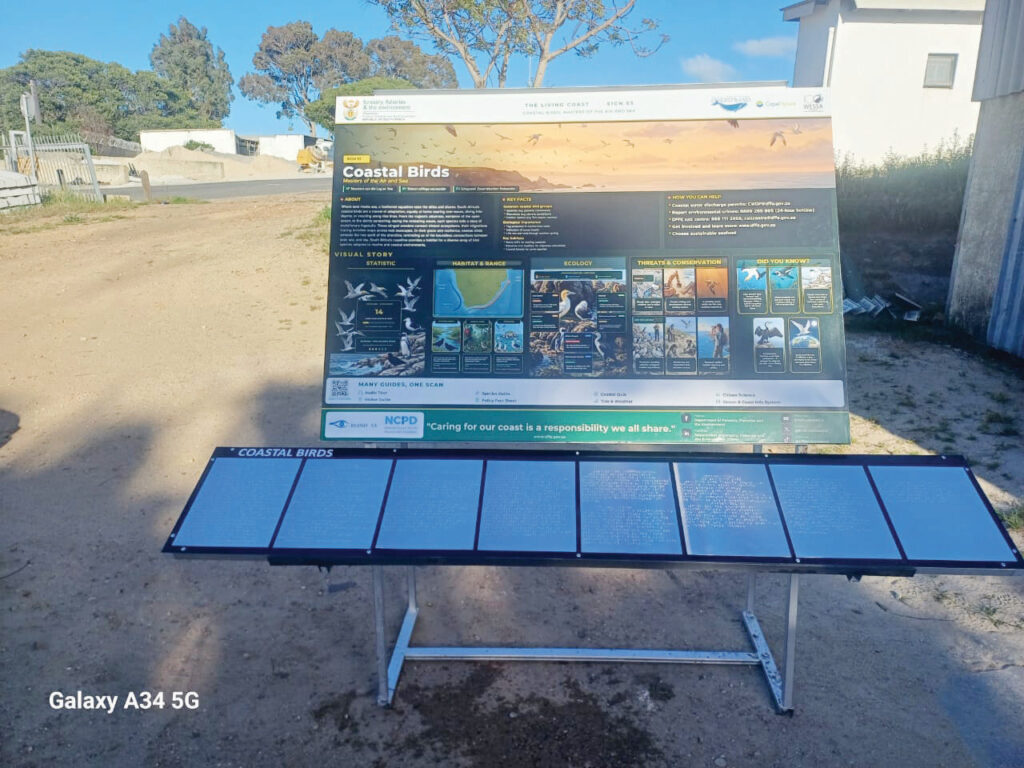
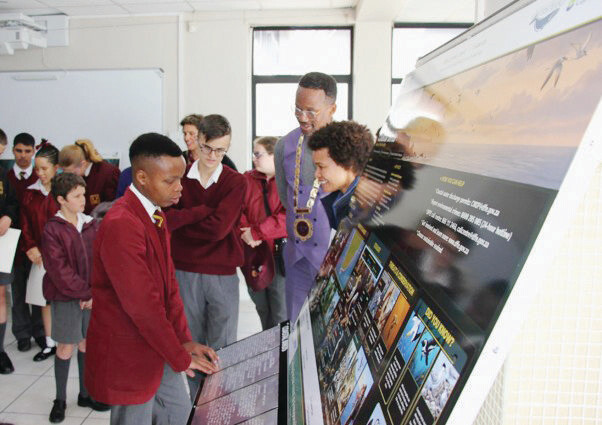
The new Living Coast signs installed at Grotto East have got people talking.

At last week’s launch, designer Ryan Peter said he believed they would set a standard for the African continent, possibly the Southern Hemisphere.

They are the latest in the Living Coast project, launched more than two decades ago as part of the Department of Forestry, Fisheries and the Environment’s (DFFE) CoastCare initiative that installed coastal interpretive signs at beaches across the country.

Signs of the times at Grotto
ABOVE: WESSA CEO Cindy-Lee Cloete and Overstrand Mayor Archie Klaas observe while a learner from the Pioneer School for the Visually Impaired engages with the new Living Coast prototype signage. PHOTO: Supplied RIGHT: The new sign. PHOTO: Supplied
Signs of the times at Grotto

Each sign includes features that make information accessible to all. Those with poor eyesight, wheelchair users, children and blind visitors can access the information indepen- dently.

Languages include English, Afrikaans, isiXhosa and isiZulu. The Hermanus prototypes feature English and Afrikaans text with Braille, while Afrikaans digital guides are already available. Other languages will be introduced as the series expands.

Adding value to the signs, QR codes provide access to a much larger digital library, extending each installation’s educational value.

The unveiling forms part of the Wildlife and Environment Society of South Africa’s (WESSA) celebration of 25 years of the Blue Flag programme in South Africa.

When the fireflies came out

0

There is something wonderful about being in nature at night – but something especially wonderful about being in Fernkloof Nature Reserve after dark at this time of year.

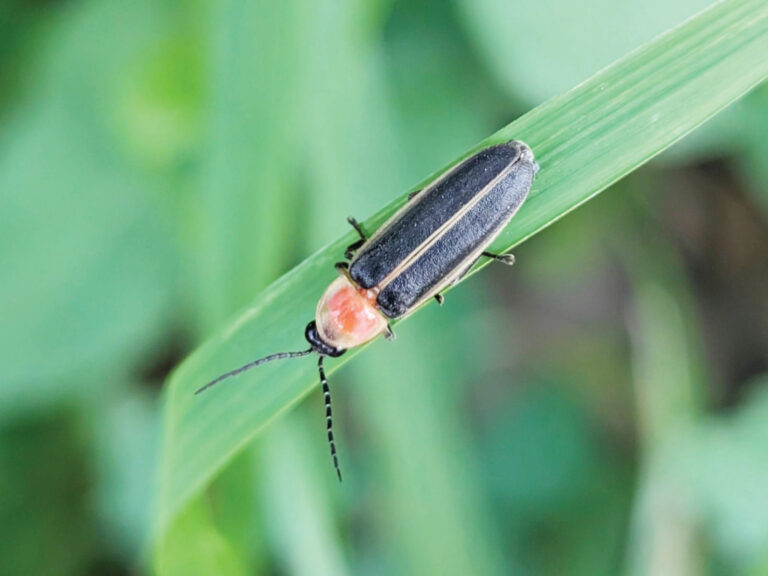
For 10 years, Whale Coast Conservation has been privileged with permission to escort small groups of nature lovers into the reserve at night. There they experience the enchantment of fireflies during the brief mating season. In our overlit residential areas, we seldom see them anymore.

The tiny beetles emerge from their long larval stage with one objective – to find a mate. To avoid daytime predators, they fly at night. But to find a mate in the dark, they need light – so they have to light up.

When the fireflies came out

Producing light requires considerable energy, which is why their reptilian-looking larval stage is a prolific predator of slugs and snails. Energy derived from their prey is stored in the larval cells and retained into adulthood, providing the fuel for their light production.

But why do they flash their lights? It’s their way of identifying who they are – their individual call signal. A female firefly stays low to the ground, while males fly overhead, sending out pulses of light to announce their presence. If a female is suitably impressed by a male’s particular show, she will flash a come-hither reply.

Their light, called bioluminescence, is cold light, meaning all the energy is converted to a photon of light, unlike artificial light sources, where at least some energy is lost as heat.

Despite this energy efficiency, all the flying and flashing soon exhausts the stored energy and the flashiness ends – either in mating success or doomed to forever failure. There is no second chance.

However, this rather prosaic account of a firefly beetle’s courtship ritual does no justice to the enchantment of the occasion.

In the dark, the familiar landscape changes. The pale paths reflect light from the starry sky, the mountains become dark silhouettes, and sounds are amplified. There is the aroma of the fynbos and the fragrance of Struthiola in the night air, attracting pollinator moths.

And, of course, there are – hopefully – the fireflies.

Suddenly the darkness comes alive with little points of light, flashing in the vegetation along the river and up the mountain slopes. For a while, the fireflies are the stars of the evening.

But they aren't the only stars. On a mountain above Hermanus, with nothing between you and the sky, the mountain is a dark shape beside you; the Milky Way appears brighter and sometimes a shooting star slips across it.

Closer to Earth, the night is alive with tiny insects flashing their coded messages, hoping to fulfil their procreation destiny.

It is easy to understand why people describe fireflies as magical. I have watched them every spring for about 10 years, and I still get excited when I see those first little flashes in the darkness.

I know the light is a chemical reaction catalysed by an enzyme, using ATP’s stored energy, and that the flashes are part of their courtship communication. Knowing how it works doesn't make the experience less extraordinary.

Perhaps that is because the magic isn't only in the firefly itself. It is in the experience of being there. We tend to think that we are going to see fireflies. What we actually discover is the beauty of the night.

The fireflies may come out in their hundreds – or they may decide the weather isn't to their liking. Too windy, too damp, too cold – we don't get to choose; they do.

Nature doesn't perform on demand. Sometimes you see a few fireflies. Sometimes you see hundreds. Sometimes you get the Milky Way and a shooting star as an unexpected bonus.

But if we are willing to slow down, switch off the lights, and simply stand still and be in the moment, there is almost always something waiting to be noticed.

Support for park proposal

0

Plans for a park development next to the Sandbaai Hall have received community support.

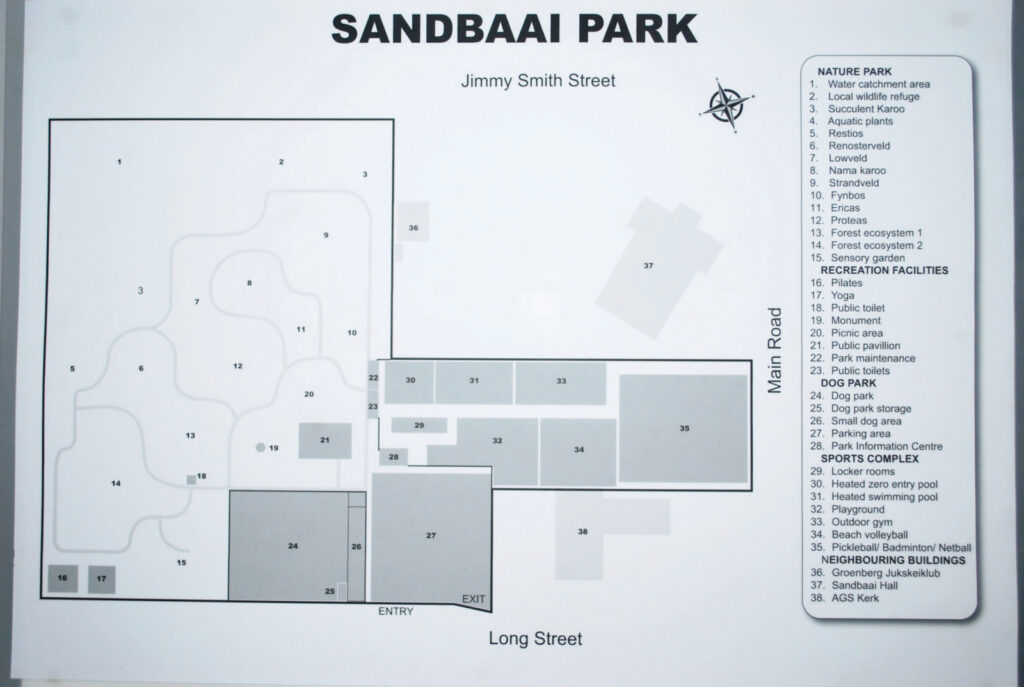
The development includes an eco-park with pathways and benches where visitors can enjoy abundant natural plant and birdlife, a heated indoor swimming pool with wheelchair-friendly access, volleyball and pickleball courts, an outdoor playpark and a fenced-off dog park.

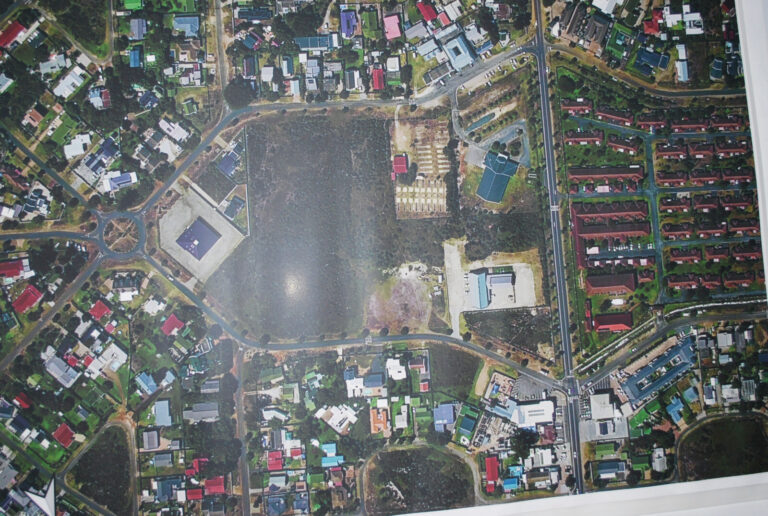
A model of the proposed amenities is currently on display in the hall’s foyer.

Support for park proposal
The proposal is to create a hub where the community can enjoy nature and recreational activities. Plans include a heated indoor swimming pool, a dog park and a children’s playground. PHOTOS: Bianca du Plessis

Overstrand DA mayoral candidate Cllr Clinton Lerm described the proposed development as a wonderful initiative. “It is vital that communities drive projects such as these and not councillors,” he said.

One resident already pledged funds and 10 young antelope that will be released into the environmental park.

Chris Reid, chairman of the Sandbaai Community Voluntary Improvement District NPC that drives the proposal, explained that last Monday’s meeting was to gather suggestions, input and support before a land-lease application was submitted to the Overstrand Municipality.

He said the theft of tortoises and rare plants on the piece of land, the threat of vagrants and illegal land invasion, and unsightly dumping motivated the concept. To address these concerns, he said it would be better to develop it into a hub for recreation, sport, and natural beauty that Sandbaai and neighbouring communities could utilise.

Professor Jeanine Vellema emphasised developing the land for the benefit of the Sandbaai community, because failure to do so could result in it being sold off. “If we don’t use it, we’ll lose it,” she warned

The vision is for the park to become self-sufficient and off-grid, with solar panels providing electricity and rainwater retention tanks supplying water for ablutions and the swimming pool. Sponsorships and letting the facilities to local sports clubs and schools will support the upkeep and further development.

Reid pointed out that the land was already zoned for community use, which counted in their favour. “If not, we could lose the only large plot of land left in Sandbaai,” he said.

Community suggestions included a skate park for teenagers, a tea garden, a putt-putt course and an indoor venue.

For more information and to have your say about the proposal, visit www.sandbaaipark.co.za or send an email to admin@sandbaaipark.co.za

A date with musical nostalgia

0

Fashions change and decades pass, yet a familiar melody can bring back a person, a place, or a moment we thought we had forgotten.

That was the territory of As Time Goes By, the OAK concert at the Hermanus Civic Auditorium on Sunday afternoon. Soprano Louise Howlett joined pianist Albert Combrink and double bassist Dylan Tabisher for a programme of familiar melodies and varied moods that suited a leisurely afternoon.

From Hoagy Carmichael’s Stardust and Burton Lane’s Old Devil Moon to medleys of Cole Porter and George Gershwin, the selection offered plenty of opportunities for recognition and rediscovery. Jerome Kern’s All the Things You Are and Rainbow Connection broadened the musical journey, while La Vie en Rose brought the world of Edith Piaf into the auditorium.

Howlett studied singing at the Royal College of Music and has built a career across classical music, jazz and Broadway.

Tickets for the next OAK concert are now available from René du Plooy at 082 940 4238 or by email: reneduphermanus@gmail.com

Small beginnings to a national campaign

Few know that the pink banners marking Breast Cancer Month had humble beginnings in Graaff-Reinet.

What started as a personal tribute to two women named Pauline has blossomed into a nationwide campaign, spreading hope, raising awareness and providing practical support to cancer communities across South Africa.

Pink Trees for Pauline was founded in 2012 by Carol-Ann van Jaarsveldt after she lost her mother and grandmother, both Pauline, to cancer. In their hometown of Graaff-Reinet, trees along the roads were wrapped in pink fabric as a tribute to the two women – and a symbol of hope for others affected by cancer. Together with breast cancer survivor Adri Jansen van Nieuwenhuizen and educational psychologist Dr Pam Kerr, the non-profit organisation Pink Trees for Pauline was established.

Today, more than 140 towns participate during September and October, using hundreds of metres of pink fabric to transform trees and public spaces and raise awareness.

The organisation’s #doekwithadifference campaign, in partnership with the Cancer Association of South Africa (CANSA), also raises funds to support families caring for palliative patients at home. Money raised helps provide medical equipment and food parcels to needy patients identified by social workers.

Participate by buying pink fabric to decorate trees – or colourful headscarves, bracelets and earrings. The campaign highlights how a simple idea born from personal loss can become a powerful, national expression of remembrance, solidarity and hope.

The Village News takes a step up

0

Most readers will know The Village News changed hands earlier this year.

I take this opportunity to introduce myself as the new owner, share my vision for the newspaper and outline some of the steps we’re taking to make it an even more vibrant, community-centred voice.

What attracted me to The Village News was the value it held for the people it served. For years, it has reflected the stories, achievements and concerns of the people and businesses of the Whale Coast and Overstrand.

That has been made possible by a dedicated local team that knows the area and cares deeply about its community. My role is to support that team, build on its strengths and help the newspaper grow.

One of our priorities is to make it easier for readers to connect with us.

Working with a digital development team, we’ve been building a new website: thevillagenews.co.za, posting our stories online so they’re more accessible and easier to read wherever you are.

The website also offers a direct platform for readers to submit their own news and for local businesses to book advertising online with ease. Over the coming months, we’ll be introducing additional features and new ways to read, engage with, and enjoy The Village News.

The website is now live and open to explore, although it remains a work in progress, so you may encounter the odd glitch along the way. We’d greatly appreciate your help in ironing out any teething problems. If something doesn’t work as it should, or there’s a feature you’d like to see, please let us know at website@thevillagenews.co.za.

We’ll keep you updated as we add the finishing touches and bring the full site online.

Finally, a heartfelt thank you to every reader, advertiser and contributor who has helped keep The Village News serving the community. We look forward to hearing more of your stories – and continuing to tell them.

FROM: Henri de Kock

CEO of the Grit Group

The Village News (Pty) Ltd is a wholly owned subsidiary of the Grit Group

A blot on Hermanus’ historic heart

0

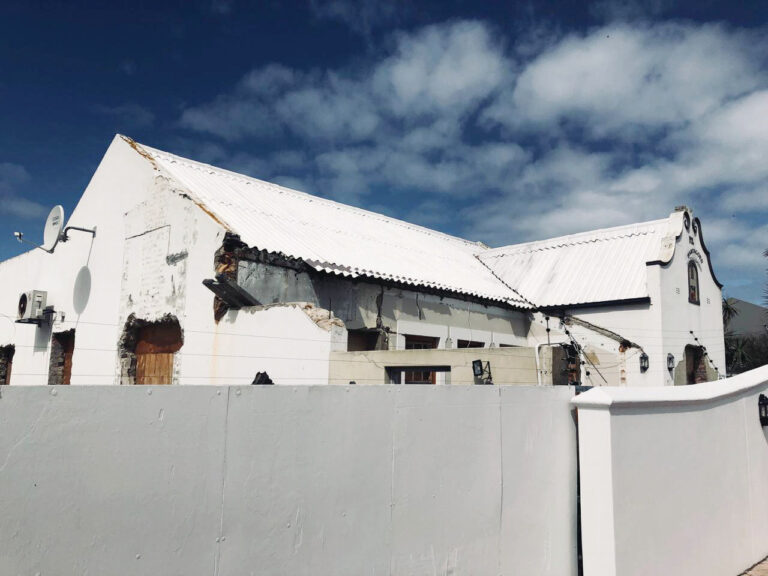
An integral part of the Hermanus legacy is in the historical homes dotted between the more modern developments. The historical section of Church Street reflects the above sentiment.

These properties are a joy to observe and appreciate, not only owing to the different historical and architectural styles they reflect, but also because the caring restoration and upkeep by the owners contribute, in no small measure, to the international standing of our charming town.

But among these are examples of neglect, leaving an eyesore of half-completed restoration left unattended for more than a year now, which reflect abandonment and decay.

This is a plea to the authorities to address the situation.

FROM: Theo de Wet – Hermanus

Don’t be lackadaisical about your pension

0

A pension fund helps employees save enough money while they earn salaries. Their savings provide them with a nest egg to live off when they can no longer work.

Pension funds have become complicated and require a board of trustees to govern them in compliance with the law. Having trustees means you are in safe hands, and that applies to retirement, death, and disability.

What is not obvious is that pension funds promise no particular outcome at retirement. So you save into the fund, and whatever is in the pot is available as a pension on retirement.

In computer circles, people refer to GIGO (garbage in, garbage out). So if you don’t save enough, you won’t have enough to retire on. The onus therefore is on members to take responsibility for the result. Trustees manage the investments and get professional advice so members have simple options to choose from.

Members must watch their pension funds like hawks. If they aren’t accumulating enough, they need to save more.

There are two ways to do this. Increase contributions to the pension fund (new legislative changes have made this possible), or invest in a retirement annuity, which is a private pension fund. Tax-deductible benefits apply when contributing to either or both, and these have increased in recent years.

I am always amazed that people in their late fifties and mid-sixties often haven’t given serious thought to their financial position in retirement. They trust their pension fund to look after them.

All other savings you make are good as long as you hold on to them until retirement. Preservation funds were introduced in 1989 to allow people changing jobs to shift their pension benefits to a safe place so they are not tempted to spend them before retirement.

In 2019, Alexander Forbes announced that 6.19% of pension fund members would be able to retire with financial independence. This is an improvement on the previous figure of 5% in 1977. But in 42 years, there has been little improvement

So individuals need to take their savings into their own hands. To do that with success, regardless of your age, you must learn as much as you can about the products and how they work.

There are good financial advisors around. But unlike in the old cowboy movies, the good guys don’t wear white hats, and the baddies don’t wear black ones. Continuously asking awkward questions is the best way to evaluate your ‘suppliers’.

Resist the easy route – relaxing and accepting that everyone loves you and won’t take advantage. Due diligence is the name of the game.

Setting the record straight

0

On Saturday, 19 September, the baboon known as Thunder died from a wound caused by an airgun pellet, according to the autopsy report.

He died on the road near my house in Betty’s Bay. Within four hours, I received a message asking if it was true that I had shot Thunder. The rumour mill of false allegations had started.

Over the ensuing weeks, I have remained largely silent, trusting that the facts would emerge. Sadly, the accusations continued.

These have had very real consequences. They have been repeated on social media, communicated to my employer and professional contacts, and resulted in four separate protests outside the home I share with my wife and young son.

I have been accused, directly and indirectly, of killing Thunder. I did not.

Because a police investigation had been initiated, I refrained from engaging in public argument or trying to defend myself through social media. I appointed an attorney and allowed the appropriate process to take its course.

I have since been advised by my attorney, following his communication with the prosecutor in Caledon, that there is no case against me.

That is an important development, but it does not undo the damage already caused.

In a small community, an allegation can spread quickly. In this instance, serious accusations were circulated before the circumstances surrounding Thunder’s death had been properly established.

I have preserved relevant material from the day, including CCTV footage, cellphone records, photographs, WhatsApp communications and other material. This evidence will be dealt with through the appropriate channels if necessary.

What concerns me is the harm caused by the publication and repetition of unsubstantiated allegations.

My reputation is central to my livelihood. I have worked for many years in this community and built my career on relationships of trust with residents, buyers and sellers. The suggestion that I deliberately killed an animal has caused obvious reputational harm.

More importantly, the matter has affected my family. Whatever views people may hold about baboon management in Betty’s Bay, repeatedly gathering outside my family home on the strength of an unproven accusation crosses a line.

I fully support the proper investigation of any unlawful killing of wildlife. But concern for wildlife cannot justify treating suspicion as proof, nor does repeating an allegation make it true.

My attorney is addressing a number of issues that we believe require correction, withdrawal, or other appropriate action.

We all deserve to live in a community built on fairness, respect and consideration for others. That requires each of us to think carefully before making or repeating accusations that can cause lasting damage to another. A fair-minded community does not condemn people on rumour; it insists on evidence before passing judgement.

FROM: Tim Starke – Betty’s Bay