Home Blog Page 7

Firefighters show their mettle

0

Overstrand Municipality's firefighters put their fitness and skills to the test at this year's Toughest Firefighter Alive (TFA) competition in George on the weekend.

The demanding competition included events such as pulling 75-metre hoses, dragging 80kg dummies, tackling obstacles, climbing walls, carrying heavy loads and completing an 800-metre sprint, all against the clock while wearing full firefighting gear.

The Overstrand team competed against firefighters from more than 30 municipalities across South Africa, as well as competitors from Botswana.

Firefighters show their mettle
Overstrand firefighters Tyrol Mackenzie, Willene Thompson, Cecil Abrahams and Coleen Johnson secured a podium finish. PHOTO: Supplied

The Overstrand mixed team, comprising Coleen Johnson, Willene Thompson, Tyrol MacKenzie and Cecil Abrahams, secured third place overall. Firefighter Jason Griffiths and reservist Coleen Johnson each achieved third place in their respective age categories.

Three in court for fatal stabbing

Three men appeared in the Hermanus Magistrate’s Court on Monday in connection with the murder of a 28-year-old Hawston man.

Hermanus SAPS’ detectives head, Lieutenant Colonel Nicky Steyn, confirmed that three suspects were arrested in connection with the murder of James Henn (28) after an argument broke out in Nasson Street in Hawston Heights on Friday night.

Henn was reportedly assaulted with a brick and stabbed in the neck. The police and emergency services responded shortly after 23:00, but the victim was declared deceased on the scene.

Three in court for fatal stabbing

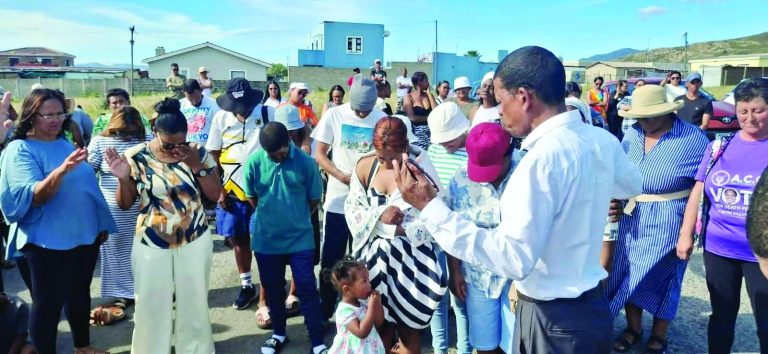
Community members, as well as religious and political leaders, gathered on the Pleintjie in Hawston on Sunday afternoon to pray for peace and for the restoration of law and order in the town.

A disaster waiting to happen?

0

The tall gum trees lining Jose Burman Drive are becoming a cause for concern. Tall, straggly and prone to losing branches, they could pose a danger when the next strong winds arrive.

Motorists and their vehicles are potentially at risk, but of greater concern is the proximity of Hermanus High School. Falling branches could have devastating consequences for children, staff, and parents using the school drop-off and pick-up area.

It is encouraging to see that the school’s management has already had the tree at its back entrance cut back. But what about the remaining trees along the road?

There is another issue worth considering. Although gum trees create an attractive, leafy avenue, they are also notorious water guzzlers. At a time when water conservation should be a priority, is maintaining thirsty trees such as these the best use of this precious resource?

Perhaps the municipality could assess the condition of these trees and consider a long-term solution – including replacing those that pose a danger with suitable, less water-intensive indigenous trees.

We all appreciate the beauty and shade trees bring to our streets. But when public safety and water security are at stake, surely prevention is better than waiting for a disaster.

FROM: Anne – Westcliff

Don’t trade trees for driveways

0

I am writing as a concerned Hermanus resident about the proposed removal of three beautiful, mature flowering gum trees on the municipal verge in Cross Street, Fernkloof.

The property on the road has recently been subdivided, and the new owners are seeking to remove these trees, which have stood for about 80 years, to accommodate three new driveways.

This is not simply a matter of three indi- vidual trees. The flowering gums form part of a much older lane of trees along Cross Street, and removing these three would further break up an established avenue that has been a part of the area’s character for generations.

At least 10 mature trees have already been removed from the property, some estimated to have been between 50 and 60 years old. Among them were two Cunonia capensis (rooiels), which are regionally protected in the Western Cape.

It is difficult to understand why the convenience of providing access to three double garages should come at the cost of these magnificent, established trees.

Hermanus is changing rapidly, and as more properties are subdivided and developed, we need to ask what we are prepared to lose in the process. Mature trees are one of the things that give Hermanus its character. They cannot simply be replaced with a few young saplings. An 80-year-old tree provides a canopy, shade, habitat, and beauty that will take generations to recreate.

Protecting established trees should be part of responsible development, not an afterthought.

There is also a very practical alternative in this case. Photographs of the site show that a large truck and digger loader can pass between the existing trees. If construction vehicles can access the property without removing them, then surely the driveways can be designed around the trees.

The municipality should not give permission for these trees to be removed simply because removing them is the easiest solution. The developers should be required to find an alternative that allows these established trees to remain.

The concern goes far beyond these three trees. If we allow mature trees to disappear one property at a time whenever a site is subdivided or redeveloped, we will gradually lose the leafy character and established tree-lined avenues that make Hermanus special.

FROM: Concerned Hermanus resident

Monitors sound alarm over water

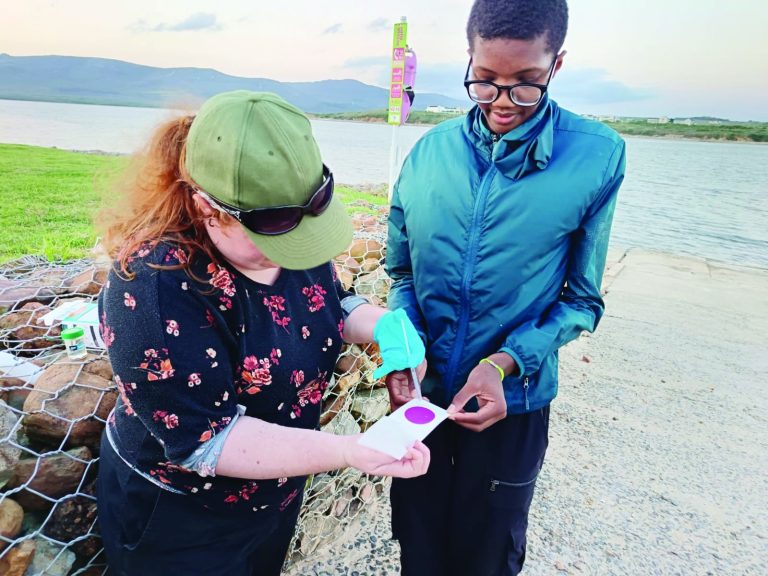
A community-led environmental monitoring project has raised concerns about water quality in runoff entering the Bot River Estuary and Bot Lagoon Ramsar System at Fisherhaven.

The Fisherhaven Lagoon Watch Citizen Science Action Project was launched by Stonefly Environmental Education (SEE), collaborating with the Fisherhaven Homeowners' Association, during National Water Week in September.

Residents received training on 17 September before undertaking their first monitoring exercise at the Fisherhaven public slipway on 21 September.

The group recorded factors including water clarity, temperature, odours, surface films, algal growth, wildlife distress, bird diversity and possible pollution. The aim was to establish a long-term record of the estuary’s ecological health.

Initial samples produced concerning results, including a reading of 139 coliform bacteria above the stated acceptable level, and an E. coli count close to the acceptable range. Screening test for hydrogen-sulphide-producing bacteria suggested faecal contamination. Chemical testing recorded approximately 5ppm total chlorine.

The project leaders stressed that the sample from runoff entering the lagoon, not from the lagoon, meant the results could not be used to assess the overall safety or quality of the lagoon water.

The findings highlighted the need for further investigation and continued monitoring. The project’s results, shared with CapeNature and Overstrand Municipality, will support collaborative environmental management and early detection of potential problems.

Community projects take shape

After the first 120 days of Dignity to Rise, six community projects are already moving from ideas to action for the non-political private initiative that’s working with Overstrand Municipality’s Socio-Economic Services Department.

Launched on 28 May to achieve zero poverty in the Overstrand by 2031, Dignity to Rise brought together business owners, creative professionals and community leaders, generating 93 project ideas.

Among those underway is the Hermanus Passport project led by Terri Muller in partnership with the local tourism sector. It aims to showcase lesser-known experiences across the greater Overstrand beyond the region’s familiar whale-watching attractions.

In the Hemel-en-Aarde Valley, a farmer has made land available for the Central Grow Zone, led by Heinrich Ungerer of the Food Security Program.

Vegetables will be grown in planter boxes, and most of the produce will go to local early childhood development (ECD) centres. Surplus produce, sold locally, will help make the project financially sustainable.

The team is also exploring a second community grow-zone, where an ECD centre could serve as a seedling nursery.

The initiative is also giving young people an opportunity to tell their own community stories. Filmmaker Jackie Viviers is training two young people in mobile-phone filmmaking.

They will document local people, projects and community needs – in their own voices.

Dignity to Rise has appointed Khanya Sogobile as assistant project manager and is beginning discussions with businesses about internships to give young people practical workplace experience.

Since the May launch, the initiative has registered 50 volunteers and engaged with 75 NGOs, schools and ECD centres to identify needs and opportunities.

The 120-day cycles are intended to keep projects focused and accountable. The next cycle starts in October. Planned projects include feeding schemes, ECD support and further job-creation opportunities.

To contribute, register as a volunteer, partner or funder, visit dignitytorise.co.za or email dignitytorise@gmail.com.

Honouring the people history forgot

0

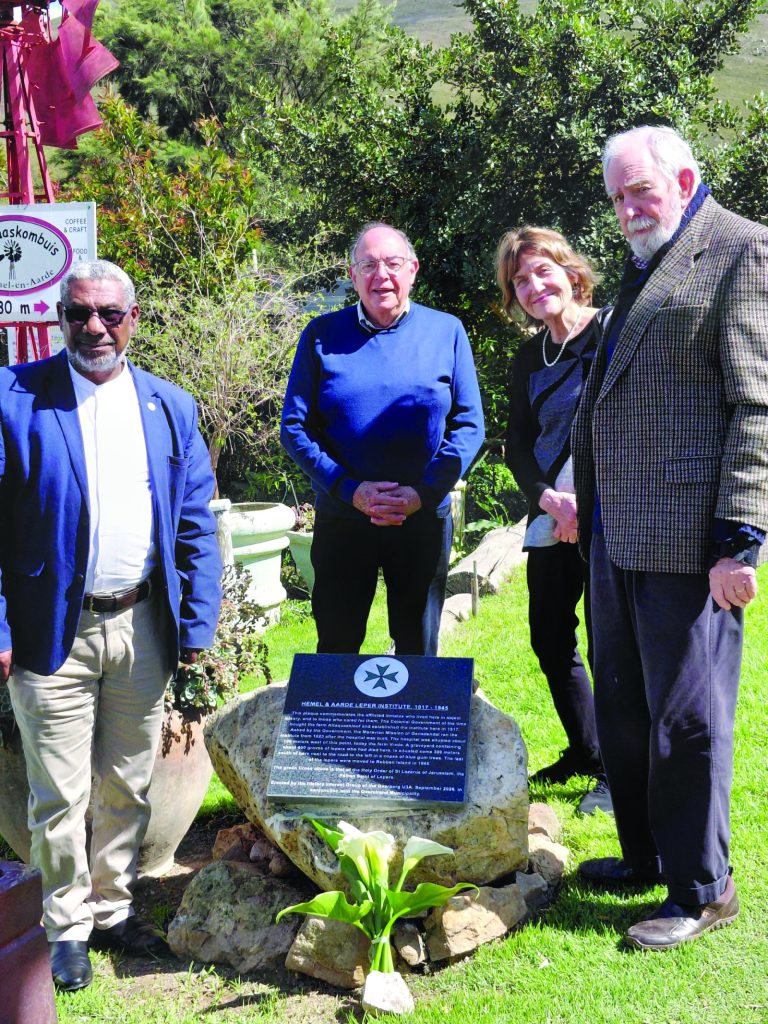
At a small but moving ceremony in the Hemel-en-Aarde Valley last Monday, a plaque was unveiled in memory of the residents of South Africa’s first leper colony.

Established by the Dutch colonial government in the mid-18th century on the farm Attaquaskloof in this remote valley of the Cape Colony, the British later formalised the leper colony under the governorship of Lord Charles Somerset.

In 1817, with the encouragement of the renowned Dr James Barry, the governor proclaimed that the lepers should be allotted “… a healthy spot, where they may retire to, and where they shall receive such aid as necessary to their future substance and comfort, but to which place the safety of the Public requires they should be confined”.

Out of sight, out of mind, in effect. He, however, had overlooked Barry’s passionate commitment to personally ensuring the residents’ medical, social, and spiritual needs were met.

A new hospital and vicarage were completed in 1820, and lepers of all races and classes were accommodated in huts and shacks and were given land to grow their own vegetables and fruit. Despite her efforts, however, things did not turn out the way Dr Barry – now elevated to the high position of Colonial Medical Inspector – had envisaged.

Hearing rumours of poor conditions in the Leper Institute, Barry requested the governor to add the Inspectorate of the Leper Institute to her duties.

What she saw on her first visit infuriated her. She reported that the medical treatment of the lepers “is so entirely neglected that, as far as I can learn, no attempts to care for the patients have been made. The hospital was crowded and dirty, with insufficient bedding, and the lepers were clothed in unclean garments with a rough texture that aggravated the disease”. She ordered increased rations and measures to improve the lepers’ lives.

She also arranged for the Moravian Brothers of Genadendal to minister to their needs. In 1823, the missionary, Peter Leitner, and his wife arrived to fill this role.

It is estimated that in the years 1823 to 1845, when the Leper Institute was closed and the last 39 patients were unwillingly transferred to Robben Island, about 400 had died and been buried on the farm. The cemetery, however, has never been definitively located. All that remains of the buildings are the large rocks imported to the area for the hospital foundations, about 100 metres to the west of the current Die Plaaskombuis, a restaurant and farm stall.

One of these rocks now forms a base for the plaque beside the restaurant’s entrance. Envisioned and erected by the History Interest Group of the Overberg U3A, with the Overstrand Municipality, the plaque acknowledges and pays tribute to a largely forgotten community that lived unobtrusively in this beautiful valley and was shunned by the public of the day.

Unveiling the plaque, Pastor Godfrey Cunningham of the Genadendal Moravian Mission called it a physical anchor of remembrance for people forgotten in history. Despite their physical and emotional exile, they lived with dignity and humanity, and in their own way, set an example for the future development of this fruitful valley between Heaven and Earth.

Among those present at the plaque’s unveiling were Pastor Godfrey Cunningham of the Genadendal Moravian Mission, Jack van Dyk and Angela Heslop of the History Interest Group of the Overberg U3A, and Prof John de Gruchy of the Volmoed Retreat Centre. The green cross on the plaque is that of the Holy Order of St Lazarus of Jerusalem, the Patron Saint of Lepers. PHOTO: Elaine Davie

School introduces quality skills

0

For the past three years, 14 dedicated Botrivier residents and associates have been working to bring quality skills education to the village and give young people an alternative to the traditional academic high-school route.

Overberg Our Community Our Future (OOCOF) is working towards establishing the Botrivier School of Skills, an independent, low-fee school for 240 learners over four years of training.

Land has been identified below the proposed Theewaterskloof (TWK) housing development. Before construction can begin, part of the property must be rezoned for educational use and undergo an environmental assessment.

OOCOF is receiving support from the Jakes Gerwel Education Trust in Bonnievale to help lay the groundwork and accelerate the project.

In the meantime, an interim training programme has been launched from a workshop behind Astra Garage. The 12-week programme is for young adults aged 17 to 24 years who are no longer at school and want to explore a future based on practical skills.

Each training cycle accommodates 10 trainees. Initially focussed on workman’s assistant training, it introduces practical, workplace skills and encourages participants to pursue further skills-based education.

Local trainers Frik Jacobs and Andie Coetzee facilitate the programme. Jacobs has extensive experience as a skills trainer in Richards Bay, while Coetzee brings experience from the education department’s district office.

Successful participants will receive a ‘Testament of Attendance' certificate outlining the areas of learning and aptitude they demonstrated. While the document is not an official qualification, OOCOF says it reflects the training programme's seriousness and integrity.

OOCOF hopes the interim programme will help build momentum towards establishing the full school and create new opportunities for young people in Botrivier.

For information about the training programme, phone Manie Carelse at 082 420 4343 or email oocof@outlook.com. Donations can be directed to Ebrahim Khan at 083 259 7425.

Waldorf breaks new ground

0

The independent Waldorf School Hermanus in Sandbaai – mainly for primary school pupils from Zwelihle and Mount Pleasant – celebrated its 30th anniversary in 2024.

That was the year it took a pioneering step into the future by adding Grade 8 to offer matric vocational training because too many former learners, who had achieved good academic matric results, were unable to find meaningful jobs.

Reaching this decision – with serious cost implications – took more than two years of negotiations before the Department of Higher Education agreed to register the proposed vocational high school.

Registration was confirmed in August this year, but the school had already enrolled 15 Grade 10 learners to start the first phase of the three-year vocational training curriculum in January

As a non-profit institution, where many learners’ school fees are subsidised, the additional expenditure was a tough ask. Waldorf’s main sponsors in Germany, however, agreed to help with building costs and equipping the requisite workshops.

Although the college was registered to offer three skills training courses, its board decided to start with two this year – Primary Health Care and Electrical Infrastructure and Construction.

The three-year curriculum includes fundamentals such as languages, life orientation and standard maths, combined with computer technology. Other subjects are added, as applicable to the specific training stream concerned.

Although not part of the formal curriculum, Waldorf will offer entrepreneurship training. Internships with relevant business undertakings also form part of the course structure.

For more information about the project or to offer opportunities for internships, send an to email adminhead@hermanuswaldorf.co.za

Grové strikes gold – again

0

There’s no stopping Overstrand modern pentathlon ace Daniel Grové’s appetite for gold.

The 17-year-old Junior Protea of the Hemel-en-Aarde Valley successfully defended his African Continental Laser Run title in Cape Town on Saturday, adding another major achievement to an extraordinary 2026 season.

The victory came after a demanding race in strong winds, which made the shooting sections particularly challenging. Laser Run combines running and laser-pistol-shooting in alternating stages.

“The wind was very strong, especially with the shooting – it threw me off target. But I was able to recover with the running,” Daniel said.

His ability to compensate for the shooting-range difficulties with his running proved decisive. Training on his family farm, often in the Western Cape’s notoriously unpredictable weather, has helped prepare him for such conditions.

Daniel also displayed impressive tactical maturity. South African rival Dylan Kruger provided strong early in the competition, with the pair running together during the opening stages.

“I wanted to stick with Dylan for the first lap to get warmed up and get my focus right,” Daniel explained. “And then I went for it with the shooting.”

The strategy paid off as Daniel found his rhythm, pulled away from the field and secured his second consecutive continental title.

The victory caps a remarkable season in which Daniel has competed on the international stage in Cairo, Budapest and Madrid. His 2026 highlights include a silver medal in the U19 World Championships in Madrid, the U19 SA Modern Pentathlon title, and a sixth-fastest Laser Run time at the UIPM World Cup Final in Budapest.

He is currently ranked fifth in the UIPM U19 world rankings and 17th among juniors.

For now, however, another challenge takes priority. The homeschooled Cambridge student has put competition on hold for two weeks to concentrate on his examinations.